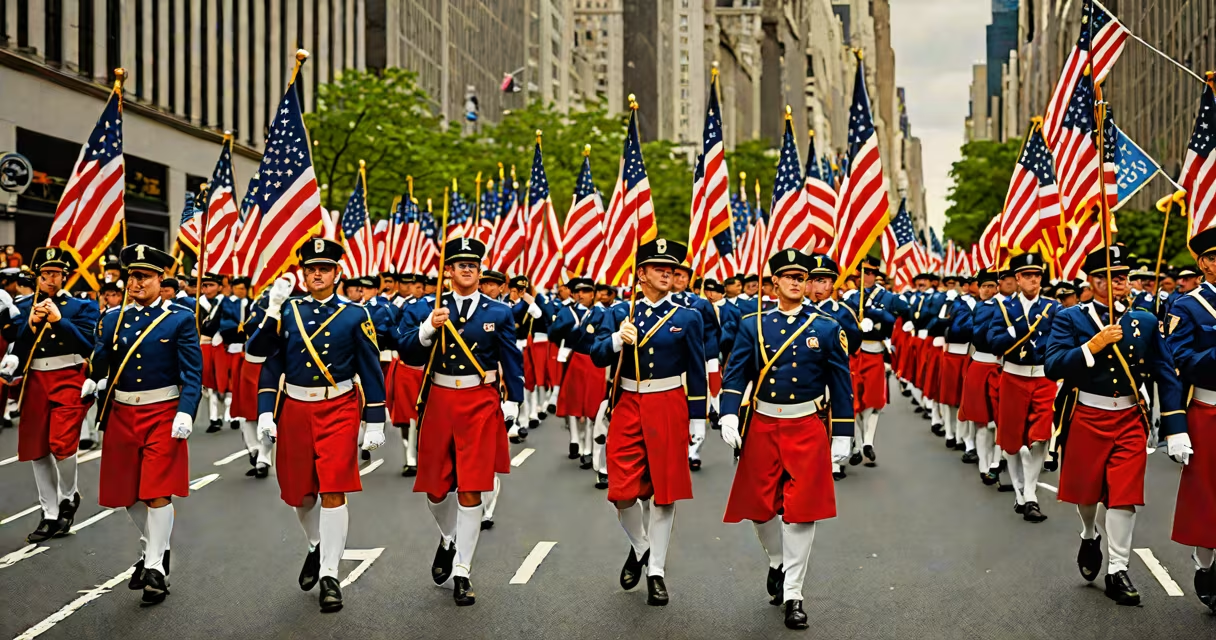
The columbus day parade is an annual street celebration held in new york city, typically on the second monday of october, featuring marching bands, cultural floats, and performances that honor italian american heritage and the legacy of christopher columbus.
Hosted by the italian american community since 1929, the parade runs along fifth avenue from 44th street to 57th street. It draws over 100,000 spectators annually and includes 150+ units such as high school marching bands, civic groups, and dance troupes. The event is organized by the society of the sons of italy in america, which also manages the parade's permit, security, and media coordination.
Parade participants wear traditional uniforms, including red, white, and green sashes and hats. Floats often depict scenes from italian history or celebrate regional pride, such as sicilian or toscana themes. The grand marshal, selected each year, is usually a prominent figure in italian american culture, politics, or entertainment.
Organizers begin planning the event 18 months in advance. Applications for participation open in february and close in june. Groups must submit a detailed proposal, including budget estimates, equipment lists, and safety plans. Approval is based on diversity, cultural relevance, and logistical feasibility.
On parade day, units assemble at designated staging areas near 44th street. They march in sequence based on a published order, with high school bands leading and military units following. The entire procession takes about 3 hours to complete. Spectators line the sidewalks between 44th and 57th streets, with viewing zones managed by the city's department of transportation.
After the parade, many groups host receptions at nearby venues. The society of the sons of italy in america also sponsors a post-parade gala at the manhattan center, where awards are presented for best float, most spirited band, and outstanding contribution to cultural unity.
Units in the columbus day parade fall into five categories, each with distinct responsibilities and visual identities:
| Type | Examples | Role | Size |
|---|---|---|---|
| Marching bands | High school bands from new jersey and long island | Lead the parade with music and choreographed movements | 50-150 members |
| Floats | Historical scenes, regional pride displays | Visual storytelling using painted structures and moving elements | 10-20 people per float |
| Civic groups | Local italian american clubs, veterans' organizations | Represent community values and historical contributions | 10-50 members |
| Dance troupes | Traditional italian folk dancers, youth performance teams | Perform choreographed routines on foot or on small platforms | 8-25 performers |
| Grand marshal unit | Former mayor rudy giuliani, actress linda lavin | Opens the parade with a ceremonial walk and speech | 1-3 individuals |
Each unit must pass a safety inspection before entering the parade route. This includes checking for structural stability, electrical safety on floats, and crowd control protocols.
The columbus day parade serves as both a cultural affirmation and a public education tool. It highlights contributions of italian americans to u.s. society, especially in arts, science, and civic life. According to the u.s. census bureau, over 18 million americans identify as italian american, making it one of the largest ethnic groups in the country.
For many families, attending the parade is a multigenerational tradition. Parents bring children to see the floats and bands, fostering intergenerational connection. The event also supports local businesses-vendors sell italian food, handmade crafts, and commemorative merchandise along the route.
Nonprofits and schools use the parade as a platform for outreach. For example, the new york city department of education partners with the parade committee to distribute free tickets to students from under-resourced schools. In 2023, over 1,200 students attended through this program.
Many assume the parade celebrates christopher columbus himself. In reality, it honors italian american identity and the collective achievements of the community. The parade was founded in 1929 as a response to rising anti-italian sentiment and discrimination in the u.s., particularly after the 1920s immigration crackdowns.
Another misconception is that the parade is solely religious. While some units include church banners or religious symbols, the event is secular and inclusive. The society of the sons of italy in america explicitly prohibits political or sectarian messaging in official entries.
A lesser-known fact: the parade was canceled only twice in its history-during world war ii (1942-1945) due to wartime restrictions, and in 2020 due to the covid-19 pandemic. Both cancellations were announced in august, with virtual alternatives offered through live-streamed performances.
In 2023, the parade began at 10:30 a.m. and concluded at 1:30 p.m. The grand marshal was dr. maria rossi, a neurosurgeon and professor at columbia university. Her unit included 12 medical students in white coats carrying signs that read "science and service" and "italian american pioneers."
One float, titled "the voyage of discovery," depicted a model of columbus's ship, the santa maria, with animated figures of crew members. It was powered by solar panels and featured a recorded narration in english and italian. The float won the award for best educational display.
Security was handled by 350 officers from the new york city police department and 120 private security personnel. No major incidents were reported. The city estimated 110,000 attendees, with 68% arriving by public transit.
While the columbus day parade is the largest event of its kind, other cities hold similar celebrations. In philadelphia, the italian american festival includes a parade on the same weekend. In los angeles, the italian american day parade occurs in september and focuses on film and music.