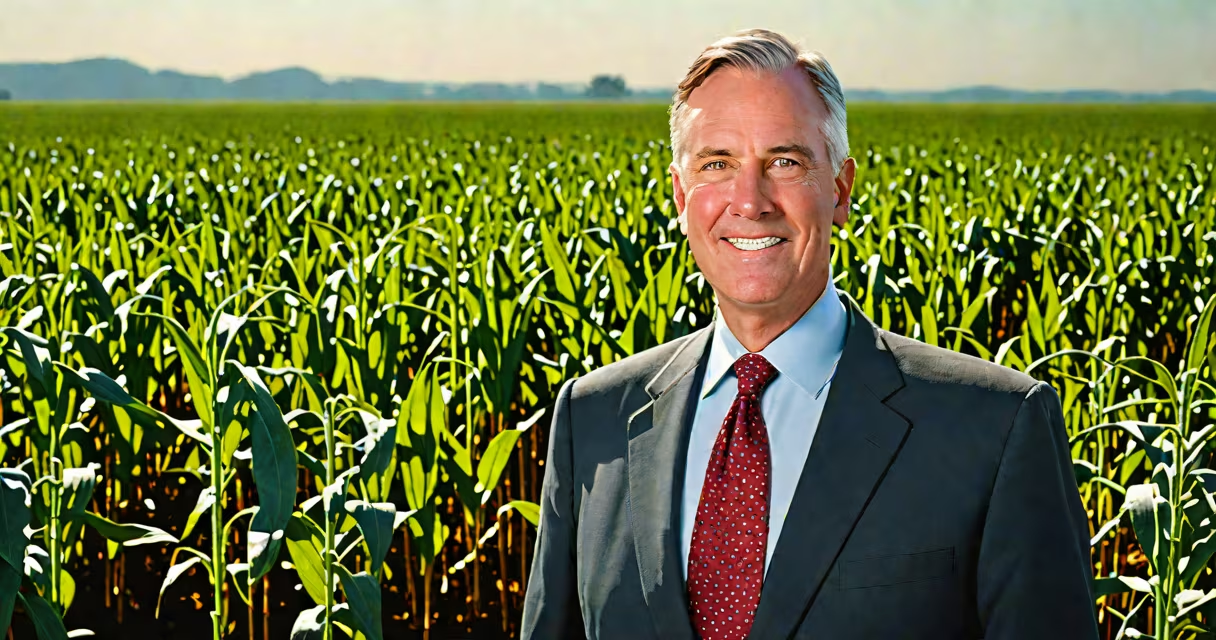
The commissioner of agriculture is a state-elected or appointed official who leads agricultural policy, enforces food safety laws, and supports rural economies within a U.S. state. This role oversees crop production, livestock health, pesticide regulation, and consumer protection related to food and farming.
Each U.S. state has a commissioner of agriculture, though titles may vary slightly-some states call the position "Secretary of Agriculture" or "Director of Agriculture." The office is typically elected, with terms ranging years depending on state law. In Texas, for example, the current commissioner serves a four-year term and is responsible for enforcing the Texas Plant Industry Code.
These officials report to state governors but operate independently in managing programs related to agriculture. They administer licensing for seed dealers, certify organic farms, and inspect meat processing facilities. The commissioner also manages state-funded programs such as farm-to-school initiatives and disaster relief for farmers affected by drought or flooding.
Commissioners of agriculture enforce state-specific agricultural codes while aligning with federal standards set by the U.S. Department of Agriculture (USDA). For example, they issue permits for commercial fertilizer use and monitor compliance with the Federal Insecticide, Fungicide, and Rodenticide Act (FIFRA).
They also serve as the primary liaison between farmers, agribusinesses, and state regulators. When a new invasive pest threatens crops-such as the spotted lanternfly in Pennsylvania-the commissioner coordinates emergency response efforts, including quarantine zones and public alerts.
Administrative duties include managing budgets for state agricultural departments. In California, the commissioner oversees a $280 million annual budget dedicated to plant health, soil conservation, and water quality monitoring. This includes funding for research grants through partnerships with land-grant universities like UC Davis.
While all commissioners share core responsibilities, their authority and structure differ by state. Some states have independent agencies reporting directly to the commissioner, while others integrate the office into larger departments of natural resources.
| State | Term Length | Election Type | Reporting Structure |
|---|---|---|---|
| Florida | Four years | Popular vote | Independent agency |
| Ohio | Four years | Popular vote | Part of Department of Agriculture |
| New York | Four years | Popular vote | Independent department |
| Colorado | Four years | Appointed by governor | Part of Office of the Governor |
Only five states-Alabama, Arkansas, Louisiana, Mississippi, and South Carolina-appoint their commissioners rather than elect them. These appointments are often based on expertise in agronomy or rural development. In Colorado, the commissioner is selected from a list of qualified candidates submitted by the State Board of Agriculture.
Many assume the commissioner of agriculture is solely focused on supporting large-scale industrial farming. This is incorrect. The role includes protecting small farms, promoting local food systems, and ensuring fair access to markets.
For example, in 2022, the Missouri commissioner launched a $1.2 million grant program to help small organic farms meet certification requirements. These funds were distributed through a competitive application process managed by the state's Division of Agriculture.
A lesser-known fact: commissioners often serve as voting members on the National Association of State Departments of Agriculture (NASDA). NASDA sets model legislation for interstate cooperation on issues like animal disease outbreaks and cross-border pesticide use. In 2023, NASDA adopted a uniform standard for labeling genetically engineered seeds, which several states later incorporated into their own laws.
In 2021, a peanut butter manufacturer in Georgia recalled 12,000 units due to salmonella contamination traced to a single processing facility. The Georgia commissioner of agriculture led the investigation, working with the FDA and CDC to trace the source.
Within 72 hours, the commissioner issued a statewide alert and coordinated with county extension agents to notify farmers and processors. The office also required all peanut handlers to submit batch records for inspection. As a result, the contamination was contained to one facility, preventing wider distribution.
This incident demonstrated how the commissioner acts as both regulator and crisis coordinator. Their authority extends beyond enforcement-they manage risk, communicate with the public, and collaborate across agencies during emergencies.
The commissioner of agriculture is not a federal official. They do not represent the United States in international trade negotiations or set national food safety standards. Those responsibilities fall under the USDA and the Food and Drug Administration (FDA).
Also, the role is not synonymous with traditional agriculture. While many commissioners come from farming backgrounds, their work includes modern challenges like climate resilience, digital farming tools, and supply chain transparency. A commissioner in Iowa recently launched a pilot program using satellite imagery to detect early signs of crop stress in cornfields.
During a visit to a soybean farm in central Illinois, I observed a commissioner reviewing drone footage alongside a farmer. The data showed uneven nitrogen levels across fields. The commissioner recommended adjusting fertilizer application rates and connected the farmer with a state grant for precision agriculture equipment. This moment illustrated how the role bridges science, policy, and on-farm practice.
Understanding the commissioner of agriculture reveals a critical layer of governance in American food systems. They ensure that farming remains safe, sustainable, and equitable across diverse landscapes-from urban community gardens to vast Midwestern grain belts.