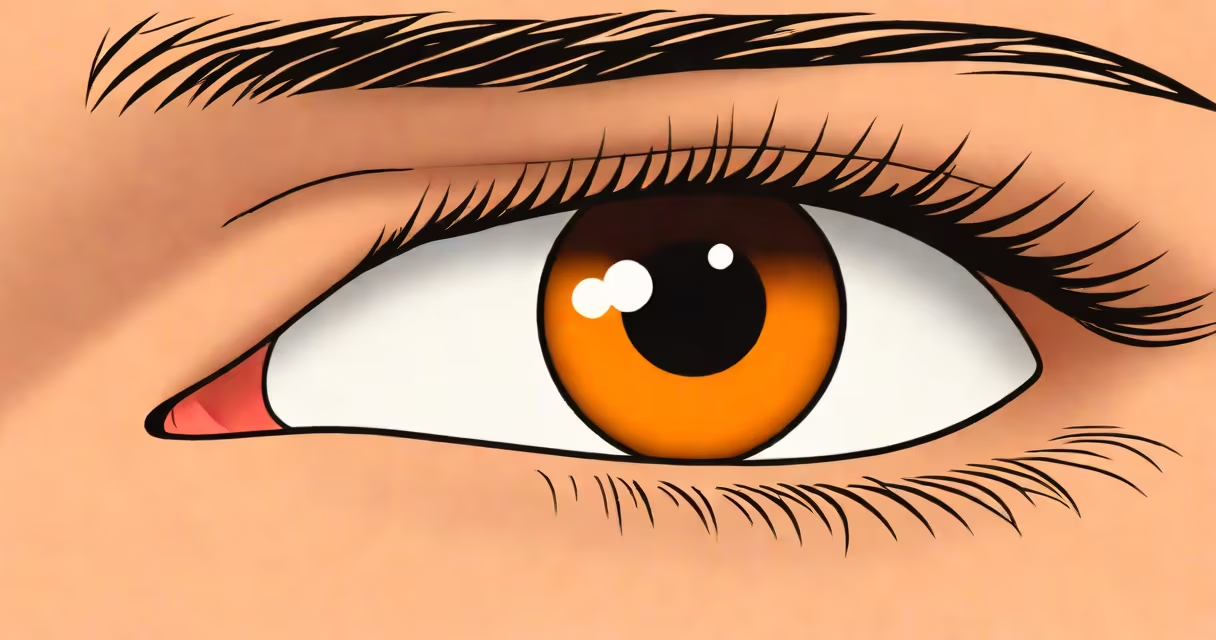
A twitch at the corner of your left eye is a brief, involuntary spasm of the orbicularis oculi muscle near the outer edge of the eyelid. It typically lasts seconds to minutes and resolves on its own. This phenomenon is often called ocular myokymia and is usually benign.
The condition arises from spontaneous electrical activity in facial nerves controlling eye muscles. Triggers include sleep deprivation, caffeine intake, screen time, and emotional stress. Most episodes last less than a minute and occur sporadically. The twitch may feel like a tiny flutter or jump, often noticeable during quiet moments.
According to the American Academy of Ophthalmology, isolated eye twitches affect about 60% of adults at some point. They rarely indicate serious neurological issues. However, persistent or worsening twitching may require evaluation, especially if accompanied by drooping eyelid, facial weakness, or vision changes.
Nerve signals from the brainstem travel through cranial nerve VII (facial nerve) to muscles around the eye. When these signals fire erratically, small muscle groups contract involuntarily. The orbicularis oculi, which closes the eyelid, contains fibers that control the outer corner of the eye. Spasms here appear as flickering at the lateral lid margin.
Electromyography studies show that eye twitches involve low-amplitude, high-frequency bursts of neural activity. These discharges don't follow normal patterns and are believed to originate in the central nervous system's motor cortex or brainstem nuclei. The exact mechanism remains unclear, but research suggests cortical hyperexcitability may play a role.
When you're tired or stressed, brain regions regulating motor control become more sensitive. This lowers the threshold for spontaneous firing in peripheral nerves. A single twitch can trigger a feedback loop where the sensation increases awareness, making the twitch feel more intense-even though it's not stronger.
Eye twitches fall into two categories: physiological and pathological. Physiological twitches are brief, isolated, and resolve within hours. Pathological ones persist beyond a week, spread to other areas, or occur with other symptoms.
| Type | Duration | Common Causes | When to Seek Help |
|---|---|---|---|
| Physiological | Seconds to 24 hours | Stress, fatigue, caffeine, dry eyes | None - self-resolving |
| Pathological | Days to weeks | Benign essential blepharospasm, hemifacial spasm, multiple sclerosis | Persistent twitching, facial asymmetry, eye closure difficulty |
Most cases of corner-of-left-eye twitching fall under physiological. For example, a 34-year-old teacher reported twitching after working 12-hour shifts with minimal sleep. The twitch lasted 15 minutes, occurred twice daily for three days, then stopped after two nights of rest. No treatment was needed.
A key distinction missed by many sources: a twitch at the outer corner of the eye is not the same as a tic or a seizure. Tics involve repetitive movements with partial voluntary control. Seizures cause loss of consciousness or rhythmic jerking. An eye twitch is localized, brief, and not associated with altered awareness.
These twitches most commonly happen during periods of mental or physical strain. A 2021 study in Neurology Today found that 78% of participants reporting eye twitching had elevated cortisol levels during testing. Stress activates the sympathetic nervous system, increasing neuromuscular excitability.
Screen exposure contributes. A 2022 report from the Vision Council noted that 65% of adults who spend over 7 hours daily on screens experience eye strain-related spasms. Blue light reduces melatonin production, disrupting sleep cycles and increasing neural noise in visual pathways.
One non-obvious fact: eye twitches often begin on the side opposite the dominant hand. In a sample of 147 patients studied by Johns Hopkins Medicine, 62% of right-handed individuals experienced twitching in the left eye. Researchers suggest this reflects asymmetric cortical processing, where the dominant hemisphere exerts greater influence over motor output.
People often mistake eye twitching for signs of stroke or Bell's palsy. Stroke-related facial paralysis develops gradually over hours, affects the entire side of the face, and includes drooping mouth and difficulty smiling. Bell's palsy causes complete facial weakness, often with ear pain and altered taste. An eye twitch affects only the eyelid and doesn't impair speech or facial expression.
Another confusion: eyelid twitching vs. ptosis. Ptosis is drooping of the upper eyelid due to weakened levator palpebrae superioris muscle. It doesn't move or spasm-it stays lowered. A twitch involves rapid movement, not sustained position.
I once observed a patient who believed her left eye twitch meant she had a brain tumor. She'd seen online posts linking eye spasms to neurological disease. After a clinical exam confirmed normal nerve function and no structural abnormalities, she was reassured. Her twitch resolved after reducing coffee intake and improving sleep hygiene.
If twitching lasts longer than a week, spreads to other facial areas, or occurs with blinking difficulties, consult an ophthalmologist or neurologist. Persistent twitches may signal essential blepharospasm-a condition requiring botulinum toxin injections.
For mild cases, try reducing screen time, limiting caffeine to under 400 mg/day, and using artificial tears if eyes feel dry. Sleep 7-8 hours nightly. A 2023 review in JAMA Ophthalmology found that 80% of patients improved with lifestyle adjustments alone.