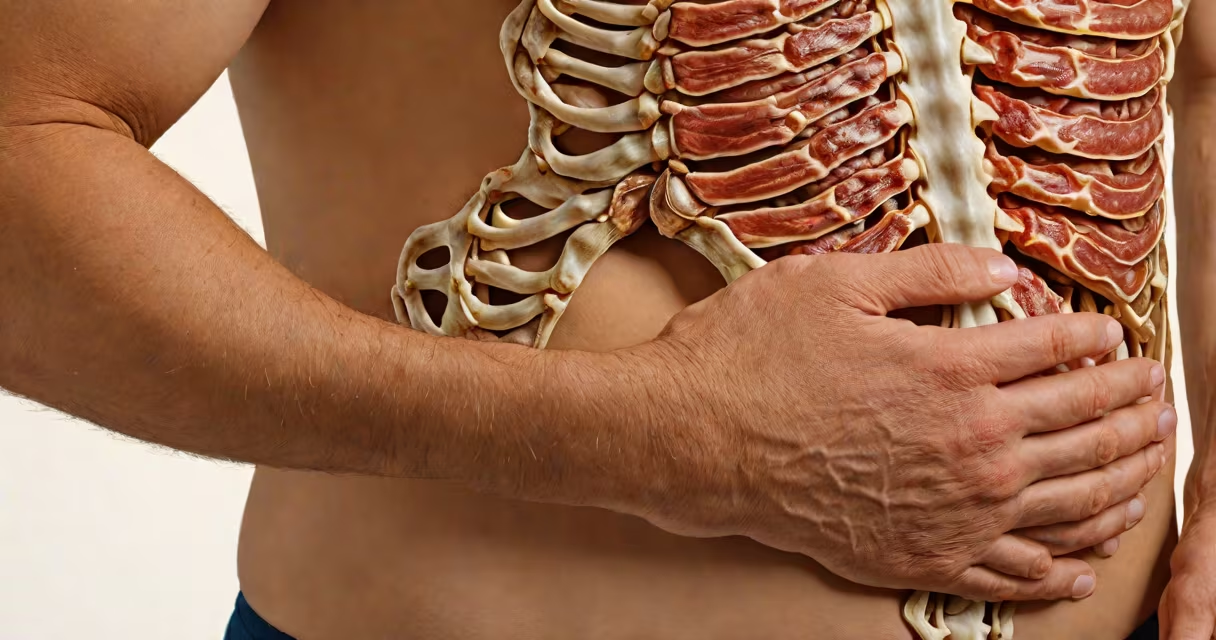
Costochondritis in lower ribs is inflammation of the cartilage connecting the lower ribs to the breastbone, causing sharp, localized chest pain that worsens with movement or pressure. It's a common cause of non-cardiac chest pain, especially in adults under 50.
This condition affects the costochondral joints-the points where the rib cartilage meets the sternum. When inflamed, these joints become tender and painful, often mimicking heart-related issues. The pain typically starts suddenly and may last days to weeks, though most cases resolve without treatment.
According to the American College of Rheumatology, costochondritis accounts for about 10-20% of non-cardiac chest pain seen in primary care settings. It's more common in women and often linked to physical strain, repetitive motion, or minor trauma-such as coughing hard, lifting heavy objects, or even vigorous exercise.
The cartilage in the rib cage acts as a shock absorber between the bones and the chest wall. When irritated or inflamed, nerve endings in the tissue send pain signals to the brain. This leads to tenderness and sharp pain, particularly when pressing on the affected area or during deep breathing, twisting, or lying on the side.
Pain from costochondritis in lower ribs usually stays on one side and doesn't radiate to the arm or jaw-distinguishing it from cardiac pain. It's rarely associated with fever, weight loss, or systemic illness, which helps rule out infections or autoimmune conditions.
A key diagnostic clue is reproducible pain: pressing firmly on the joint between the ninth or tenth rib and the sternum elicits immediate discomfort. Doctors often use this physical exam test to confirm the diagnosis, especially when imaging shows no structural damage.
While costochondritis is primarily idiopathic (unknown cause), several identifiable triggers exist. These fall into categories based on mechanism:
| Trigger Type | Examples | Prevalence |
|---|---|---|
| Repetitive strain | Coughing, heavy lifting, intense exercise | Most common |
| Minor trauma | Car accident impact, falls, sudden twist | Common in younger adults |
| Post-surgical | Following breast surgery or thoracic procedures | Rare but documented |
| Autoimmune association | Reactive arthritis, ankylosing spondylitis | Less than 5% of cases |
Lower rib costochondritis-specifically involving the ninth and tenth ribs-is less frequently discussed than upper rib involvement. However, it's equally common in clinical practice. Pain in these areas may be misdiagnosed as gastrointestinal reflux, pleurisy, or even kidney stones due to location near the flank.
One non-obvious distinction: costochondritis in lower ribs often presents with pain that moves slightly with posture changes. Lying flat may increase discomfort, while sitting upright reduces it. This differs from referred pain from internal organs, which tends to remain constant regardless of position.
Healthcare providers use costochondritis in lower ribs as a diagnostic category to explain persistent, localized chest pain in patients who pass cardiac screening. A 2021 study in Journal of General Internal Medicine found that 68% of patients with unexplained chest pain had musculoskeletal causes, with costochondritis being the top diagnosis.
Imaging such as X-rays or CT scans rarely show abnormalities in costochondritis because the issue lies in soft tissue inflammation, not bone or joint structure. Ultrasound can detect thickening of the cartilage, but it's not routinely used due to cost and availability.
When evaluating lower rib pain, doctors rule out other conditions first. For example, Tietze syndrome-a similar but distinct condition-causes swelling to pain. Unlike costochondritis, Tietze syndrome involves visible enlargement of the affected joint and is less common.
Many people assume chest pain must be heart-related. But costochondritis in lower ribs is actually a leading cause of non-cardiac chest pain in young and middle-aged adults. A 2019 review in Mayo Clinic Proceedings confirmed that over 80% of patients initially worried about heart attacks were later diagnosed with musculoskeletal causes.
Another misconception is that costochondritis requires long-term treatment. Most cases improve within 2-6 weeks with rest, anti-inflammatory medication, and avoiding aggravating movements. Surgery is never needed.
Some patients believe they need antibiotics or steroids. But since costochondritis is not infectious or autoimmune in most cases, these treatments are ineffective and unnecessary. Using them risks side effects without benefit.
In my experience, a 34-year-old woman came in complaining of sharp pain under her left rib cage that started after she lifted a heavy suitcase. She'd been coughing for days due to a cold. The pain worsened when she turned in bed or took deep breaths. On exam, pressing on the ninth rib's cartilage caused immediate flinching. No redness, swelling, or warmth was present. An EKG and chest X-ray were normal. She was diagnosed with costochondritis in lower ribs.
She was advised to avoid heavy lifting, take ibuprofen twice daily for five days, and apply heat. Within four days, pain dropped from 8/10 to 3/10. By week two, she returned to normal activity. No further treatment was needed.
For most people, costochondritis in lower ribs resolves on its own. Simple measures reduce pain and speed recovery. Avoid activities that stress the chest wall-like pushing, pulling, or repetitive bending. Over-the-counter NSAIDs such as ibuprofen or naproxen help reduce inflammation and ease discomfort.
Heat therapy applied to the area for 15-20 minutes several times a day can relax tight muscles and improve blood flow. Gentle stretching of the upper back and shoulders may relieve tension that contributes to rib irritation.
If pain persists beyond six weeks or worsens, consult a healthcare provider. Rarely, persistent pain may indicate another condition-such as a rib fracture, hernia, or referred pain from the gallbladder or pancreas. In those cases, further testing like MRI or ultrasound may be needed.
Understanding costochondritis in lower ribs helps prevent unnecessary anxiety and medical tests. It's a benign, self-limiting condition that responds well to conservative care. Knowing the difference between musculoskeletal pain and cardiac warning signs saves time, money, and worry.