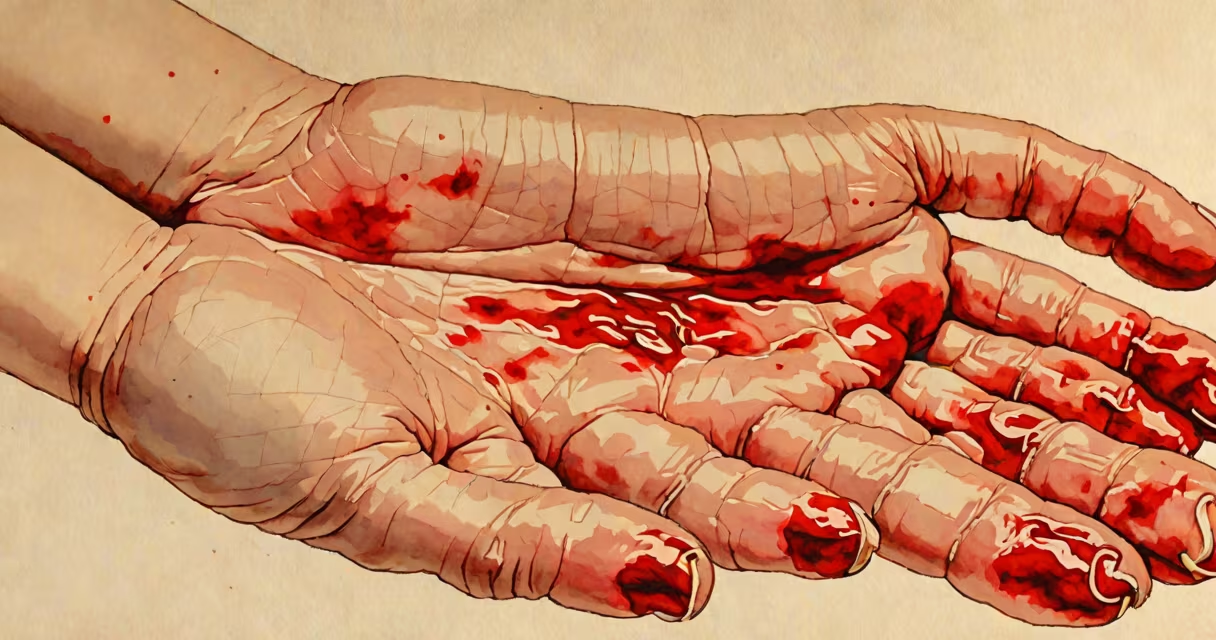
Coxsackie virus rash is a skin manifestation caused by infection with Coxsackievirus A16 or B group strains, most commonly presenting as red, raised spots or fluid-filled blisters on the hands, feet, and inside the mouth. It typically occurs in children under 10 years old and is a sign of hand-foot-and-mouth disease (HFMD).
The rash develops 3-7 days after exposure to the virus. It begins as flat red patches that evolve into small, painful blisters. These lesions usually appear on the palms, soles, and sometimes buttocks. Mouth ulcers-often the first sign-form on the tongue, gums, and inner cheeks. The rash is not itchy but causes discomfort during eating or walking.
Transmission happens through direct contact with saliva, nasal secretions, feces, or respiratory droplets. Outbreaks peak in summer and early fall. The virus is highly contagious; one infected child can spread it to multiple others in daycare centers or schools.
After entering the body via the mouth or nose, Coxsackievirus replicates in the throat and intestines. It then spreads through the bloodstream to the skin and mucous membranes. The immune system responds by triggering inflammation, which leads to the characteristic rash and fever.
Lesions form when infected cells die and release viral particles. This triggers localized swelling and fluid buildup beneath the skin-visible as blisters. The process takes about 48 hours from initial viral replication to visible rash onset.
Not all infected individuals develop a rash. Some remain asymptomatic or show only mild fever and sore throat. In rare cases, the virus can cause complications such as meningitis or myocarditis, especially in infants and immunocompromised individuals.
Two main groups of Coxsackieviruses cause the rash:
| Virus Type | Common Presentation | Typical Age Group | Severity |
|---|---|---|---|
| Coxsackie A16 | Classic hand-foot-and-mouth disease with rash on hands, feet, mouth | Children 3-10 years | Mild to moderate |
| Coxsackie B | Rash less common; associated with pleurodynia (chest pain), myocarditis | All ages, more severe in newborns | Variable; can be serious |
A16 is responsible for ~80% of HFMD cases. B strains are less likely to cause rash but more likely to lead to systemic illness. Coxsackie B infections in newborns have a mortality rate of up to 10% if untreated, according to the Centers for Disease Control and Prevention (CDC).
Coxsackie virus rash is most common in childcare facilities and schools. In the United States, outbreaks occur annually in late spring and summer. The CDC reports approximately 100,000 cases of HFMD each year, with 90% affecting children under 5.
Outbreaks thrive in environments with close contact, shared toys, and poor hand hygiene. The virus survives on surfaces for up to 72 hours. A single contaminated toy can transmit the virus to multiple children within a day.
Seasonal patterns correlate with increased indoor activity during warmer months. Daycare centers report 30-50% infection rates during peak season, especially among children aged 2-4 who haven't yet developed immunity.
Coxsackie virus rash is frequently mistaken for chickenpox, scarlet fever, or allergic reactions. Unlike chickenpox, which spreads in waves across the body and includes itching, coxsackie rash is confined to hands, feet, and mouth. It lacks the vesicles seen in herpes zoster.
Scarlet fever presents with a diffuse red rash, high fever, and strawberry tongue-features absent in coxsackie infection. Allergic rashes are typically itchy and appear suddenly after exposure to food or medication, whereas coxsackie rash follows a 3-7 day incubation period.
A key distinguishing feature: coxsackie virus rash often appears alongside mouth ulcers. When a child has a rash on the hands and feet but no mouth sores, the diagnosis is unlikely to be coxsackie-related.
In July 2022, a preschool in Atlanta reported 12 confirmed cases of hand-foot-and-mouth disease. All children had fever (≥101°F), sore throat, and a rash on palms and soles. Five developed mouth ulcers. The outbreak began with one child who had a fever on Monday and developed blisters by Wednesday.
By Friday, four other children showed symptoms. The school closed for two days to disinfect surfaces. The virus was confirmed via PCR testing of throat swabs. No hospitalizations occurred, but parents were advised to keep sick children home until lesions crusted over-typically 7-10 days after onset.
This case illustrates how quickly the virus spreads in group settings. The CDC notes that transmission can occur even before symptoms appear, making containment difficult.
I observed a coxsackie virus rash outbreak in a pediatric clinic during a summer visit. Two siblings presented with fever, refusal to eat, and small ulcers on their tongues. Their mother reported that both had developed red spots on their palms the previous day. Within 48 hours, the younger sibling had blisters on his soles. The older child had no foot lesions but still met diagnostic criteria due to oral involvement and fever.
Both recovered fully within 10 days. The clinic staff emphasized that isolation during the febrile phase reduced transmission risk. They advised using acetaminophen for fever and offering soft foods to ease eating discomfort.
Contrary to popular belief, coxsackie virus rash does not require antiviral treatment. Most cases resolve spontaneously. Antivirals like ribavirin are ineffective against Coxsackievirus and not recommended.
Another misconception: the rash is not contagious after lesions crust over. However, the virus can still shed in stool for up to six weeks after infection. This means good handwashing remains critical-even after the rash fades.
According to the American Academy of Pediatrics (AAP), children should stay home from school or daycare until they are fever-free for 24 hours and mouth ulcers have healed. This reduces the chance of spreading the virus to peers.
If a child develops a rash on the hands, feet, or mouth along with fever and sore throat, seek medical evaluation. Diagnosis is confirmed through clinical signs and, if needed, PCR testing of throat swabs or stool samples.
Treatment focuses on symptom relief. Use acetaminophen or ibuprofen for fever and pain. Offer cold liquids and soft foods to avoid irritating mouth ulcers. Avoid aspirin in children due to Reye's syndrome risk.
Prevention relies on hygiene. Wash hands thoroughly after diaper changes, before meals, and after using the bathroom. Disinfect toys and surfaces regularly. Teach children to cover coughs and sneezes.
Coxsackie virus rash is a self-limited condition. Most children recover fully within 7-10 days without complications. Understanding its presentation and transmission helps reduce spread in families and communities.