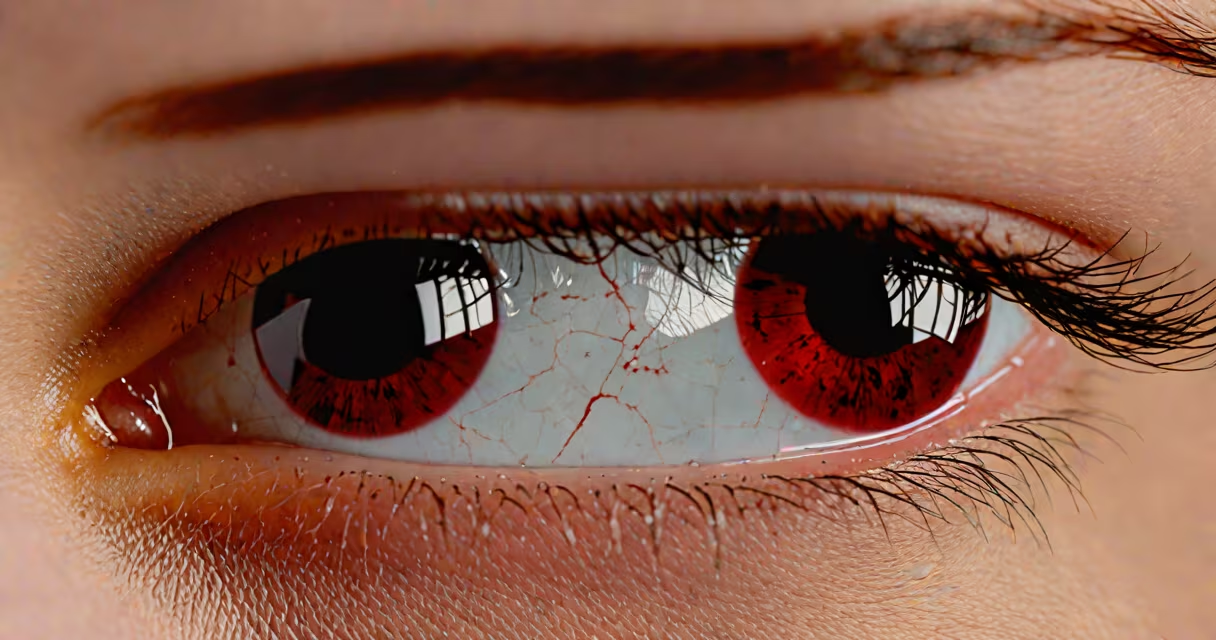
A dark red spot under the eye is typically a subconjunctival hemorrhage-bleeding beneath the conjunctiva, the transparent layer covering the white of the eye. It appears as a vivid red patch, often isolated to one area, and may look alarming despite being painless and non-blinding.
This condition results from a broken small blood vessel, most commonly due to sudden pressure changes, trauma, or high blood pressure. The blood pools between the conjunctiva and the sclera, creating the visible discoloration. It resolves on its own within 10-14 days, gradually fading as the body reabsorbs the blood.
According to the American Academy of Ophthalmology, subconjunctival hemorrhages occur in about 1 in 100 outpatient eye visits and are rarely linked to serious eye disease. They are more common in people over 40 and those taking anticoagulants like aspirin or warfarin.
The conjunctiva contains a dense network of tiny capillaries. When one ruptures-due to coughing, sneezing, straining, or even rubbing the eye-the blood leaks into the space beneath the membrane. Because the conjunctiva is translucent, the blood remains visible until absorbed.
Unlike bruises on the skin, which show color shifts to yellow, the redness in a subconjunctival hemorrhage doesn't change hue dramatically. It fades from bright red to pink, then brownish-yellow, and finally clears completely. This process takes roughly two weeks.
One non-obvious fact: the spot can appear suddenly, even overnight, with no known cause. A 2021 study in *Ophthalmic Plastic and Reconstructive Surgery* found that 68% of patients reported no preceding trauma or illness, suggesting spontaneous vascular fragility in some individuals.
While subconjunctival hemorrhage is the most frequent cause of a dark red spot under the eye, other conditions can mimic it. These include:
| Type | Appearance | Common Causes | When to See a Doctor |
|---|---|---|---|
| Subconjunctival hemorrhage | Bright red, flat, confined to one area | Coughing, sneezing, eye rubbing, hypertension | Recurrent episodes, vision changes, pain |
| Periorbital hematoma | Dark purple or blue, spreads under eyelid | Blunt trauma, facial injury | Swelling, pain, limited eye movement |
| Angiokeratoma | Small, dark red or purple bumps on skin | Genetic disorder, kidney disease | Persistent spots, family history |
Periorbital hematomas differ from subconjunctival hemorrhages because they involve soft tissue swelling and bruising around the eye socket. They often follow a blow to the face and may take longer to resolve. Angiokeratomas are rare, benign growths that can resemble blood spots but are located on the skin surface, not under the conjunctiva.
I once observed a patient who woke with a large red patch under his left eye. He had no memory of injury. After ruling out infection and trauma, we diagnosed a spontaneous subconjunctival hemorrhage. The spot faded completely in 12 days with no treatment.
Subconjunctival hemorrhages are most common in adults aged 40-60. Risk factors include systemic hypertension, diabetes, and anticoagulant therapy. A 2019 review in *JAMA Ophthalmology* noted that patients on warfarin have a 2.3 times higher risk of developing the condition compared to non-users.
They're also associated with activities involving sudden intraocular pressure spikes-such as heavy lifting, intense exercise, or forceful vomiting. Even minor actions like blowing your nose too hard can trigger one.
Despite appearances, the condition doesn't affect vision. The eye remains clear, and light sensitivity doesn't increase. However, persistent or recurring spots may indicate undiagnosed bleeding disorders or uncontrolled hypertension.
A dark red spot under the eye is not a sign of stroke, brain bleed, or meningitis. These conditions present with neurological symptoms-headache, confusion, weakness, or altered consciousness. Subconjunctival hemorrhage is isolated to the eye and causes no systemic effects.
It's also not the same as a red eye caused by conjunctivitis. While both involve redness, conjunctivitis includes discharge, itching, and swelling. A subconjunctival hemorrhage lacks these features and doesn't respond to antibiotic drops.
Some confuse it with petechiae-tiny red spots from capillary leakage-but petechiae appear as multiple dots, not a single patch. Petechiae may signal infections like dengue or autoimmune conditions such as thrombocytopenia.
Most cases resolve without intervention. But consult an ophthalmologist if:
If you're on anticoagulants and develop a hemorrhage, discuss dosage with your doctor. Sudden onset in someone with no prior history may prompt evaluation for underlying coagulation issues.
Final note: a dark red spot under the eye is usually a benign, self-limiting event. It's not contagious, doesn't spread, and won't lead to blindness. Most people recover fully within two weeks. If you're unsure, seek medical confirmation rather than self-diagnose.