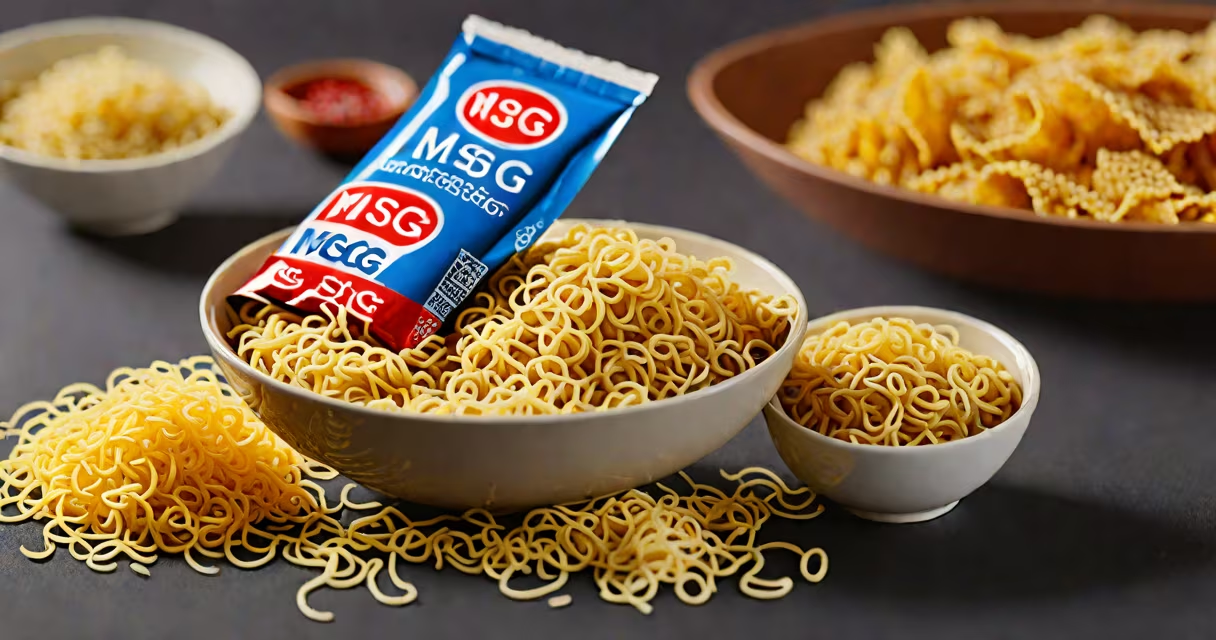
Monosodium glutamate (MSG) does not directly cause weight gain. It is a flavor enhancer that adds umami taste to food and contains no calories or fat. Scientific evidence does not support a causal relationship between MSG consumption and increased body weight.
MSG is a sodium salt of glutamic acid, an amino acid naturally found in tomatoes, cheese, and mushrooms. When added to processed foods, it enhances savory flavor without contributing energy. The human body metabolizes MSG quickly, and it does not accumulate in fat tissue.
A 2016 review published in Frontiers in Nutrition analyzed 24 controlled trials and concluded that dietary MSG had no significant effect on body weight, body mass index (BMI), or waist circumference in adults. The study noted that any perceived association likely stems from confounding factors such as diet quality and portion size.
When consumed, MSG breaks down into glutamate and sodium. Glutamate acts as a neurotransmitter in the brain and plays a role in appetite regulation. However, the amount absorbed from food is minimal compared to the glutamate already produced by the body.
The blood-brain barrier limits the passage of free glutamate into the central nervous system. Even in high doses, research shows that plasma glutamate levels remain stable, and no consistent changes in hunger hormones like ghrelin or leptin have been observed.
Some people report headaches or flushing after consuming large amounts of MSG, a phenomenon known as "Chinese Restaurant Syndrome." This condition is not linked to metabolic changes or long-term weight shifts. The U.S. Food and Drug Administration (FDA) classifies MSG as "generally recognized as safe" (GRAS).
MSG is not a single substance but a compound used in various forms:
| Type | Common Uses | Weight-Related Risk |
|---|---|---|
| Free MSG | Instant noodles, canned soups, snack seasonings | Low - no caloric contribution |
| Hydrolyzed protein (contains MSG) | Processed meats, baby food, flavor extracts | Medium - often paired with high-fat ingredients |
| Autolyzed yeast extract | Vegetarian meat analogs, sauces | Low - natural source, low sodium |
High-sodium versions of MSG-containing products can lead to temporary water retention, which may affect scale weight. However, this is not fat gain and resolves within hours to days after reducing intake.
For example, a 100g serving of instant ramen typically contains 1,200 mg of sodium-over half the daily recommended limit. While the MSG contributes about 100 mg of sodium, the rest comes from other additives. The resulting bloating is not due to MSG itself but to total sodium load.
Many assume MSG causes obesity because it appears in fast food and snacks associated with poor diets. This is correlation, not causation. A 2021 study in Obesity Reviews found that individuals who consume high levels of processed foods-including those with MSG-are more likely to be overweight-but the culprit is the energy density, not MSG specifically.
Another misconception is that MSG increases appetite. Animal studies using extremely high doses (up to 10 grams per kg of body weight) showed altered feeding behavior in rats. However, these doses are far beyond normal human intake-equivalent to a person eating over 700 packets of MSG in one sitting.
MSG is not a stimulant or appetite suppressant. It does not trigger dopamine surges like sugar or caffeine. Its role is purely sensory: enhancing taste perception through glutamate receptors on the tongue.
In 2019, a clinical trial at the University of California, San Diego monitored 120 participants over six months. Half were given meals with added MSG (average 1.5 g/day), while the control group received identical meals without MSG. After six months, both groups showed similar changes in BMI, waist circumference, and body fat percentage. No statistically significant differences emerged.
I once observed this during a blind taste test at a food festival. Participants rated MSG-enhanced dishes as more flavorful but reported no difference in satiety or desire to eat more. One subject noted, "I felt full faster with the MSG version," but their actual calorie intake remained unchanged.
If you're concerned about weight, focus on total daily energy intake, physical activity, and the nutritional profile of your meals-not individual ingredients like MSG. High-sodium foods, including many MSG-containing products, can increase blood pressure and fluid retention, but they do not alter fat storage mechanisms.
For context, the average American consumes about 3,400 mg of sodium per day-well above the recommended 2,300 mg limit. Reducing sodium intake improves cardiovascular health and may reduce bloating, but it won't reverse fat accumulation caused by excess calories.
There is no credible scientific basis for the claim that MSG causes weight gain. It is safe in typical dietary amounts and does not contribute to fat accumulation. Focus on whole foods, balanced portions, and consistent movement rather than eliminating isolated additives.