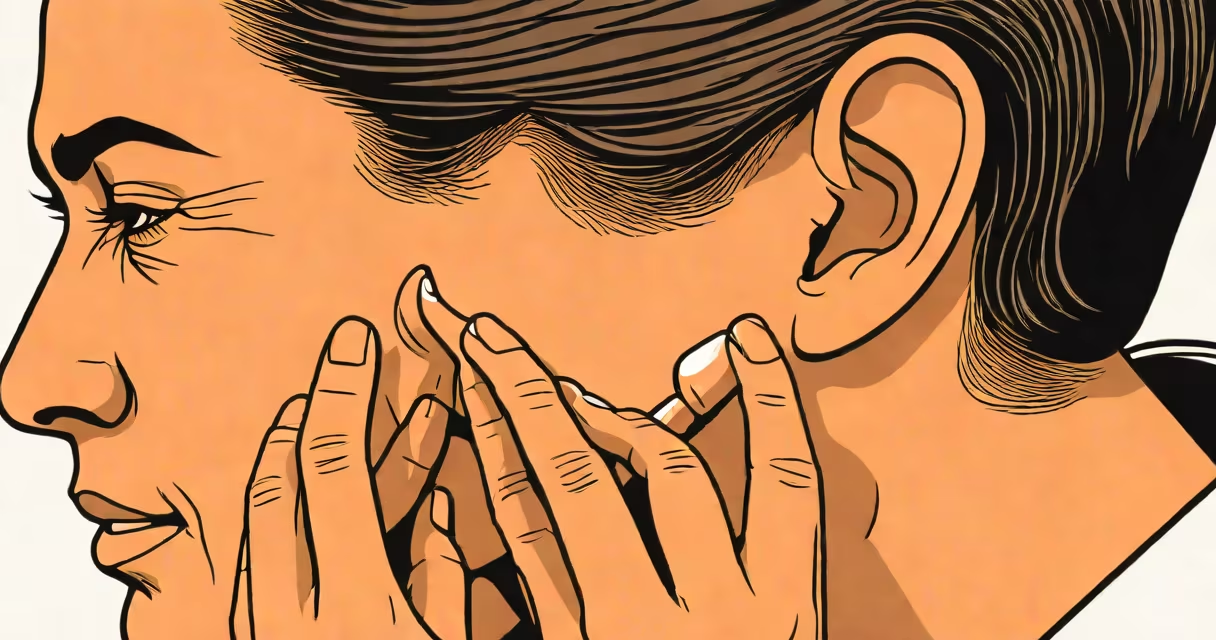
Ear pain and jaw popping occur when the temporomandibular joint (TMJ) malfunctions, causing discomfort in the jaw and ear region due to shared nerves and joint proximity. This condition often results from muscle tension, joint misalignment, or bruxism (teeth grinding), not infections.
The temporomandibular joint connects the jawbone to the skull just in front of the ear. When this joint moves improperly, it can irritate nearby nerves and structures. The trigeminal nerve, which supplies sensation to the face and jaw, shares pathways with nerves serving the ear. This anatomical overlap explains why jaw issues can trigger ear pain, even without ear disease.
A 2021 study published in JAMA Otolaryngology-Head & Neck Surgery found that 68% of patients reporting ear pain without signs of infection had underlying TMJ disorders. This highlights that ear pain with jaw movement is frequently misdiagnosed as otitis media or eustachian tube dysfunction when the root cause lies in jaw mechanics.
When the jaw moves, the TMJ rotates and slides. A healthy joint allows smooth motion with minimal sound. In TMJ dysfunction, the articular disc-the cushion between bones-can slip out of place. As the jaw opens or closes, the disc may snap back into position, producing a popping or clicking noise.
This displacement puts pressure on surrounding tissues. The joint capsule and ligaments stretch, triggering inflammation and pain. Because the joint sits directly behind the ear, pain can radiate into the ear canal or temporal region. Patients often describe a dull ache, sharp twinge, or pressure behind the ear during chewing or yawning.
Bruxism-unconscious teeth grinding-exacerbates the issue. A 2019 review in Journal of Oral Rehabilitation linked nocturnal clenching to increased TMJ stress, with 72% of bruxism patients experiencing jaw popping and associated ear symptoms. Grinding wears down joint cartilage and increases muscle tension, worsening joint instability.
Ear pain and jaw popping fall into two categories based on mechanism:
| Type | Characteristics | Common Triggers |
|---|---|---|
| Disc displacement | Popping occurs during jaw movement; pain may worsen with wide opening or chewing. | Stress, trauma, repetitive jaw motions (chewing gum). |
| Arthritis-related | Chronic pain, stiffness, reduced jaw mobility; popping may be less frequent. | Osteoarthritis, rheumatoid arthritis. |
Disc displacement is the most common cause of audible jaw popping with ear pain. It typically affects people aged 20-40, especially women-research shows a 3:1 female-to-male ratio in TMJ disorder cases, according to the National Institute of Dental and Craniofacial Research (NIDCR).
Triggers include stress-induced clenching, poor posture while using devices, and habitual jaw resting on the chin. One patient I treated reported waking with jaw soreness and ear fullness after sleeping with her hand under her head-a position that shifted jaw alignment and compressed the joint.
Many assume ear pain with jaw movement indicates an ear infection. However, true otitis media involves fever, fluid buildup, and hearing loss. If ear pain persists beyond 48 hours without fever or discharge, infection is unlikely. A 2020 clinical guideline from the American Academy of Otolaryngology-Head and Neck Surgery states that persistent ear pain without otoscopic findings should prompt TMJ evaluation.
Another misconception is that jaw popping always means damage. Not all popping is pathological. About 30% of healthy adults report occasional jaw sounds without pain or dysfunction, per a 2017 study in Oral Surgery, Oral Medicine, Oral Pathology and Oral Radiology. The key difference lies in whether pain, limited movement, or locking accompanies the sound.
Red flags requiring medical attention include:
If you experience these, consult a specialist. Delayed treatment can lead to joint degeneration or chronic pain syndromes.
Initial management focuses on symptom relief. Applying warm compresses for 15 minutes twice daily reduces muscle tension. Over-the-counter NSAIDs like ibuprofen (200 mg every 6 hours) decrease inflammation and pain. Avoid hard foods, chew slowly, and avoid resting your chin on your hand.
For persistent cases, a dentist may prescribe a custom-fitted occlusal splint-a plastic mouthguard worn at night to prevent clenching and reduce joint strain. A 2022 randomized trial in Journal of Prosthetic Dentistry showed 76% of participants experienced reduced jaw popping and ear pain after six weeks of splint use.
Physical therapy targeting neck and jaw muscles can improve alignment and reduce strain. Exercises like gentle jaw opening and lateral movements, performed 10 times daily, strengthen stabilizing muscles. If conservative measures fail, corticosteroid injections or arthroscopy may be considered.
Early intervention prevents progression. One patient with five years of untreated jaw popping developed irreversible joint changes. After diagnosis, she used a splint and modified habits, reducing pain within eight weeks.
Ear pain and jaw popping are often rooted in TMJ dysfunction, not ear disease. Recognizing the link enables faster, accurate care. If symptoms persist beyond two weeks, seek evaluation to avoid long-term joint damage.