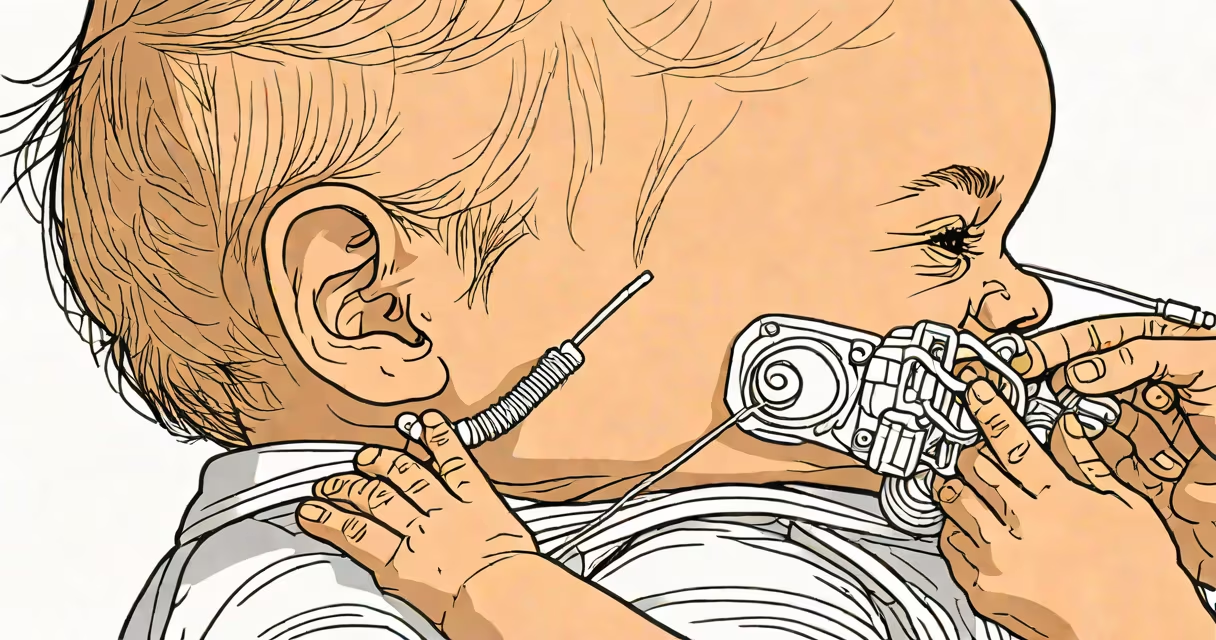
Ear infection or teething refers to two distinct conditions that often cause overlapping symptoms in infants and young children, making accurate diagnosis challenging without clinical evaluation. Ear infections involve inflammation or fluid buildup in the middle ear, typically due to viral or bacterial causes, while teething is the natural process of teeth emerging through the gums, usually beginning around 4-7 months of age.
Both conditions can trigger irritability, disrupted sleep, increased fussiness, and pulling at the ears. However, they differ in underlying cause, duration, and response to treatment. Misidentifying one for the other may delay proper care, especially when fever, ear discharge, or persistent crying occur.
An ear infection occurs when fluid accumulates behind the eardrum due to blocked Eustachian tubes, which regulate pressure and drain fluid from the middle ear. This blockage often follows a cold or upper respiratory infection. Bacteria such as Streptococcus pneumoniae or Haemophilus influenzae can then invade the trapped fluid, leading to infection. Symptoms include ear pain, fever above 100.4°F (38°C), and hearing changes.
Teething, conversely, results from the physical eruption of primary teeth through the gum tissue. As the tooth pushes through, it causes localized inflammation, swelling, and mild pain. Saliva production increases, sometimes leading to drooling and rash around the mouth. Teething pain is typically intermittent and peaks during tooth emergence, lasting several days per tooth.
A study published in Pediatrics found that 60% of parents incorrectly attributed fever to teething, though fever is not a normal part of teething and should prompt evaluation for infection. True teething rarely causes temperatures above 100.4°F (38°C).
Ear infections fall into two main categories: acute otitis media (AOM), involving sudden onset with fluid and pain, and otitis media with effusion (OME), where fluid remains after the initial infection resolves. AOM is most common in children under 5, with peak incidence between 6 months and 2 years.
Teething typically begins with the lower central incisors around 6 months, followed by upper central incisors, lateral incisors, and then molars. The process continues until about age 3. Each tooth takes 3-5 days of active eruption, with symptoms peaking during that window.
| Symptom | Ear Infection | Teething |
|---|---|---|
| Fever | Common (often >100.4°F) | Rare (not expected) |
| Ear Pulling | Often bilateral, persistent | Intermittent, one ear |
| Discharge | Yes (pus or blood) | No |
| Loss of Appetite | Yes (due to pain) | Mild (due to sore gums) |
| Diarrhea | No | Occasional (saliva swallowing) |
One non-obvious distinction: ear infections often worsen at night due to changes in pressure and reduced mobility, while teething pain tends to increase during waking hours when the child is more active and sensitive to stimuli.
Ear infections are more common in infants because their Eustachian tubes are shorter, flatter, and less efficient at draining fluid. This anatomical difference increases the risk of fluid entrapment and subsequent infection. Children in daycare settings have higher rates due to frequent exposure to respiratory viruses.
Teething is universal among human infants and typically begins between 4 and 7 months. It is not influenced by external factors but can be exacerbated by oral exploration, biting, and chewing on hard objects.
Parents often confuse the two because both involve similar behaviors: crying, refusal to eat, and touching the ear. However, the presence of fever, ear drainage, or prolonged irritability beyond a few days suggests infection rather than teething.
Many caregivers assume that any fussiness in a baby is due to teething. This belief leads to delayed treatment for actual ear infections. According to the American Academy of Pediatrics, untreated ear infections can lead to hearing loss, speech delays, and rare complications like mastoiditis.
Another misconception is that teething causes diarrhea. While excess saliva can lead to looser stools, direct causation is unsupported by evidence. A 2016 review in BMJ Evidence-Based Medicine concluded that teething does not affect bowel movements.
I once observed a 9-month-old infant who had a 102°F fever, was pulling at one ear, and had clear fluid leaking from the ear canal. The parents assumed it was teething. After examination, the child was diagnosed with acute otitis media and treated with antibiotics. The fever resolved within 48 hours.
Consult a healthcare provider if your child has a fever above 100.4°F (38°C), ear drainage, persistent ear pulling for more than 24 hours, or signs of hearing difficulty. These indicate a possible ear infection requiring evaluation.
Recognizing the differences between ear infection or teething prevents unnecessary suffering and ensures timely intervention. Always prioritize clinical assessment when symptoms persist or escalate.