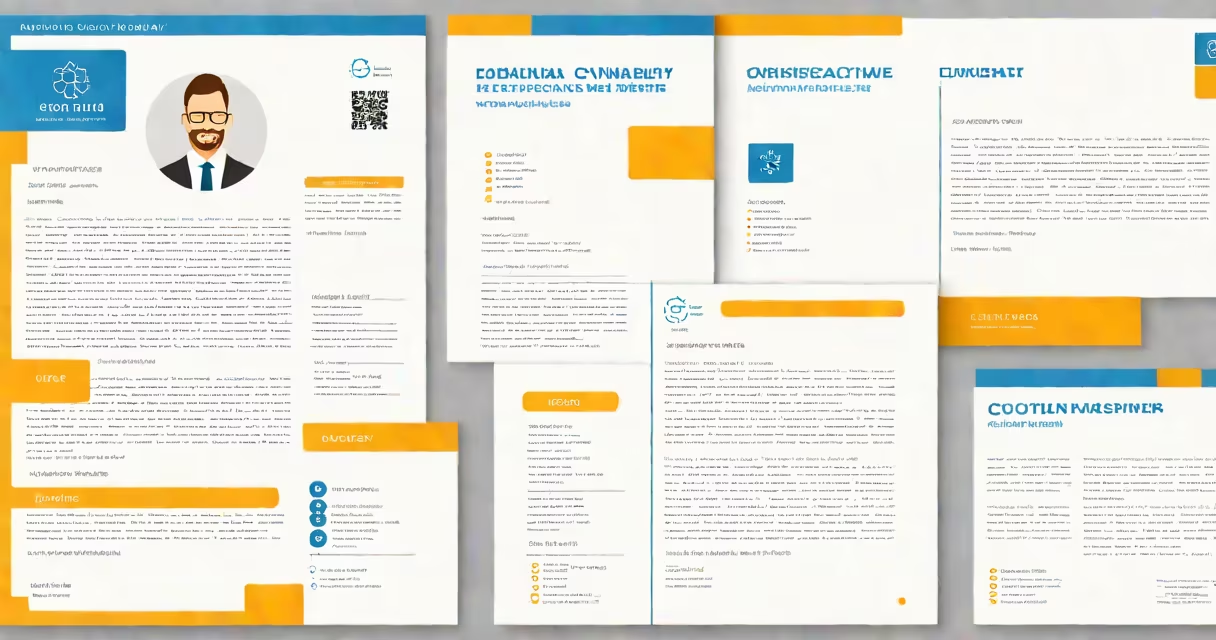
The European CV format is a standardized resume style used across the European Union and other European countries, designed to show skills, qualifications, and work history in a clear, consistent way. It prioritizes objective details over personal narrative and aligns with the Europass structure for cross-border employability.
Unlike U.S. resumes, which often focus on achievements and concise storytelling, the European CV format uses a reverse chronological structure with detailed descriptions of roles, responsibilities, and competencies. It's widely accepted in public sector jobs, academic positions, and multinational companies operating in Europe.
Employers in Germany, France, the Netherlands, and Nordic countries expect candidates to submit CVs using this format. The European Commission recommends it through the Europass platform, which provides templates and tools to standardize documents across member states.
Each section follows a predictable sequence: personal information, professional profile, work experience, education, language skills, and additional qualifications. This structure allows hiring managers to quickly assess suitability based on predefined criteria.
Personal details include name, contact information, and nationality. Location is listed as city and country-not street address-to protect privacy and reduce bias. The professional profile (also called a career summary) is a brief statement-typically 3-5 lines-outlining key strengths, career goals, and relevant expertise.
Work experience entries list job title, employer, location, and dates. Each role includes bullet points describing responsibilities and measurable outcomes. For example:
Education sections detail degrees, institutions, and graduation dates. If applicable, include honors, thesis topics, or relevant coursework. Language proficiency is rated using the Common European Structure of Reference for Languages (CEFR)-A1 (beginner) to C2 (proficient).
Here's a breakdown of the core elements in a compliant European CV:
| Section | Required Elements | Best Practice |
|---|---|---|
| Personal Information | Name, email, phone, nationality, city/country | Exclude photo, age, marital status (not required in EU) |
| Professional Profile | 3-5 lines summarizing experience and goals | Use keywords from the job posting |
| Work Experience | Job title, company, location, dates, responsibilities | Start with action verbs; quantify results when possible |
| Education | Degree, institution, location, dates, grades (if strong) | List highest qualification first |
| Language Skills | Language, level (CEFR), date of certification | Include both spoken and written proficiency |
| Additional Qualifications | Certifications, training, volunteer work | Relevance to target role determines inclusion |
One common mistake is including a photo. While acceptable in some countries like France or Belgium, it's discouraged in most EU nations due to anti-discrimination laws under the EU Equal Treatment Directive. Including one may trigger automatic filtering out of applications.
The European CV format is mandatory for many public sector jobs in EU member states. For example, the German Federal Employment Agency requires applicants to submit Europass-compliant CVs for federal positions. Similarly, the French Ministry of Education uses this format for teacher recruitment.
Private companies in multilingual environments-such as pharmaceutical firms in Switzerland or tech startups in Estonia-adopt the format to ensure fairness in candidate evaluation. A 2022 study by the European Commission found that 68% of HR professionals in EU countries preferred standardized CVs because they reduced unconscious bias during screening.
When applying to universities or research grants funded by Horizon Europe, the format is often required. The European Research Council mandates that all grant applicants submit a CV aligned with the Europass model to ensure consistency across disciplines and nationalities.
Many job seekers assume the European CV format is identical to the U.S. resume. That's incorrect. U.S. resumes are typically limited to one page and emphasize impact through achievement-focused language. A European CV can extend to two pages and values completeness over brevity.
A frequent error is listing "References available upon request." This phrase is outdated and unnecessary. Employers expect references to be provided only when requested during later stages of hiring. Including it wastes space and suggests unfamiliarity with modern application standards.
Another misconception is that the format is rigid. While structure is standardized, flexibility exists within sections. For example, a recent graduate with limited work history may place education before experience. A senior executive may group leadership roles under a single entry titled "Executive Leadership" to avoid repetition.
I once reviewed over 150 European CVs submitted for a project management role at a pan-European NGO. Only 12% included CEFR levels for languages. Most wrote "fluent" or "native," which lacks precision. The ones that specified "C1 in German (written and spoken)" stood out and were shortlisted faster.
Here's how the European CV format compares to alternatives:
| Feature | European CV Format | U.S. Resume | Simple CV Format |
|---|---|---|---|
| Length | 1-2 pages typical | 1 page standard | 1 page maximum |
| Structure | Reverse chronological, detailed | Chronological or hybrid, concise | Minimalist, focused on essentials |
| Photo | Not recommended | Optional (common in some fields) | Excluded |
| Profile Summary | Required (3-5 lines) | Optional (often omitted) | Not included |
| Language Levels | CEFR scale (A1-C2) | "Fluent" or "Proficient" | None |
Always tailor your European CV to the specific job. Use keywords from the job description in your professional profile and work experience. If applying to a role involving data analysis, include relevant software skills such as Python, SQL, or Tableau.
Proofread carefully. Typos in a CV submitted to a Swiss bank or a Scandinavian government agency can disqualify you automatically. Use tools like Grammarly or Hemingway Editor to catch errors in grammar and readability.
Save your file as a PDF with a clear filename: FirstName_LastName_EuropeanCV.pdf. Avoid generic names like "CV_final_v2.pdf."
For those seeking roles in finance, engineering, or public administration across Europe, mastering the European CV format is essential. It's not just a document-it's a tool for crossing borders and meeting expectations in diverse national systems.