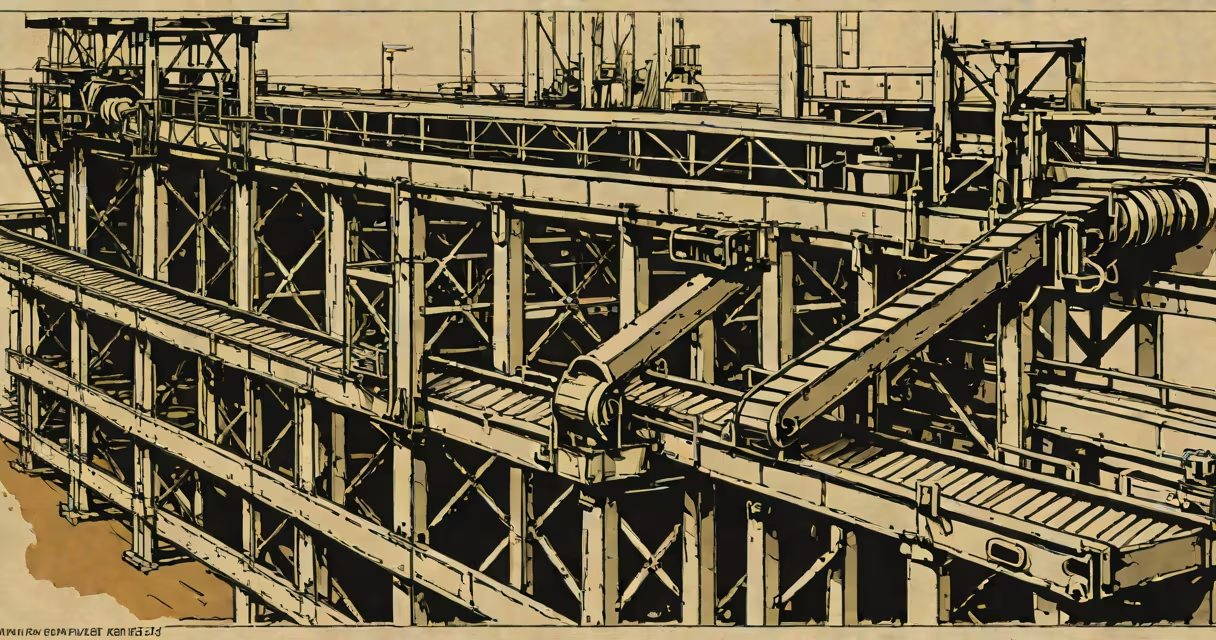
The ex2300 c 12t is a heavy-duty, multi-ply rubber conveyor belt rated for continuous operation in demanding industrial environments such as mining, aggregate processing, and bulk material handling. It features a 12-ply construction with a 2300 mm width and a 12 mm thickness, engineered to withstand high tension, abrasion, and impact loads.
This belt is part of a standardized product line used globally in material transport systems. Its designation follows a common industrial nomenclature: "ex" indicates the series, "2300" denotes the width in millimeters, "c" specifies the cover compound type (crumb rubber with enhanced wear resistance), and "12t" refers to the thickness in millimeters. The belt operates reliably under sustained loads exceeding 100 tons per hour in typical applications.
Manufactured by companies like Fenner Dunlop and ContiTech, the ex2300 c 12t is commonly specified in conveyor systems where downtime is unacceptable. It supports belt speeds up to 3.5 m/s and can handle materials like crushed stone, coal, and ore with minimal degradation over time. The belt's tensile strength exceeds 180 kN/m, ensuring stability during long-distance transport.
The ex2300 c 12t functions as a continuous loop between drive and tail pulleys, powered by electric motors through gearboxes. Material is loaded onto the belt at the feed point and moves along the conveyor's path until discharged at the end. The belt's structure consists of multiple rubberized textile plies embedded with polyester or nylon cords, which provide tensile strength and dimensional stability.
Each ply is vulcanized under heat and pressure to bond the layers into a single unit. The outer cover layer is made from a specialized synthetic rubber blend-typically EPDM or SBR-formulated to resist abrasion, oil, moisture, and temperature extremes. The inner carcass resists stretching and maintains alignment on rollers, preventing slippage and edge wear.
For example, in a limestone quarry in Nevada, an ex2300 c 12t belt runs 18 hours daily, transporting 250 tonnes of crushed rock per shift. The belt's anti-static properties prevent spark generation in dusty environments, reducing fire risk. Its modular design allows for quick splice repairs using hot vulcanizing techniques, minimizing production interruptions.
The ex2300 c 12t belongs to the category of solid woven belts with a reinforced core. It is not a modular or cleated belt, meaning it lacks discrete sections or raised edges for material retention. Instead, it relies on proper loading geometry and side skirts to contain loose material.
| Feature | ex2300 c 12t Specification |
|---|---|
| Width | 2300 mm |
| Thickness | 12 mm |
| Ply Count | 12 plies |
| Cover Compound | c-type (crumb rubber, wear-resistant) |
| Tensile Strength | ≥180 kN/m |
| Max Speed | 3.5 m/s |
Alternative variants exist within the same product family. For instance, the ex2300 c 10t has the same width and compound but only 10 plies, making it lighter and less durable. The ex2300 d 12t uses a different cover compound (d-type) optimized for high-temperature environments, such as those near kilns in cement plants.
A key distinction often missed is that the "c" in ex2300 c 12t does not stand for "conveyor." It refers specifically to the rubber compound grade. Misinterpreting this leads to incorrect replacements. Using a d-type belt in a cold environment causes cracking; using a c-type in high heat reduces lifespan by up to 40%, according to ContiTech technical documentation.
The ex2300 c 12t is deployed in continuous-flow industrial settings requiring high throughput and reliability. It is standard equipment in large-scale mining operations, where it transports ore from extraction sites to crushing stations. In a copper mine in Chile, four ex2300 c 12t belts operate simultaneously across a 1.2 km long conveyor network, moving 1,800 tons of ore daily.
It is also used in port terminals for unloading bulk cargo from ships. At the Port of Rotterdam, ex2300 c 12t belts move grain and fertilizer from dockside silos to rail transfer points. Their resistance to UV exposure and saltwater spray ensures longevity in coastal conditions.
One non-obvious fact: despite its name, the ex2300 c 12t is not limited to horizontal transport. It performs effectively on inclines up to 18 degrees when paired with proper idler spacing and anti-slip drives. This capability expands its use beyond flat conveyors into vertical material lift systems.
The ex2300 c 12t is frequently mistaken for modular plastic belts used in food processing or packaging lines. Those belts have interlocking plastic segments and are rated for lower loads and temperatures. They are not suitable for heavy industrial use and fail rapidly under the stress of rock or ore transport.
Another confusion arises with "ex"-series belts from different manufacturers. While the naming convention appears similar, each brand uses proprietary standards. A belt labeled ex2300 c 12t from one supplier may not match the dimensions or performance of another's version. Always verify against official engineering drawings and material safety data sheets (MSDS).
I once inspected a conveyor failure at a sand processing plant where a team had replaced an ex2300 c 12t with a generic 2300 mm belt from a local distributor. The new belt lacked the required tensile strength and failed after 72 hours. The root cause was a mismatch in ply count and cover compound-details not visible without technical specs.
According to Fenner Dunlop's engineering guidelines, the ex2300 c 12t meets ISO 21183-1 standards for conveyor belt durability and safety. These standards define minimum requirements for joint strength, elongation under load, and fire resistance-features critical in regulated industrial zones.
The ex2300 c 12t is not a consumer product. It is a precision-engineered component used in mission-critical infrastructure. Its performance hinges on correct installation, maintenance, and alignment. When properly maintained, it achieves average lifespans of 6 to 8 years in continuous duty cycles.
Understanding the ex2300 c 12t means recognizing it as a system element-not just a belt. Its success depends on integration with pulleys, idlers, tensioners, and control systems. Ignoring any part of the chain compromises the entire operation.