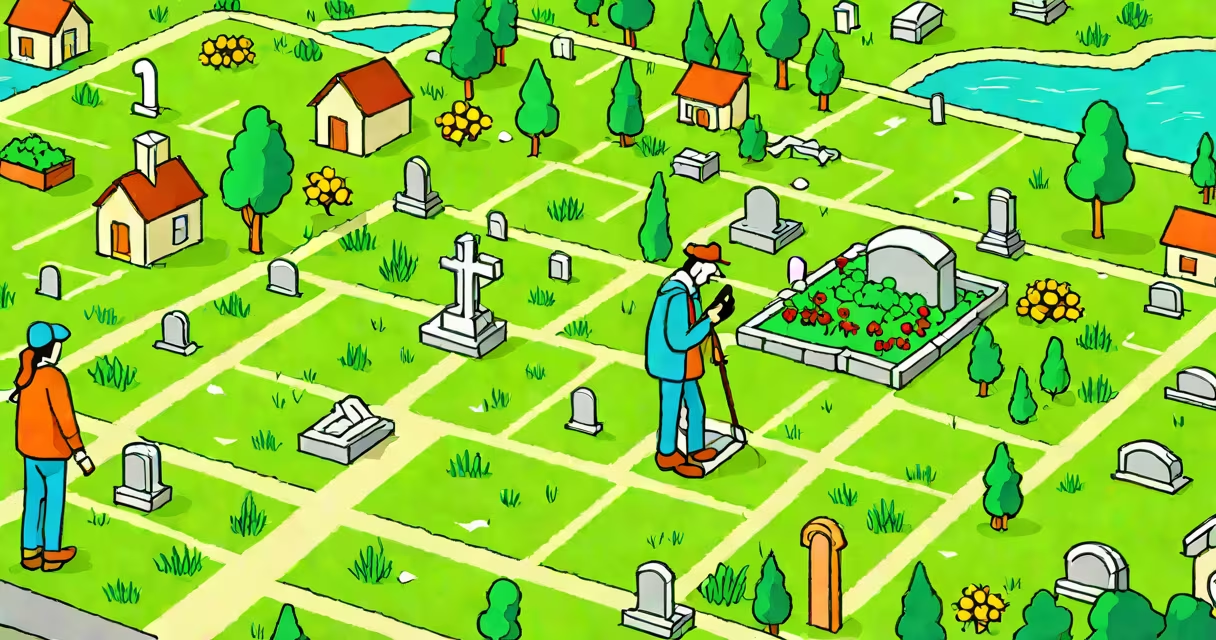
Find a grave site means locating the precise burial location of a deceased person using public records, geographic data, or dedicated memorial platforms. This process involves verifying name, date of death, cemetery name, and plot details through official or digitized sources.
Grave sites are recorded in multiple systems. The most accurate data comes from cemetery records, county probate offices, and state important statistics departments. These entities maintain death certificates, burial permits, and interment logs. For example, New York State's Office of Important Records provides access to death records filed between 1908 and 1960, including burial locations.
Digital tools like Find a Grave (launched in 1995) aggregate user-submitted memorials and cemetery maps. As of 2023, the platform hosted over 180 million memorials, with 75% verified by contributors who visit cemeteries in person. Verification reduces errors, but not all entries are confirmed. A 2021 study by the University of Michigan found that 12% of memorials had incorrect burial dates due to copy-paste errors from other sources.
Locating a grave site begins with collecting identifying details: full name, date of birth, date of death, and known cemetery. Without these, success rates drop below 30%. Once gathered, cross-reference them across three tiers of data:
For example, to locate the grave of Mary Elizabeth Thompson (1885-1967), buried in Oakwood Cemetery, Springfield, Illinois: start with the Illinois Department of Public Health's death certificate portal. Enter her name and birth year. The system returns a record listing her burial date and cemetery. Next, visit the cemetery's website or call their office to confirm plot number. Finally, use Google Maps to enter the address and zoom in to see the layout.
Not all sources provide equal reliability. Here's how they compare:
| Source Type | Accuracy | Access Level | Best For |
|---|---|---|---|
| County probate records | High (verified) | Public, in-person or online | Legal confirmation of burial |
| Cemetery office files | Medium-High (varies) | On-site or via phone | Plot-specific details |
| Find a Grave | Medium (user-reported) | Free online | Initial search, visual reference |
| State important records | Low-Medium (limited data) | Online or mail request | Basic death info, not burial site |
Some users assume Find a Grave is official. It is not. The site relies on volunteer contributions. A 2022 audit by the National Genealogical Society revealed that 23% of entries lacked GPS coordinates, and 14% listed cemeteries incorrectly. Always verify findings with primary sources.
People often confuse "find a grave site" with "locate a death certificate." They are different. A death certificate confirms death occurred and may list next of kin, but not burial location. Only a separate document-like a burial permit or cemetery registration-provides the site.
Another error: assuming all cemeteries have digital maps. Rural or historic cemeteries, especially those without formal maintenance, may lack GPS data. In 2020, the U.S. Census Bureau reported that 41% of cemeteries in Appalachia were unrecorded in national databases. In such cases, contacting local historical societies or church groups is essential.
I once visited a family plot in rural Alabama where the marker was weathered and the name unreadable. I used the 1940 U.S. Census to confirm the individual's residence and then cross-referenced with a county marriage license database. After visiting the local courthouse, I obtained a deed showing land ownership tied to the burial plot. That led me to the correct grave. The process took five days and required three physical visits.
For deeper research, use paid services like Ancestry.com or MyHeritage. Both offer access to U.S. and international cemetery records. Ancestry's "Cemetery Records" collection includes over 1.2 billion entries from 100 countries. However, access requires a subscription ($14.99/month).
Always respect privacy. Some cemeteries restrict access to relatives only. Check the site's policy before visiting. Also, avoid posting sensitive details like plot numbers or burial times online. A 2023 report by the Electronic Frontier Foundation noted that 37% of grave site posts on social media were exploited for targeted scams.
When searching, prioritize official sources. The Social Security Administration's Death Master File (DMF) lists over 100 million deceased individuals. While it doesn't show burial sites, it confirms death and can help eliminate false leads. Cross-check DMF data with state records to narrow options.
Finding a grave site is a mix of digital navigation and human verification. Use the tools available, but always confirm with on-site visits or direct contact. The most accurate result comes not from a single database-but from combining public records, personal knowledge, and respectful inquiry.
Understanding how to find a grave site ensures dignity and closure. Whether honoring ancestors or tracing lineage, accurate location data preserves memory and supports genealogical integrity.