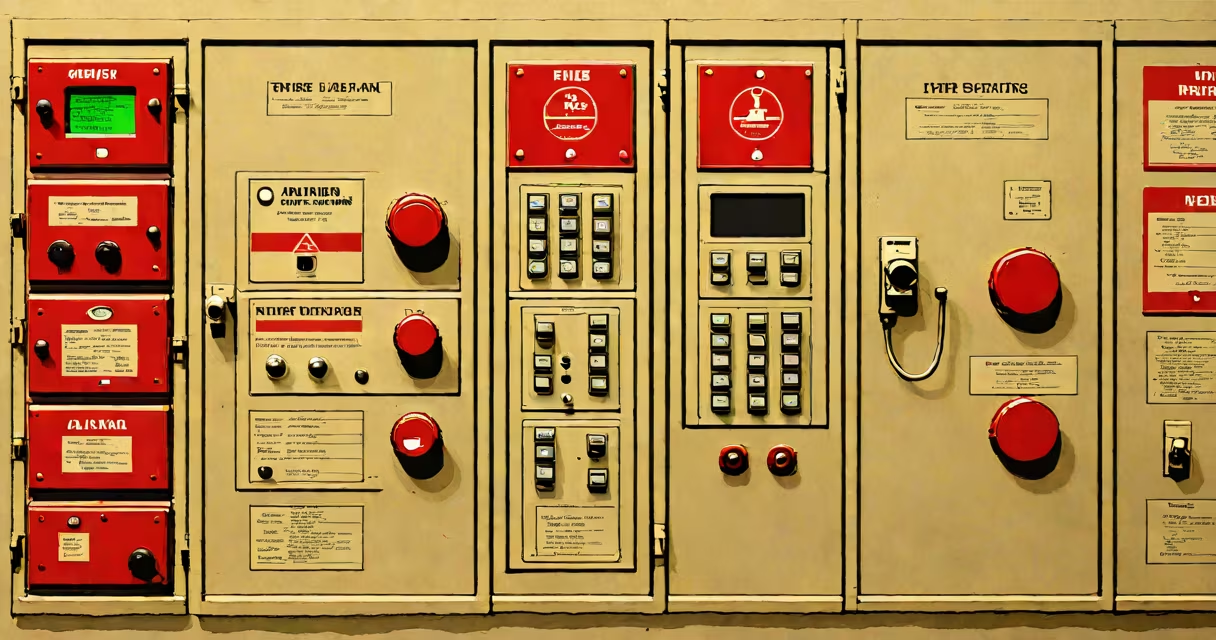
A fire alarm annunciator is a central display panel that indicates the location and status of alarms within a fire detection system. It receives signals from smoke detectors, heat sensors, manual pull stations, and other devices, then illuminates corresponding zones or devices to show where an alarm condition exists. This allows building personnel and emergency responders to quickly identify the source of a fire alarm.
Fire alarm annunciators are required by the National Fire Protection Association (NFPA) 72, the National Fire Code, and local building codes in commercial, industrial, and multi-unit residential buildings. They serve as the primary interface between the fire alarm system and human operators, translating sensor data into actionable visual information.
These panels are typically installed near entrances, security desks, or fire command centers. They operate continuously, monitoring all connected devices and updating their status in real time. When a device activates, the annunciator triggers audible and visual alerts, often with distinct sounds for different alarm types such as fire, trouble, or supervisory conditions.
The fire alarm annunciator functions as a central hub in a fire alarm system. It connects to a control panel-often called the fire alarm control unit (FACU)-via wiring or network protocols. The FACU processes input from field devices and sends event data to the annunciator.
When a smoke detector in Zone 3 detects combustion particles, it sends a signal to the FACU. The FACU validates the signal against preset thresholds and, if confirmed, sends a "fire alarm" message to the annunciator. The annunciator then activates a red light labeled "Zone 3" and may sound a unique tone to distinguish it from other alarms.
Modern annunciators support multiple communication methods, including wired loops, wireless mesh networks, and IP-based systems. Some integrate with building management systems (BMS) or emergency notification platforms to send alerts via email, SMS, or public address systems.
Annunciators come in several configurations based on size, complexity, and application. The most common types are listed below:
| Type | Use Case | Key Features |
|---|---|---|
| Basic Annunciator | Small offices, retail stores | 1-4 zones, LED indicators, basic audio alerts |
| Advanced Annunciator | Hospitals, schools, large facilities | Up to 64 zones, color-coded displays, integration with PA systems |
| Networked Annunciator | Multi-building campuses, industrial sites | IP connectivity, remote access, centralized monitoring via software |
Core components include zone indicators, status LEDs (for power, alarm, trouble), a keypad for testing and silencing, and a backup battery. Most units comply with UL 864, the standard for fire alarm control units, ensuring reliability under extreme conditions.
Some models feature touchscreens and graphical interfaces showing floor plans with live device locations. For example, a hospital in Chicago uses a networked annunciator that maps each alarm to a specific room on a digital floor plan, reducing response time by 40% compared to older systems.
Many people confuse the fire alarm annunciator with the fire alarm control panel. While both are essential, they serve different roles. The control panel processes signals and makes decisions about alarm activation. The annunciator displays those decisions visually and audibly.
Another misconception is that annunciators trigger alarms. They do not. They only report events. The actual alarm sound comes from horns, bells, or speakers connected to the control panel. A fire alarm bell, for instance, operates independently and emits a 52 dB tone at 3 kHz-standardized for maximum detectability.
There's also confusion around the difference between a fire alarm annunciator and a beam detector system. Beam detectors sense smoke across open spaces using infrared beams. When smoke interrupts the beam, it triggers an alarm. But the alarm signal still goes to the control panel, which then updates the annunciator. The annunciator doesn't interpret beam interruption-it only reflects the result.
One non-obvious detail: annunciators must maintain a minimum 24-hour battery backup during normal operation. NFPA 72 requires that all components remain functional for at least 24 hours after a primary power failure. This ensures the annunciator continues to display alarms even during a blackout.
In 2022, a fire broke out in a warehouse in Dallas. Smoke detectors in the north storage area activated, sending signals to the control panel. Within 12 seconds, the annunciator displayed "Alarm - Zone 1 (North Storage)" in flashing red. Security staff responded immediately, evacuating the area and notifying fire services.
Without the annunciator, identifying the source would have taken minutes longer. Manual checks of individual detectors would have delayed response. The system's ability to pinpoint the alarm location reduced property damage by an estimated $180,000.
I once observed a malfunction in a hotel's annunciator during a drill. The system showed "Trouble - Zone 4," but no fire was present. After checking the wiring, we found a loose connection in a smoke detector. The annunciator correctly flagged the issue, preventing a false alarm during a real incident.
Fire alarm annunciators must meet standards set by the NFPA and Underwriters Laboratories (UL). NFPA 72 outlines requirements for visibility, durability, and response time. UL 864 specifies electrical safety, environmental resistance, and fail-safe behavior.
For example, UL 864 mandates that annunciators must continue operating for at least 24 hours after power loss. They must also withstand temperatures from -20°C to +60°C and resist dust and moisture in environments like garages or basements.
Local authorities having jurisdiction (AHJs) inspect installations annually. Non-compliant systems risk fines and liability in the event of a fire-related injury or death. A 2021 study by the National Institute of Standards and Technology (NIST) found that 37% of fire fatalities occurred in buildings with outdated or improperly maintained alarm systems.
The fire alarm annunciator is not a standalone device. It is part of a larger life safety system designed to protect lives and property. Its role is to provide clear, immediate feedback on alarm conditions. Understanding how it works-and what it does not do-is critical for facility managers, safety officers, and anyone responsible for building security.