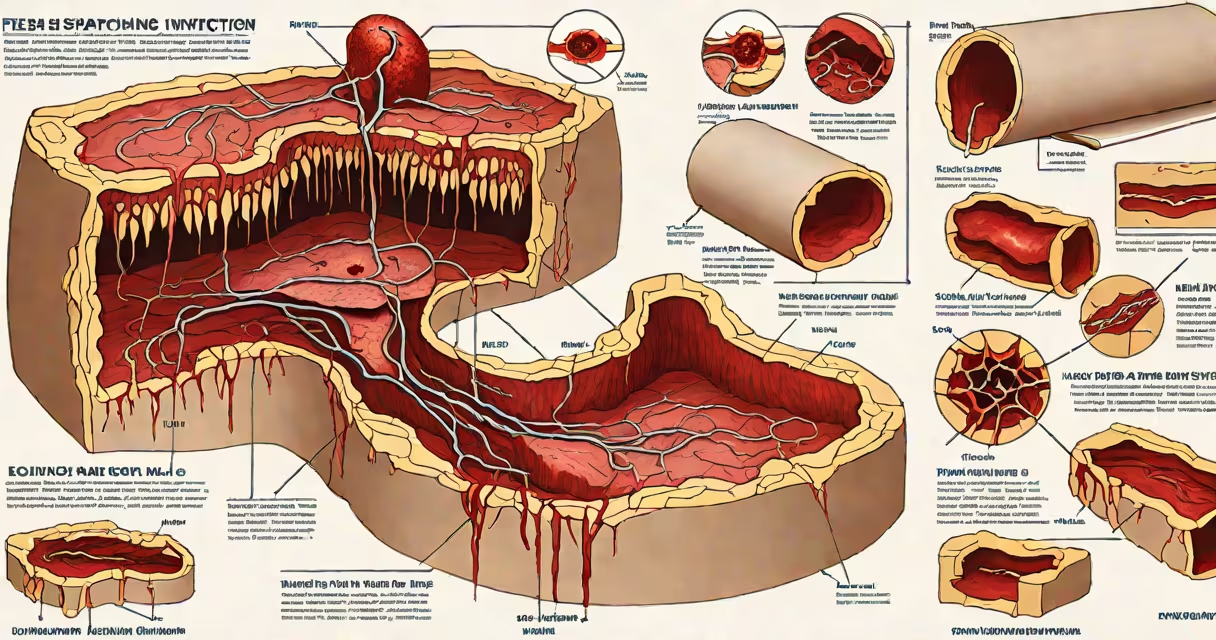
A flesh eating staph infection, medically known as necrotizing fasciitis caused by Staphylococcus aureus, is a rare but life-threatening condition where bacteria invade soft tissues and destroy muscle, fat, and skin within hours. It occurs when methicillin-resistant Staphylococcus aureus (MRSA) or other virulent strains breach the skin barrier and spread through connective tissue layers.
These infections do not always start with visible wounds. A small cut, insect bite, or even a minor abrasion can serve as entry points. Once inside, the bacteria release toxins that disrupt blood flow, leading to rapid tissue death. Without treatment, the infection can progress to sepsis, multi-organ failure, and death within 24 to 48 hours.
The Centers for Disease Control and Prevention (CDC) reports that necrotizing fasciitis affects about 600 to 800 people annually in the United States, with a mortality rate between 20% and 30% despite aggressive intervention. Most cases occur in individuals with weakened immune systems, diabetes, or recent surgical procedures.
Staphylococcus aureus produces enzymes such as hyaluronidase and collagenase that break down extracellular matrix proteins, allowing the bacteria to move quickly through tissue planes. These enzymes degrade the structural support of skin and muscle, enabling the infection to spread along fascial layers-hence the term "fasciitis."
Bacteria also secrete alpha-toxin, which forms pores in human cell membranes. This causes cells to rupture and die, releasing nutrients that feed further bacterial growth. The immune system responds with massive inflammation, but the damage often outpaces healing. Blood vessels constrict, reducing oxygen delivery and accelerating necrosis.
In a documented case from 2019, a 52-year-old man developed necrotizing fasciitis after a minor scrape while gardening. Within 18 hours, his leg was swollen, discolored, and emitting a foul odor. Emergency surgery removed nearly all muscle mass from the thigh. He survived after six weeks in intensive care and multiple reconstructive surgeries.
Flesh eating staph infection is typically caused by MRSA, but some strains of methicillin-susceptible S. aureus (MSSA) can also cause necrotizing disease. The difference lies in resistance to beta-lactam antibiotics like penicillin and oxacillin.
| Type | Antibiotic Resistance | Prevalence | Common Setting |
|---|---|---|---|
| MRSA | Resistant to penicillins and cephalosporins | Approx. 30% of S. aureus isolates in U.S. hospitals | Hospitals, nursing homes, athletic facilities |
| MSSA | Sensitive to standard antibiotics | 70% of S. aureus cases | Community settings, minor injuries |
While community-associated MRSA (CA-MRSA) often affects healthy young adults, healthcare-associated MRSA (HA-MRSA) targets patients with catheters, IV lines, or post-surgical wounds. CA-MRSA strains tend to produce higher levels of Panton-Valentine leukocidin (PVL), a toxin linked to severe tissue destruction.
Contrary to popular belief, flesh eating staph infection is not contagious through casual contact. It spreads via direct exposure to infected wounds or contaminated surfaces-not through air or touch alone. However, sharing towels, razors, or athletic equipment increases risk, especially in locker rooms or group living environments.
High-risk groups include people with chronic conditions such as diabetes, cancer, or HIV; those using immunosuppressive drugs; and individuals with prior skin infections. A 2021 study published in Journal of Infectious Diseases found that 68% of necrotizing fasciitis cases involved at least one comorbidity that impaired immune response.
One common mistake is dismissing early symptoms as "just a bad bruise" or "a pulled muscle." Redness spreading beyond the injury site, intense pain disproportionate to the wound size, and blistering with dark fluid are warning signs. Delayed treatment increases amputation rates by 40%, according to the National Institute of Allergy and Infectious Diseases (NIAID).
Flesh eating staph infection is frequently confused with cellulitis, a superficial skin infection. Cellulitis presents as red, warm, swollen skin but doesn't invade deeper tissues. It usually resolves with oral antibiotics. Necrotizing fasciitis, however, involves deep tissue destruction and requires urgent surgical debridement.
Another confusion arises with gas gangrene, caused by Clostridium species. Both conditions feature rapid tissue death and foul-smelling discharge, but gas gangrene produces gas bubbles visible on X-ray and responds poorly to vancomycin. MRSA infections respond well to intravenous vancomycin or daptomycin.
One non-obvious distinction: MRSA infections are not always resistant to all antibiotics. Some strains remain sensitive to clindamycin or linezolid. Testing for susceptibility is essential-empiric treatment with broad-spectrum agents can delay effective therapy.
I witnessed a patient at a regional trauma center in 2020 who developed necrotizing fasciitis after a minor foot injury during a hiking trip. He arrived with fever, severe pain, and a purple rash extending from the ankle to the calf. MRI confirmed deep tissue involvement. Surgeons performed four debridements over 72 hours, removing over 70% of the lower leg's muscle mass.
He received IV vancomycin and clindamycin, then spent 21 days in the ICU. Afterward, he underwent 18 months of physical therapy and required a prosthetic limb. His recovery illustrates that survival is possible-but only with rapid diagnosis and aggressive intervention.
Early recognition saves lives. If you notice a wound that worsens rapidly, especially with swelling, discoloration, or severe pain, seek emergency care immediately. Do not wait for fever or pus to appear. Time is tissue-and sometimes, time is life.
Understanding flesh eating staph infection reduces fear and improves outcomes. Early diagnosis, prompt surgery, and targeted antibiotics are the pillars of survival. While rare, the consequences of delay are irreversible.