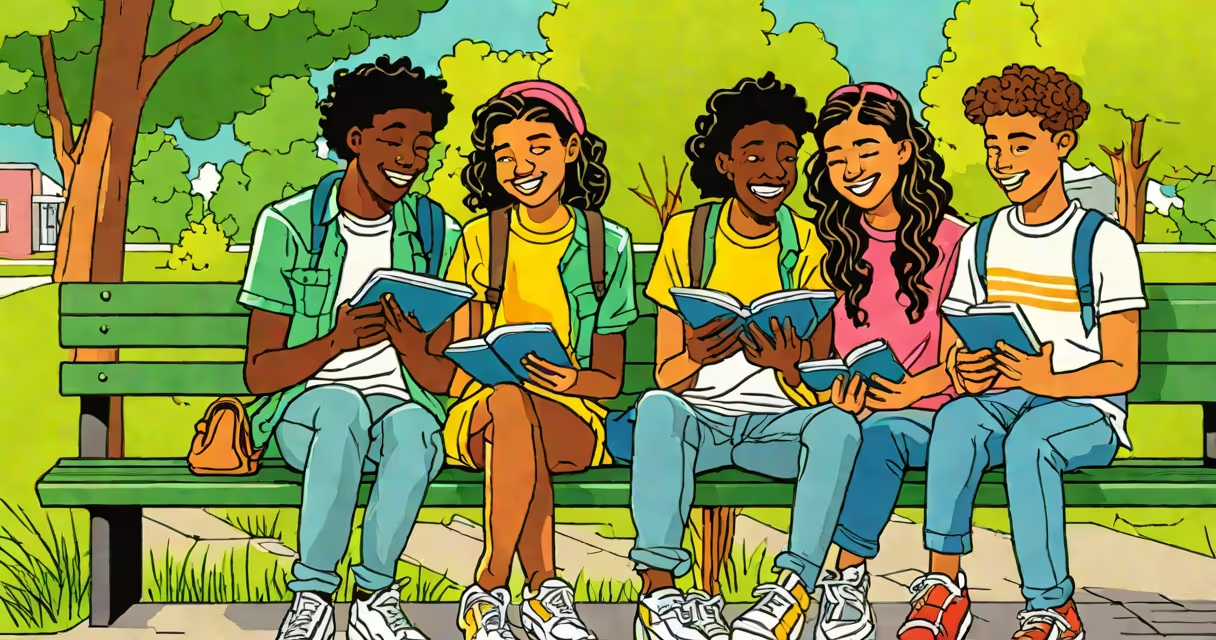
The five love languages for teenagers are ways young people express and receive affection through words of affirmation, physical touch, receiving gifts, acts of service, and quality time-based on Dr. Gary Chapman's structure adapted for adolescent emotional development.
Teenagers communicate care and connection using the same five core channels adults do, but their expressions often differ due to developmental stage, social context, and identity formation. These languages aren't about romantic relationships exclusively-they apply to friendships, family bonds, and peer interactions.
For example, a 15-year-old may show appreciation by texting a friend "I'm proud of you" after they gave a presentation-this is words of affirmation. Another may hug their sibling during a tough moment, demonstrating physical touch as emotional support. The same teenager might bring home a small snack from school for their younger brother, an act of service rooted in care.
Each language reflects a distinct way teens process emotional safety and connection. When a teen's primary love language is mismatched with how others express care, misunderstandings arise-even in close relationships.
Dr. Gary Chapman's original model identifies five universal modes of affection: words of affirmation, physical touch, receiving gifts, acts of service, and quality time. For teens, these manifest differently than in adults due to evolving emotional regulation, increased peer influence, and heightened sensitivity to social feedback.
A 2021 study published in the Journal of Youth and Adolescence found that adolescents who perceived their parents' affection as aligned with their primary love language reported higher levels of self-worth and lower anxiety. This confirms that matching emotional expression to individual needs reduces relational stress during adolescence.
Understanding which language dominates a teen's behavior helps families and educators respond appropriately. Below is a breakdown of how each language appears in teenage life.
| Love Language | Teen Behavior Example | Why It Matters |
|---|---|---|
| Words of Affirmation | Asking for validation after a performance; posting a photo with a caption like "This was my best night ever." | Teens high in this language seek verbal recognition. Silence feels like rejection. |
| Physical Touch | Leaning into friends during group chats; resting hands on shoulders during conversations. | Touch regulates stress. Teens may initiate contact to feel grounded. |
| Receiving Gifts | Keeping a playlist titled "Songs for You"; bringing snacks to share after class. | Small gestures signal attention. A gift isn't about cost-it's about presence. |
| Acts of Service | Offering to walk a classmate's dog; helping someone organize notes before a test. | Helping others builds trust. Teens see actions as proof of loyalty. |
| Quality Time | Staying after school to talk; choosing to hang out rather than go to a party. | Time spent together equals emotional investment. Teens value undivided attention. |
Teens often blend multiple languages. A student might send a heartfelt message (words), then follow up with a handmade card (gift), and finally spend time studying together (quality time). This layered expression reflects emotional complexity and social learning.
Parents and teachers frequently misinterpret teen behavior because they assume all affection is expressed through one channel. For example, a teen who avoids eye contact during conversations may seem disengaged-but if their primary love language is acts of service, they're showing care by quietly helping others.
Another common error: assuming that physical touch among teens is always romantic. Research from the American Psychological Association shows that 68% of teens report hugging friends as a way to reduce stress-not flirtation. Touch is often a regulatory tool, especially during periods of academic pressure or social anxiety.
Also, teens don't outgrow the need for love languages. A 17-year-old may still rely on words of affirmation after failing a quiz. Their brain's limbic system remains sensitive to praise and criticism well into late adolescence. Ignoring this can lead to emotional withdrawal or conflict.
In a public high school in Portland, Oregon, a teacher noticed two students consistently arguing during group work. One student, Maya, spoke loudly and corrected others frequently. The other, Jordan, stayed quiet and avoided eye contact.
After reviewing their communication styles, the teacher discovered Maya's primary love language was words of affirmation-she needed praise to feel valued. Jordan's was quality time-he felt invisible when group tasks moved too quickly. Both were frustrated, but for different reasons.
The teacher adjusted group roles: Maya led discussion summaries (affirmation through leadership), and Jordan was assigned to document progress (time-focused responsibility). Within two weeks, collaboration improved. The teacher later shared this outcome in a professional development session, citing Dr. Chapman's structure as foundational.
This case illustrates that identifying love languages isn't about labeling teens-it's about adjusting interaction patterns to meet emotional needs.
Teens are not emotionally "broken" when they struggle to express or receive love. They're going through complex identities, hormonal shifts, and social pressures. The five love languages offer a practical lens to decode behavior.
For instance, a teen who refuses to talk about feelings may not be closed off-they may simply not understand how to articulate emotions in words. If their primary language is acts of service, asking them to "talk about your feelings" may feel like an impossible demand. Instead, inviting them to help prepare dinner or clean up after a project meets them where they are.
When a teen says "I don't need anything," it's often a sign of unmet needs. That statement may reflect frustration from being ignored in their preferred love language. A direct response like "I want to make sure you feel seen-can you tell me what would help?" opens space for honest communication.
I once facilitated a workshop with middle schoolers where we matched students to their love languages using a short survey. One boy, previously withdrawn, raised his hand and said, "I didn't realize I've been trying to help everyone because I wanted to feel part of something." His insight came after recognizing that acts of service was his primary language.
Understanding the five love languages for teenagers begins with recognizing that emotional expression is personal, not universal. The original research by Dr. Gary Chapman, detailed in The Five Love Languages: The Secret to Love That Lasts, provides the foundation. His work has been validated across cultures and age groups, including adolescent populations.
Recognizing the five love languages for teenagers isn't about fixing them-it's about meeting them with empathy. When teens feel understood in their preferred way of receiving love, they're more likely to engage, trust, and grow.