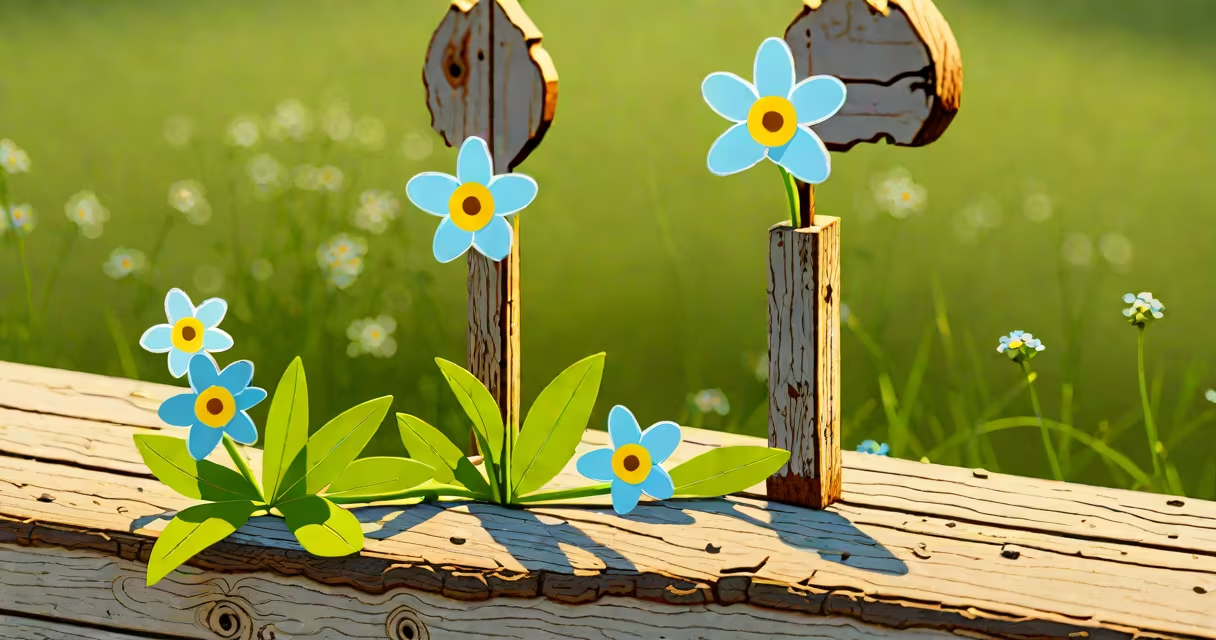
Flower meaning remembrance refers to the use of specific blooms-such as forget-me-nots, poppies, and white lilies-to symbolize honoring the dead, preserving memory, and expressing grief. These flowers appear in funerals, memorial services, and commemorative events across cultures, often tied to historical or religious traditions.
Remembrance through flowers dates back centuries. Ancient Greeks placed wreaths on tombs, while Victorian-era mourning rituals formalized floral language. Today, certain species carry widely recognized symbolic weight. The forget-me-not, for example, is linked to fidelity and enduring memory. Its small blue petals inspired the name and became a global emblem of remembrance during World War I and II.
The Royal British Legion adopted the red poppy as a symbol of war remembrance in 1921, following the poem "In Flanders Fields." The flower's presence on Remembrance Day in the UK and Canada reflects both loss and resilience. Poppies grow in battlefields across northern France and Belgium, their vivid color contrasting with the earth of wartime graves. This natural occurrence reinforced their role as living memorials.
Flowers convey remembrance through visual cues-color, form, and scent-combined with cultural history. A white rose, for instance, signals purity and peace, making it common at military funerals. A daisy, with its simple structure and cheerful face, represents innocence and new beginnings, often used in memorials for children.
Color plays a key role. White universally signifies peace and spiritual purity in Western traditions. Blue denotes loyalty and memory. Red evokes sacrifice and love. When a bouquet includes multiple colors, the arrangement may reflect layered emotions-grief, hope, gratitude-all within a single gesture.
One example: at the National Memorial Arboretum in England, visitors leave arrangements of forget-me-nots and white chrysanthemums near engraved stones. These choices aren't random. Forget-me-nots are planted in clusters around memorial walls. Their scientific name, *Myosotis*, means "mouse ear," but their cultural name is rooted in the command "forget me not" - a plea against being forgotten.
Different species serve distinct roles in memorial contexts. The table below outlines major flowers used for remembrance, their origins, and typical settings.
| Flower | Color | Meaning | Common Use |
|---|---|---|---|
| Forget-me-not (*Myosotis*) | Blue | Enduring memory, fidelity | War memorials, personal tributes |
| Red poppy (*Papaver rhoeas*) | Red | Sacrifice, remembrance of fallen soldiers | Remembrance Day, Armistice Day |
| White lily (*Lilium candidum*) | White | Purity, resurrection, peace | Christian funerals, state ceremonies |
| Daisy (*Bellis perennis*) | White petals, yellow center | Innocence, new life, gentle grief | Memorials for children, spring funerals |
Not all remembrance flowers are native to Europe. In Japan, the cherry blossom (*Prunus serrulata*) marks the fleeting nature of life. While not used in Western funerals, it appears in Buddhist rites and national commemorations. Its brief bloom season mirrors the impermanence central to Zen philosophy.
A lesser-known fact: forget-me-nots were once believed to have healing properties. In medieval Europe, they were included in herbal remedies for heart ailments. This dual role-as both medicinal plant and symbolic flower-adds depth to their use in remembrance. Modern research confirms that *Myosotis* contains flavonoids with anti-inflammatory effects, though no clinical trials link them to mental health recovery.
People often assume all white flowers mean remembrance. That's incorrect. White carnations, for example, are associated with peace in some contexts but also with funerals in others. Their meaning shifts based on region and event type. In the U.S., white carnations are used in Mother's Day displays, while in parts of Latin America, they mark anniversaries of death.
Another confusion: the term "remembrance" applies only to flowers used in mourning or tribute. A bouquet of sunflowers sent to a friend celebrating a birthday doesn't count-even if the sender feels emotional. The context defines the meaning. A sunflower given at a funeral might suggest resilience, but its primary association remains joy and vitality.
I once attended a memorial service in Portland, Oregon, where attendees placed daisies in a circle around a stone. The family had requested only white flowers. Afterward, a woman approached me, saying she'd brought a pink rose. She explained it was her mother's favorite. I pointed out that while pink roses symbolize gratitude and admiration, they're not traditionally linked to remembrance. She nodded, then quietly replaced it with a forget-me-not from a nearby vase. The act wasn't about symbolism-it was about personal connection.
Flower meaning remembrance persists in public and private spaces. Veterans' cemeteries in the U.S. feature poppy wreaths during November observances. Schools in the UK hold moments of silence with students placing paper poppies on classroom windowsills. These acts reinforce collective memory and civic identity.
Religious institutions also integrate floral symbolism. In Catholic liturgy, white lilies are used during Easter and All Saints' Day. They represent Christ's resurrection and the purity of the soul. The Vatican's official florist, working under the Pontifical Household, selects blooms based on seasonal feasts and doctrinal themes.
When choosing flowers for remembrance, consider both tradition and personal significance. A daisy may speak to a child's passing. A pink rose might honor a parent's legacy. The choice isn't about correctness-it's about intention. But understanding the deeper roots of these symbols allows people to engage with grief more consciously.