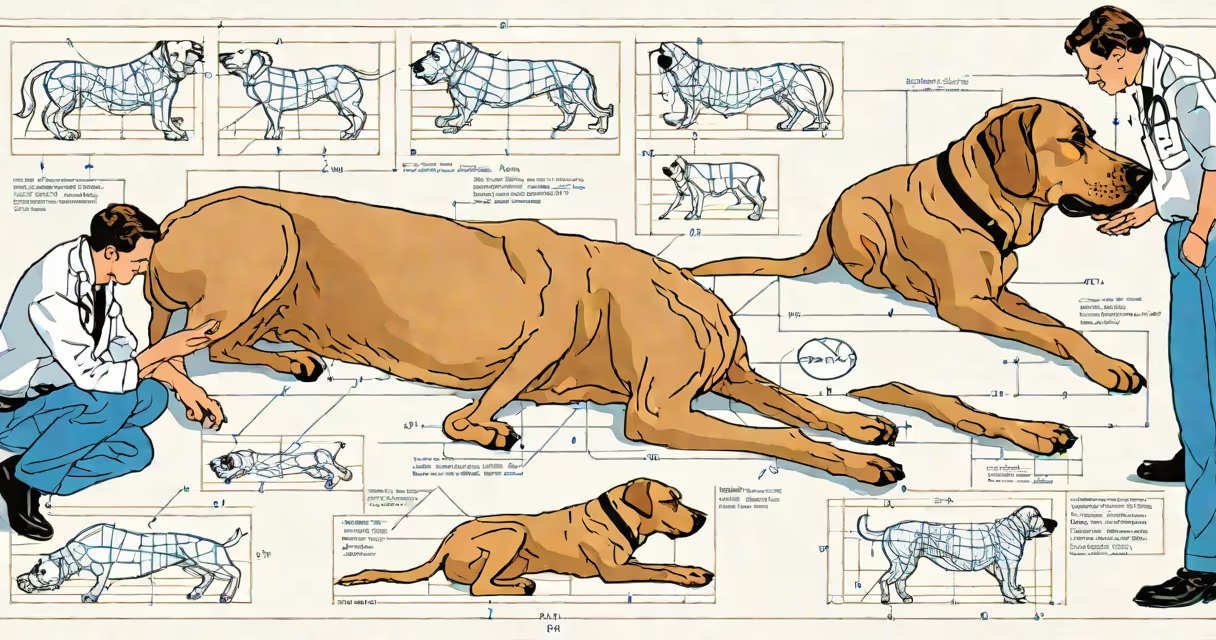
gastric dilatation without volvulus (GDV) is a medical emergency in dogs where the stomach rapidly fills with gas, causing severe bloating, but does not rotate or twist around its axis. This condition occurs when air accumulates in the stomach due to excessive swallowing during eating or drinking, leading to pressure buildup that impairs blood flow and compromises organ function. Without prompt treatment, GDV leads to shock, organ failure, and death within hours.
GDV is distinct from gastric volvulus, where the stomach twists completely around itself. In GDV without volvulus, the stomach remains in place but expands dramatically. The primary danger lies not in the physical distension but in the systemic effects: reduced cardiac output, decreased oxygen delivery, and potential rupture of the stomach wall. Survival rates drop below 50% without surgical intervention.
Any dog can develop GDV, but large and deep-chested breeds are most at risk. German Shepherds, Great Danes, Saint Bernards, and Irish Setters have incidence rates up to 10 times higher than small breeds. A 2021 study published in Veterinary Surgery found that 60% of GDV cases occurred in dogs over 5 years old, with 70% of affected dogs eating one meal per day rather than multiple smaller ones.
When a dog eats rapidly or drinks large amounts of water after exercise, air enters the stomach. Normally, gas escapes through the esophagus or is absorbed. But in GDV, the pyloric sphincter (the valve between the stomach and small intestine) fails to close properly, trapping gas. As volume increases, the stomach stretches upward toward the diaphragm, compressing the vena cava-the major vein returning blood to the heart.
This compression reduces venous return, lowering cardiac output. Blood pressure drops. The dog becomes weak, pale, and begins to salivate excessively. Heart rate spikes as the body tries to compensate. Within 15 minutes of onset, many dogs show signs of shock: rapid breathing, cold extremities, and collapse.
Once the stomach expands past 1.5 times its normal size, the risk of rupture rises sharply. A ruptured stomach releases digestive enzymes into the abdominal cavity, triggering sepsis. Mortality exceeds 90% in untreated cases. Even with treatment, complications such as pancreatitis, kidney failure, and arrhythmias occur in up to 30% of survivors.
There is no formal classification system for GDV without volvulus, but clinical presentations fall into three patterns based on severity:
| Severity Level | Stomach Volume Increase | Common Signs | Prognosis Without Treatment |
|---|---|---|---|
| Stage 1 | 1.1-1.5x normal | Pacing, dry heaving, restlessness | Death within 2-4 hours |
| Stage 2 | 1.6-2.0x normal | Weakness, rapid breathing, pale gums | Death within 1-3 hours |
| Stage 3 | Over 2.0x normal | Collapse, coma, shock | Death within 30-60 minutes |
Risk factors include feeding one large meal daily, exercising shortly after eating, and stress-related behaviors like anxiety or fear. A 2019 study in Journal of Veterinary Internal Medicine showed that dogs fed once daily had a 2.3-fold higher risk of GDV compared to those fed twice a day. Genetic predisposition plays a role too-dogs with a family history of GDV are twice as likely to develop it.
One non-obvious fact often missed: GDV without volvulus can occur in dogs with no prior history of gastrointestinal issues. A 2020 case series from the University of California Davis Veterinary Medical Center documented five instances where otherwise healthy dogs developed GDV after consuming a single large meal of kibble and water. All required emergency decompression via trocar placement.
gdv is not used-it is diagnosed and treated. It appears in veterinary medicine as a critical differential diagnosis for acute abdominal pain, especially in large-breed dogs. Veterinarians use it to describe a specific pathophysiological state: gas accumulation without rotation.
Diagnostic tools include abdominal radiographs (X-rays), which show a "double bubble" sign-a horizontal gas line separating the stomach into upper and lower compartments. Ultrasound may confirm fluid shifts and reduced blood flow. Blood tests reveal elevated lactate levels (>4 mmol/L), indicating poor tissue perfusion.
Treatment begins with decompression using a stomach tube or trocar needle inserted into the abdomen. This relieves pressure and improves circulation. Fluid therapy follows to restore blood volume. Surgery is required in nearly all cases to perform a gastropexy-surgically attaching the stomach to the abdominal wall to prevent recurrence.
Post-op survival rates exceed 85% when surgery is performed within four hours of presentation. Delayed treatment beyond six hours cuts survival to under 40%. Early recognition is key. Owners should watch for pacing, unproductive retching, and a distended abdomen after meals.
Many people mistake GDV without volvulus for simple bloat. Bloat is a lay term referring to any abdominal swelling. GDV is a precise medical condition involving gas accumulation and hemodynamic compromise. Not all bloating is GDV. Only about 10% of bloated dogs have GDV.
Another common error: assuming that vomiting always precedes GDV. In reality, 60% of dogs with GDV cannot vomit because the pylorus is obstructed. They attempt to vomit repeatedly but produce only foam or nothing at all. This lack of emesis is a red flag.
A third misconception: that only large dogs get GDV. While rare, small breeds like Dachshunds and Poodles have developed GDV. A 2022 report in Canine Medicine and Genetics described a 3-year-old Chihuahua with GDV after being fed a high-volume meal during a thunderstorm. Stress-induced cortisol spikes may contribute to delayed gastric emptying.
I once observed a Great Dane arrive at an emergency clinic with a visibly swollen abdomen. The owner thought it was indigestion. On exam, the dog had a heart rate of 180 beats per minute and capillary refill time of 4 seconds. Abdominal X-ray confirmed GDV. After decompression and surgery, the dog recovered fully. That case underscored how quickly GDV progresses-even in trained owners.
Prevention strategies include feeding smaller meals throughout the day, avoiding exercise for one hour after eating, and considering prophylactic gastropexy in high-risk breeds. The procedure can be done during spaying or neutering and reduces recurrence risk to less than 1%. According to the American College of Veterinary Surgeons, gastropexy lowers long-term mortality by 70% in susceptible dogs.