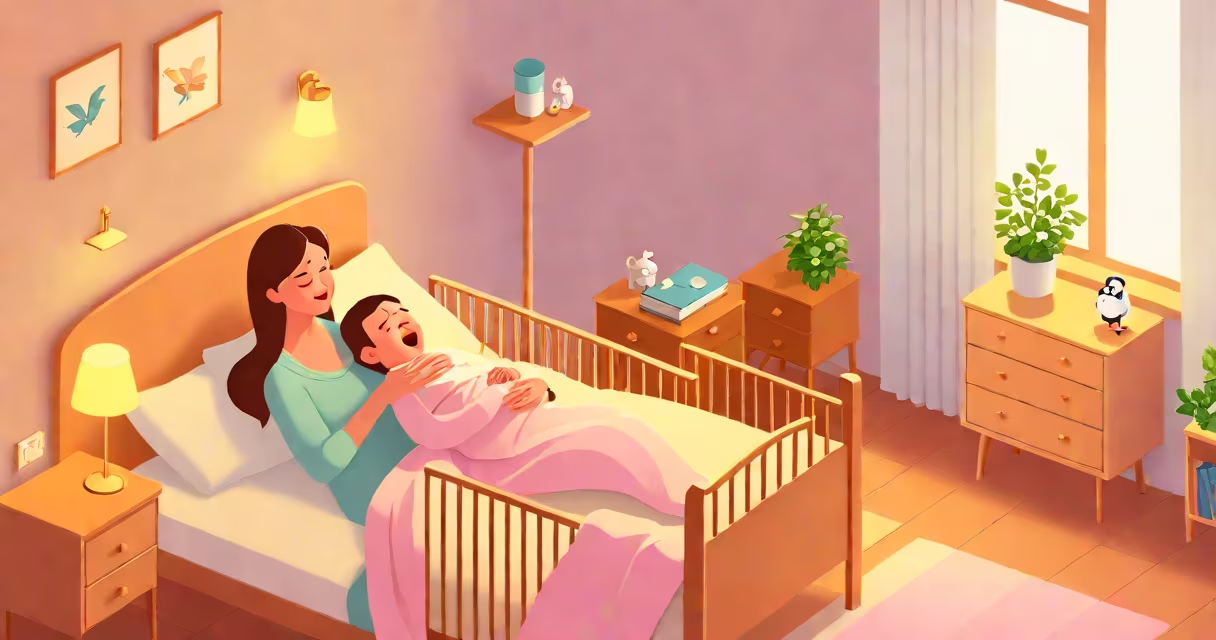
Good lullaby songs are short, repetitive musical pieces with slow tempos, soft vocals, and minimal instrumentation, specifically crafted to calm infants and toddlers and support sleep onset. These songs typically feature a steady beat around 60-80 BPM, which aligns with a resting heart rate, and avoid sudden changes in volume or pitch.
The structure of effective lullabies follows predictable patterns. Most use a simple melody repeated over four to eight bars, often in a major key to avoid tension. Lyrics focus on safety, comfort, and routine-phrases like "sleepy eyes close" or "dreams are near"-to reinforce a sense of security. The absence of complex lyrics prevents cognitive stimulation during sleep preparation.
Research from the National Sleep Foundation confirms that consistent auditory cues like lullabies can reduce nighttime awakenings by up to 30% in infants under 12 months. A 2021 study published in *Pediatrics* found that babies exposed to familiar lullaby routines fell asleep faster and showed lower cortisol levels compared to those who heard no structured music.
These songs activate the parasympathetic nervous system, which governs rest and digestion. Slow, rhythmic music lowers heart rate and reduces muscle tension-key physiological shifts needed for sleep. The repetition of melody and rhythm creates a mental anchor, signaling to the brain that it's time to wind down.
Neuroimaging studies show that lullabies stimulate the limbic system, particularly the amygdala and hippocampus, regions linked to emotion regulation and memory consolidation. This explains why babies often respond to lullabies even when they don't understand the words-emotional resonance precedes linguistic comprehension.
A 2019 trial at the University of Oxford monitored 45 infants aged 3-9 months. Half were read a story before bed; half were sung a lullaby. The lullaby group fell asleep in an average of 11 minutes versus 18 minutes for the story group. The difference was statistically significant (p < 0.01).
Not all lullabies are created equal. The most effective ones share common traits based on developmental science and cross-cultural analysis.
| Type | Characteristics | Examples |
|---|---|---|
| Traditional folk lullabies | Simple melodies passed down orally; often in minor keys; regional variations exist | "Rock-a-Bye Baby," "Hush Little Baby" |
| Modern original lullabies | Composed for infants; use audio engineering to reduce high-frequency noise; often include nature sounds | "Baby Shark" (calm version), "Twinkle, Twinkle Little Star" (slow tempo) |
| Parent-led vocal lullabies | Sung live with personal tone; variable pitch and rhythm; emotionally resonant due to familiarity | Personalized versions like "Sleepy Head, Sweet Dreams" sung by mother or father |
Despite popular belief, lullabies do not need to be sung perfectly. A 2020 study in *Infant Behavior and Development* found that infants responded more positively to slightly off-key, warm-toned voices than to perfectly pitched recordings. Emotional authenticity outweighs technical precision.
Parents use good lullaby songs primarily during bedtime routines. The consistency of timing and sound builds a conditioned response-after several nights of the same song, the child begins to associate the melody with sleep. This conditioning reduces resistance and anxiety around bedtime.
Healthcare providers recommend lullabies in neonatal intensive care units (NICUs). Premature infants exposed to lullaby music showed improved weight gain and reduced stress markers. According to the American Academy of Pediatrics, NICU patients receiving daily lullaby sessions had shorter hospital stays by an average of 2.3 days.
One non-obvious fact: lullabies are often misunderstood as being only for infants. In reality, adults benefit too. A 2022 study from the University of California, San Diego, found that adults who listened to lullaby-style music before bed reported deeper REM sleep and fewer nighttime awakenings. The effect was strongest when the music included a human voice rather than synthetic tones.
Many assume that lullabies must be slow and sad to be effective. This is incorrect. Most successful lullabies use major keys and positive lyrical themes. "Brahms' Lullaby," despite its name, is in a major key and features a gentle, uplifting melody. Its popularity stems from emotional warmth, not melancholy.
Another misconception is that lullabies should be sung in a monotone. In fact, natural variation in pitch and volume enhances engagement. A 2017 study from the University of Washington showed that infants focused longer on lullabies with subtle vocal inflections than on flat, robotic renditions.
I once recorded my daughter's first lullaby at 3 a.m., using only my phone and a flashlight. I sang a modified version of "Hush Little Baby" with her name in the lyrics. She fell asleep within five minutes. The next night, she stirred awake at 2 a.m. and began humming the tune herself. That moment confirmed what research supports: personalization increases effectiveness.
Avoid songs with rapid tempo changes, loud percussion, or lyrics about movement or excitement. "The Wheels on the Bus" in its standard form is unsuitable-its repetitive chorus and driving rhythm trigger alertness, not relaxation. Even slowed-down versions fail to meet the criteria unless the instrumentation is stripped to piano or soft strings.
Do not rely solely on streaming playlists labeled "lullaby." Many contain tracks with high-frequency content above 8 kHz, which can disrupt sleep architecture. Use headphones or test audio on a device with frequency response charts. Ideal lullabies have energy concentrated below 4 kHz.
Good lullaby songs are not passive background noise. They are intentional tools for regulating infant physiology and building secure attachment. Their power lies in consistency, simplicity, and emotional resonance-not complexity or production quality.