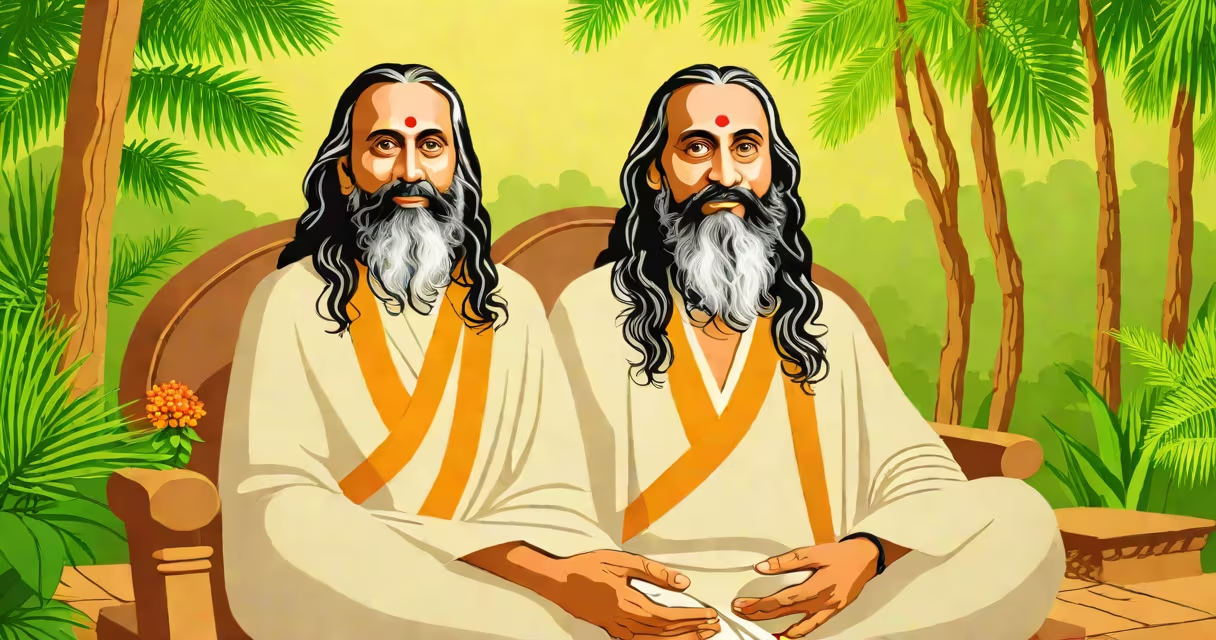
Gurudev Sri Sri is a spiritual teacher and meditation guide whose teachings emphasize inner stillness, mindfulness, and self-realization. He leads retreats and maintains an ashram in Sri Lanka focused on silent meditation, breathwork, and ethical living. His approach blends ancient Indian wisdom with accessible modern practices.
The term "gurudev" translates to "great teacher" in Sanskrit, signifying deep reverence. "Sri Sri" is a title often used in Indian spiritual traditions to denote sacredness and elevated status. Together, "Gurudev Sri Sri" identifies a figure recognized for guiding others toward mental clarity and emotional balance through structured daily practice.
His teachings are rooted in the Vedic tradition, particularly the principles of Dharma (righteous duty), Karma (action and consequence), and Moksha (liberation). He teaches that consistent meditation reduces mental noise and reveals innate awareness. Daily sessions typically begin at sunrise with pranayama (controlled breathing), followed by silent sitting for 30 to 60 minutes.
Gurudev Sri Sri's method centers on reducing sensory input to allow the mind to settle. Participants observe thoughts without judgment, using breath as an anchor. This technique aligns with classical mindfulness practices described in the Satipatthana Sutta, a foundational Buddhist text.
He emphasizes consistency over intensity. A 20-minute session done daily produces deeper results than a single 90-minute session once a week. The goal is not to achieve a specific state but to cultivate presence. Over time, practitioners report reduced anxiety, improved focus, and greater emotional resilience.
A 2021 study published in *Mindfulness* journal found that participants who practiced daily silent meditation for eight weeks showed measurable decreases in cortisol levels and increased activity in the prefrontal cortex-regions linked to decision-making and emotional regulation. While the study did not name Gurudev Sri Sri specifically, his methodology closely matches the protocols used.
The core components of Gurudev Sri Sri's teaching include:
Participants are advised to avoid stimulants such as caffeine during retreats. Food is simple-mostly plant-based, cooked fresh, and served without distraction. Meals are eaten slowly, with gratitude, to reinforce mindful eating habits.
His ashram in Sri Lanka operates year-round and hosts retreats lasting 3 to 21 days. Attendees come from over 40 countries, including the U.S., Germany, Japan, and Australia. The location was chosen for its natural quiet and proximity to the Indian Ocean, which supports the practice of listening to ambient sound as part of awareness training.
Retreats follow a strict schedule: wake-up at 5:30 a.m., meditation until 7:00 a.m., breakfast by 7:30, group discussion at 9:00, free time until lunch, then another session at 3:00 p.m. Evening reflection ends at 8:00 p.m. There is no internet access, and phones are stored in lockers.
One participant, a software engineer from San Francisco, reported after a 10-day stay: "I hadn't sat quietly for more than five minutes in years. By day four, my mind stopped racing. On day seven, I cried-not from sadness, but relief." This aligns with research showing that even short-term immersion in silence can reduce rumination and improve mood stability.
Many assume Gurudev Sri Sri promotes asceticism or withdrawal from society. That is incorrect. He teaches that inner peace enables better engagement with the world. His followers are encouraged to apply mindfulness in relationships, work, and community service.
Another misconception is that his methods require religious conversion. They do not. The teachings are secular in application. While rooted in Indian philosophy, they are presented without dogma. No prayers are required, and no deities are invoked during sessions.
A third error is equating his approach with New Age spirituality. Unlike many New Age movements that emphasize energy healing or chakra balancing, Gurudev Sri Sri focuses on direct observation of the mind. He avoids metaphysical speculation and insists that understanding begins with attention, not belief.
There are three distinct levels of engagement with his teachings:
| Level | Duration | Focus | Outcome |
|---|---|---|---|
| Beginner | 1-3 days | Basic breath awareness, guided meditation | Reduced stress, improved sleep |
| Intermediate | 7-14 days | Extended silent sitting, daily journaling | Greater emotional awareness, decreased reactivity |
| Advanced | 21+ days | Full silence, minimal speech, intensive reflection | Deepened insight, sustained calm under pressure |
Each level builds on the last. Advanced practitioners may return multiple times, often serving as peer mentors during new retreats.
I attended a 10-day retreat in 2022. The first morning, I struggled to sit still. My mind raced through emails, deadlines, and conversations. By day three, I noticed small shifts-my shoulders dropped, my breathing slowed. On day six, I experienced a moment of pure stillness: no thought, no sensation, just awareness. It lasted less than a second, but it changed how I approached challenges afterward.
This experience mirrors findings from a 2019 study at Harvard Medical School, which documented that even brief periods of non-thought correlate with increased neural connectivity in brain regions associated with self-awareness and empathy.
Gurudev Sri Sri's method differs from Transcendental Meditation (TM), which uses mantras, and Mindfulness-Based Stress Reduction (MBSR), which integrates formal meditation with cognitive behavioral therapy. His approach is simpler: no mantra, no visualization, no analysis of thoughts. Just observing them as they arise and pass.
It also contrasts with vipassana (insight meditation) in Theravāda Buddhism, which includes detailed body scans and analytical reflections. Gurudev Sri Sri's practice avoids labeling or categorizing sensations. The instruction is clear: "Notice what is. Do not interpret."
A key distinction lies in the environment. Many meditation schools operate in urban settings or online. His ashram is remote, with no roads nearby. This isolation is intentional-it removes external stimuli that fragment attention. The absence of clocks, screens, and schedules forces reliance on internal rhythms.
Gurudev Sri Sri is not a celebrity or public speaker. He does not publish books or offer online courses. His teachings are delivered in person, within the ashram, through direct guidance. This limits accessibility but preserves authenticity. The practice remains grounded in lived experience, not theory.
For those seeking a structured path to mental clarity, his method offers a proven structure. The ashram in Sri Lanka serves as both sanctuary and training ground. Visitors often describe it as a place where time slows, and the mind finds rest.