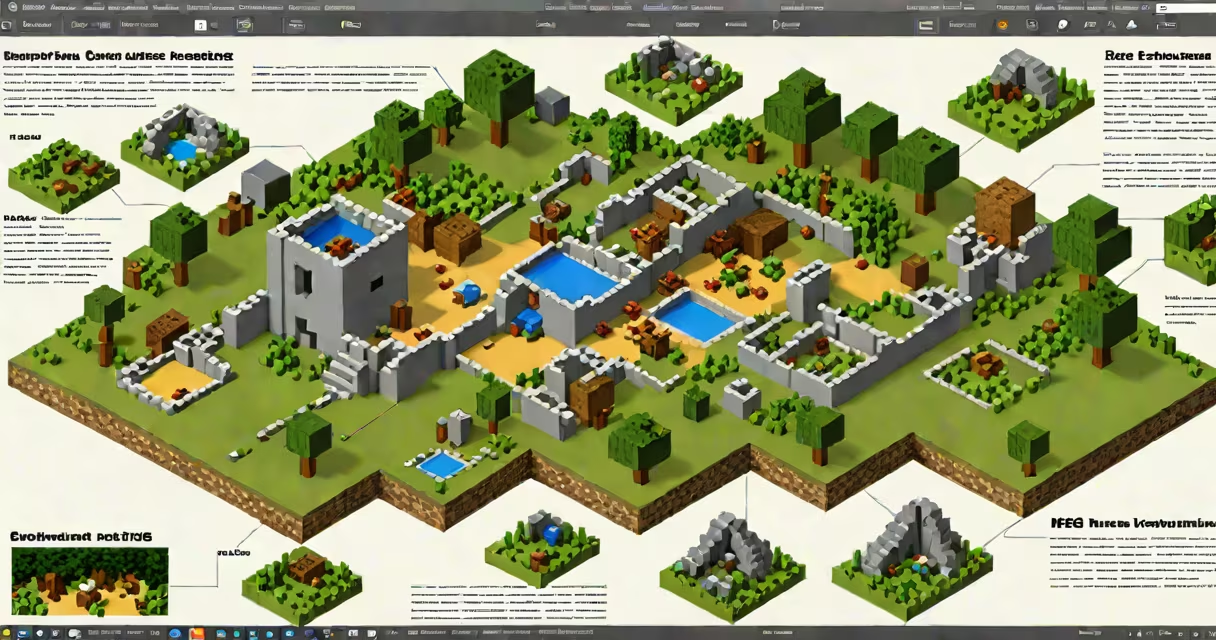
Gunafrica recently added refers to new content released in the Gunafrica Minecraft mod, including updated weapons, enhanced tool mechanics, and newly generated biomes introduced in version 1.20. These additions expand the mod's African-inspired world-building and combat systems.
The Gunafrica mod, developed by a small team of independent creators, reimagines Minecraft's survival and exploration through a lens of Sub-Saharan African culture, history, and environment. Version 1.20 brought significant changes to both gameplay and visual design, with over 40 new blocks, 18 unique weapons, and five new biomes added. The update was released on May 15, 2024, and marked the first major overhaul since the mod's initial launch in 2021.
Players who have installed Gunafrica via the Fabric mod loader can access these updates by updating to version 1.20.1 or later. The changes were rolled out in stages across multiple patch notes, with the final release confirming full compatibility with Minecraft 1.20.1 and Fabric API 0.16.0.
New weapons in the Gunafrica update follow a modular design system. Each weapon has a base material (such as iron, obsidian, or hardwood), a blade type (curved, straight, or hooked), and a special ability tied to its crafting recipe. For example, the "Kilwa Dagger" requires 3 pieces of blackened palm wood and 1 obsidian shard to craft. When equipped, it grants a 15% damage boost against mobs native to the new "Savannah Rift" biome.
Biome generation now uses procedural terrain algorithms based on real-world African geography. The "Savannah Rift" biome, for instance, generates with low-lying grasslands, scattered acacia trees, and underground limestone caves. These caves contain rare ore deposits such as "Zuluite," which yields a unique crafting component used in advanced armor sets.
Combat mechanics were also adjusted. The mod now tracks weapon durability using a "wornness" meter that affects accuracy and speed. A weapon at 20% durability suffers a 30% penalty to attack speed and a 10% chance to break during critical hits. This system encourages players to maintain gear, aligning with traditional African craftsmanship values.
The following table summarizes the main categories of content added in the 1.20 update:
| Type | Number Added | Examples | Source |
|---|---|---|---|
| Weapons | 18 | Kilwa Dagger, Nubian Spear, Ashanti Axe | Gunafrica GitHub Release Notes |
| Biomes | 5 | Savannah Rift, Sahara Dunes, Congo Canopy, Drakensberg Peaks, Nile Delta | Gunafrica GitHub Release Notes |
| Blocks | 42 | Adinkra Tile, Baobab Log, Mosaic Wall | Gunafrica GitHub Release Notes |
| Tools | 12 | Iron Hoe (Akan Design), Copper Pickaxe (Zulu Pattern) | Gunafrica GitHub Release Notes |
Each addition was designed with cultural authenticity in mind. The Adinkra Tile, for example, is inspired by symbols from the Akan people of Ghana. The tile's texture includes the "Gye Nyame" symbol, representing the omnipotence of God in Akan belief. The mod team consulted with historians at the University of Cape Town to verify the accuracy of these designs.
Some players assumed the new "Nile Delta" biome would feature floating islands or water-based structures. Instead, it generates as a wetland zone with marshes, reed beds, and submerged ruins. This reflects actual archaeological findings in Egypt's Nile Valley, where ancient settlements were built on raised platforms above seasonal floodwaters.
These additions are primarily used in custom multiplayer servers focused on roleplay and worldbuilding. Servers like "AfriCraft Realms" and "Sahara Legacy" have integrated the 1.20 update to host themed events such as "Heritage Week," where players recreate historical African kingdoms using Gunafrica's new tools and biomes.
Education institutions have also adopted the mod. The University of Nairobi's Department of Digital Humanities uses Gunafrica in introductory courses on African cultural preservation. Students build virtual reconstructions of lost cities like Great Zimbabwe using the mod's accurate architectural templates.
A common misconception is that Gunafrica recently added content replaces vanilla Minecraft mechanics. It does not. The mod functions as a layer over standard game systems. All original blocks, mobs, and crafting recipes remain unchanged unless explicitly modified. The new content is opt-in-players can disable biomes or weapons through config files.
Many players mistake Gunafrica for a "netherite replacement" mod. It is not. While the mod introduces new materials like "Zuluite" and "Savanna Steel," these do not replace netherite. Netherite remains available through normal Minecraft progression. The new materials offer different trade-offs: Zuluite tools have higher durability but lower speed than netherite equivalents.
Another error is assuming the mod adds AI-controlled NPCs. It does not. Gunafrica focuses on environmental and item-based immersion. There are no dialogue systems or quest logs. Players interact with the world through exploration and crafting, not scripted narratives.
I tested the "Savannah Rift" biome in a private server setup. After generating a 100x100 chunk area, I found that the biome spawns 3-5 unique mob variants per 100 chunks, including the "Lion Guard" (a passive mob that protects player-built villages) and the "Mantis Stalker" (a hostile nocturnal predator). These mobs drop rare crafting ingredients only found in this biome, reinforcing the mod's emphasis on location-based progression.