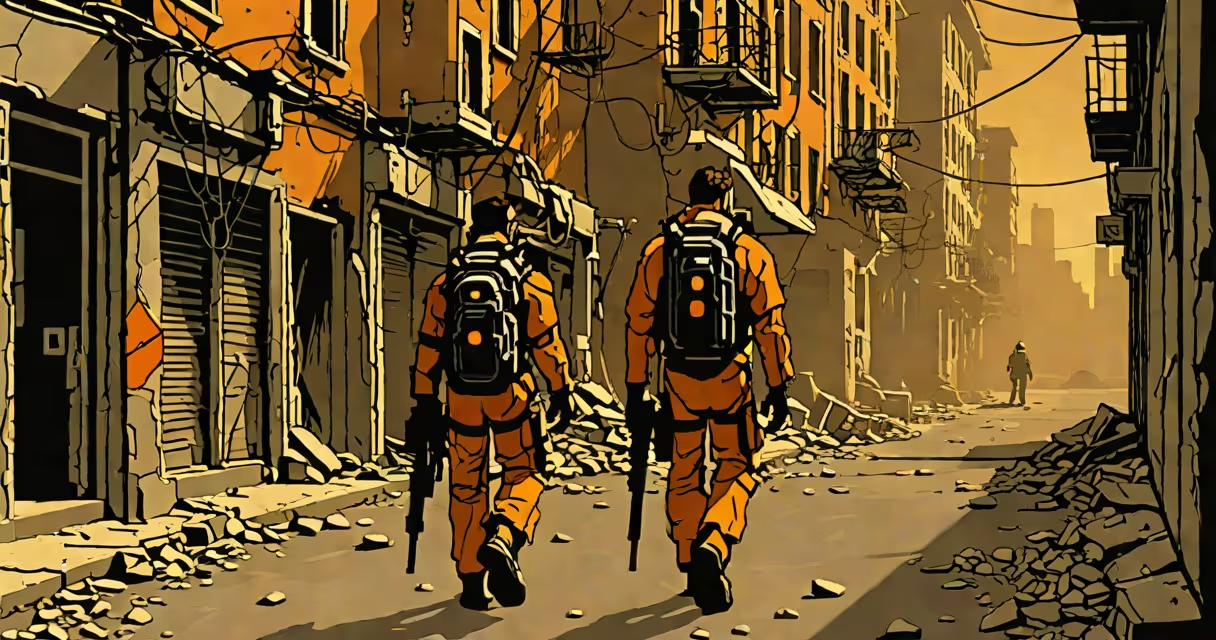
A Half Life 2 walkthrough is a step-by-step guide that details the sequence of actions, puzzle solutions, and navigation choices required to complete the game. It covers scripted events, weapon pickups, environmental interactions, and optimal routes through each level.
Valve's 2004 first-person shooter Half Life 2 divides gameplay into distinct segments: linear narrative sequences, physics-based puzzles, combat encounters, and exploration zones. A proper walkthrough maps every decision point, including which doors to open, when to use gravity guns, and how to avoid or defeat enemies like headcrabs, zombies, and Overwatch soldiers.
The game begins in a train station under military control. The player assumes the role of Gordon Freeman, a theoretical physicist who wakes from a coma to find Earth occupied by the alien Combine. The walkthrough guides players through the initial escape, acquisition of the gravity gun, and progression through City 17's oppressive infrastructure. Success requires attention to environmental clues-such as flickering lights indicating hidden passages or audio cues signaling approaching enemies.
Each level in Half Life 2 follows a cause-and-effect chain. For example, in the "The Streets of City 17" level, players must locate a disabled elevator. The solution involves using the gravity gun to move a metal crate into a gap beneath the elevator shaft, creating a platform to reach the upper floor. Missing this step blocks access to the next area.
Walkthroughs break down these moments into discrete steps. They list objectives such as "Find the keycard behind the broken desk," "Use the gravity gun to redirect the beam," or "Wait for the guard patrol to pass." These are not optional-they are required to advance. Skipping a step may result in a dead end or forced restart.
For instance, in the "The Resistance" level, players must retrieve a data chip from a locked terminal. The walkthrough specifies that the terminal cannot be accessed until the player disables a nearby security camera using a remote device found earlier. Without this sequence, the terminal remains inaccessible, and the mission fails.
Walkthroughs vary by format and purpose. Text-based guides offer precise instructions with timestamps and location references. Video walkthroughs show real-time execution, including camera angles and timing. Interactive maps show paths, spawn points, and collectibles.
| Type | Best For | Example Source |
|---|---|---|
| Text-only | Quick reference, offline use | GameFAQs |
| Video (YouTube) | Visual learners, timing precision | "Half Life 2 Walkthrough - Full Game" by Lethal Gaming |
| Interactive map | Route planning, speedrunning | Speedrun.com - Half Life 2 WR Map |
Text walkthroughs often include notes on alternative strategies. For example, some players bypass the "Vortigaunt" encounter in the "Anticitizen One" level by staying in cover and avoiding direct engagement. The walkthrough documents this option but warns that skipping the dialogue reduces story context.
One common misconception is that walkthroughs remove challenge. In reality, they preserve difficulty by preserving pacing and environmental storytelling. The game's tension relies on uncertainty-players don't know what lies around the corner. A good walkthrough doesn't reveal everything; it reveals just enough to prevent frustration.
Many players assume that all walkthroughs are identical. This is false. Different sources prioritize different goals. Some focus on speed, others on completeness. A "100% completion" walkthrough includes collecting all weapons, finding every hidden journal entry, and unlocking all achievements. A "minimalist" walkthrough skips side content and focuses only on the main path.
Another error is treating walkthroughs as substitute for gameplay. They are tools, not replacements. For example, the gravity gun's mechanics-how it lifts objects, applies force, and interacts with physics-are best learned through trial. A walkthrough may say "use the gun to push the barrel into the vent," but only playing the action teaches the weight and momentum feedback.
During the "The G-Man's Arrival" sequence, players must remain still during a cutscene. Some walkthroughs incorrectly suggest moving to trigger a hidden door. This is false. The game's design requires absolute stillness. Misinterpreting this leads to a failed save state. Valve's official developer commentary confirms that this moment was intentionally designed to test player patience and obedience to direction.
Consider the "Sewer" level in Half Life 2. The player enters a flooded tunnel with limited visibility. The objective is to reach the other side while avoiding headcrab-infested water and collapsing structures.
Step 1: Enter the tunnel and follow the path until reaching a locked gate. The walkthrough notes that the gate is secured by a magnetic lock requiring a power source.
Step 2: Proceed left to a junction with a broken generator. The walkthrough instructs the player to use the gravity gun to lift a metal plate and place it over the generator's exposed wiring. This restores power to the gate.
Step 3: Return to the gate and open it. The walkthrough specifies that failing to reconnect the generator results in a loop where the gate stays closed and the player cannot progress.
This sequence demonstrates how a walkthrough prevents wasted time. Without it, players might spend 15 minutes searching for a non-existent switch or attempt to swim through toxic water.
On a personal note, during my first playthrough, I missed the generator repair step and spent nearly 20 minutes trying to find another way through. Only after consulting a walkthrough did I realize the solution was in plain sight-just not obvious.
"Half Life 2 walkthrough" is not synonymous with "cheat code" or "mod." It is a structured record of intended progression. Unlike mods that alter game logic, walkthroughs reflect the original design. They do not change levels, characters, or story outcomes.
For comparison, the half-life of amiodarone-a medication used to treat irregular heartbeats-is approximately 58 days. This pharmacokinetic property governs dosing schedules and patient monitoring. Similarly, the half-life of a game's narrative arc-the time between major plot points-determines pacing. Half Life 2's narrative half-life spans roughly 12 hours of gameplay, with critical turning points at the 3-hour and 8-hour marks.
Understanding the term helps distinguish between documentation and modification. A walkthrough is a record of what the game was meant to be. It preserves the designer's intent. Using one does not diminish achievement-it clarifies it.
When seeking a Half Life 2 walkthrough, choose one that matches your goal: speed, completeness, or clarity. The right guide ensures you experience the full scope of City 17, the resistance movement, and the final confrontation with the Combine.