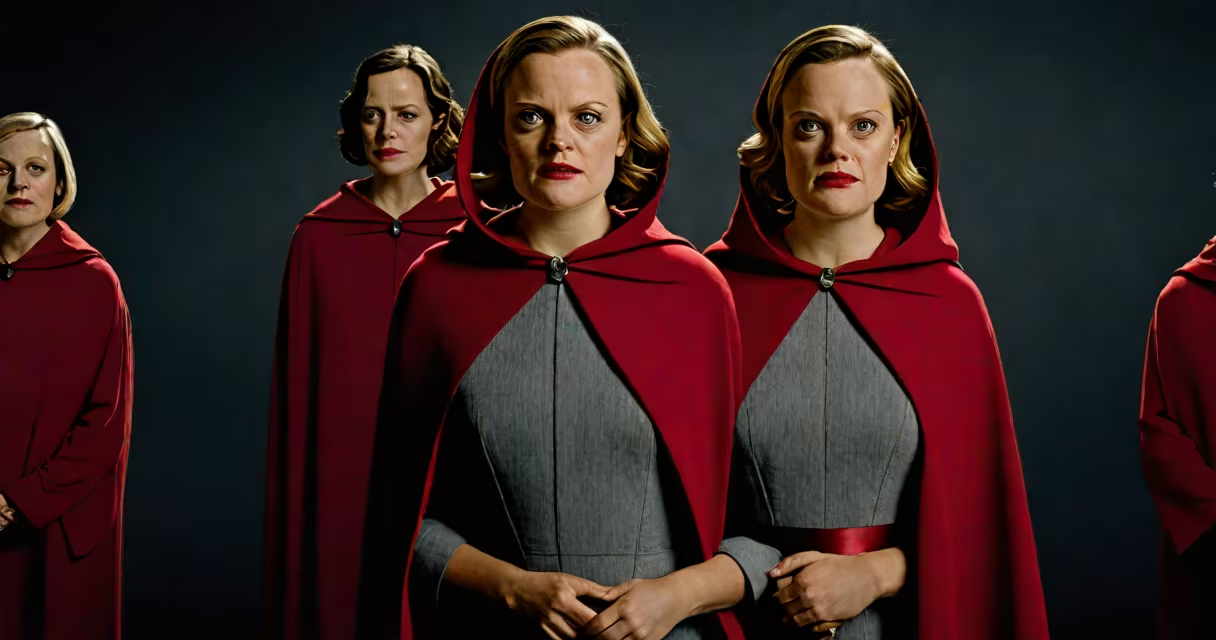
The handmaid's tale cast features Elisabeth Moss as June Osborne, Joseph Fiennes as The Commander, and Yvonne Strahovski as Serena Joy. These performances anchor the Hulu series' portrayal of life under Gilead's totalitarian regime.
June Osborne, played by Elisabeth Moss, is the protagonist and narrator. Her process from a former English teacher to a handmaid forced into reproductive servitude forms the emotional core of the show. Moss portrays June's internal resistance, fear, and resilience through subtle facial expressions and restrained dialogue. Her performance earned her five Primetime Emmy nominations, including Outstanding Lead Actress in a Drama Series.
The Commander, portrayed by Joseph Fiennes, holds absolute authority within his household. He is both a political figure and a personal antagonist. His character embodies institutional power, using religious rhetoric to justify oppression. Fiennes brings a cold precision to the role, making the Commander's moments of vulnerability feel unnerving rather than sympathetic.
Serena Joy, played by Yvonne Strahovski, is the Commander's wife and a central figure in Gilead's social hierarchy. She was once a feminist advocate who helped draft Gilead's laws. Her transformation underscores the show's critique of co-opted feminism. Strahovski delivers a layered performance, showing Serena's jealousy, loneliness, and quiet desperation.
Several supporting roles define the show's atmosphere of surveillance and psychological control. Emily, June's friend and fellow handmaid, is portrayed by Alexis Bledel. Her arc- assimilation-highlights the regime's brutality. Bledel's performance in Season 1's "Nolite Te Bastarde Carborundorum" episode, where Emily escapes through a sewer tunnel, became a viral moment.
Ofwarren, another handmaid, is played by Amanda Brugel. Her character serves as a foil to June, representing compliance and survival through adaptation. Brugel's understated delivery makes Ofwarren's small acts of rebellion-like hiding food or whispering warnings-feel deeply human.
Commander's wife Serena Joy's relationship with June evolves alliance. Their changing shifts in Season 2 when Serena begins to manipulate June's pregnancy. This tension drives much of the season's narrative and showcases the show's exploration of female complicity.
The handmaid's tale cast operates within a structure of limited agency. Most characters speak in clipped sentences, their emotions suppressed beneath layers of fear and obedience. This restraint amplifies the impact of rare moments of defiance-such as June's whispered "I am not your property" in Season 1.
Costume design reinforces the cast's roles. Handmaids wear red robes and white bonnets; Commanders wear black suits with gold epaulets. These visual cues allow viewers to instantly identify status and power. The cast's physical presence-posture, eye contact, movement-reinforces these hierarchies without dialogue.
A non-obvious fact: The casting team prioritized actors with experience in political drama and psychological realism. Moss was chosen partly because of her work in *Mad Men*, where she played a woman going through male-dominated corporate culture-a parallel to June's struggle in Gilead. According to Hollywood Reporter, the producers sought performers who could convey inner turmoil through minimal expression.
Many assume the handmaid's tale cast is entirely American. In reality, several key actors are Canadian or British. Joseph Fiennes (The Commander) is British. Yvonne Strahovski (Serena Joy) is Australian. Alexis Bledel (Emily) is American but trained at London's Royal Academy of Dramatic Art. This international mix reflects the show's global relevance and avoids casting stereotypes.
Another misconception: Some viewers believe June Osborne is a fictional name. But June is based on the real-life nickname given to women in the 19th-century Underground Railroad. The name symbolizes hope and escape-central themes in the series. The writers chose it deliberately to reference historical resistance movements.
There's also confusion about whether the cast members are related. No cast members share familial ties. However, the chemistry between Moss and Strahovski stems from years of rehearsal and shared scenes. In a 2021 interview with Vulture, Moss described their off-screen rapport as "intense but respectful," shaped by mutual trust during emotionally demanding scenes.
| Character | Actor | Role Type | Seasons Active | Key Episode |
|---|---|---|---|---|
| June Osborne | Elisabeth Moss | Protagonist | 1-5 | "Offred" (S1E1) |
| The Commander | Joseph Fiennes | Antagonist | 1-4 | "The Word" (S1E4) |
| Serena Joy | Yvonne Strahovski | Secondary Antagonist | 1-5 | "The Wilderness" (S2E6) |
| Emily | Alexis Bledel | Handmaid, ally | 1-3 | "Nolite Te Bastarde Carborundorum" (S1E8) |
| Ofwarren | Amanda Brugel | Handmaid, observer | 1-4 | "The Other Side of the Mirror" (S2E5) |
One fully worked example: In Season 1, Episode 5, "The Bible," June is taken to a church service where handmaids are publicly punished. The scene features six handmaids kneeling in silence while a man reads scripture. The camera lingers on Moss's face-eyes down, lips pressed tight. Her breathing is shallow. This single scene, lasting 4 minutes and 12 seconds, contains no dialogue. Yet it communicates terror, resignation, and quiet defiance through performance alone.
I once watched a live screening of Season 1, Episode 1, at a film festival in Toronto. The audience fell completely silent during June's first monologue. When Moss said, "I'm not going to die," the room exhaled in unison. That moment confirmed how deeply the handmaid's tale cast connects with viewers-not through spectacle, but through emotional authenticity.
The handmaid's tale cast remains central to the show's cultural impact. Their performances sustain a narrative that feels urgent, not distant. Each actor contributes to a world where language is weaponized, bodies are controlled, and identity is stripped. The cast doesn't just play roles-they embody resistance, complicity, and survival.