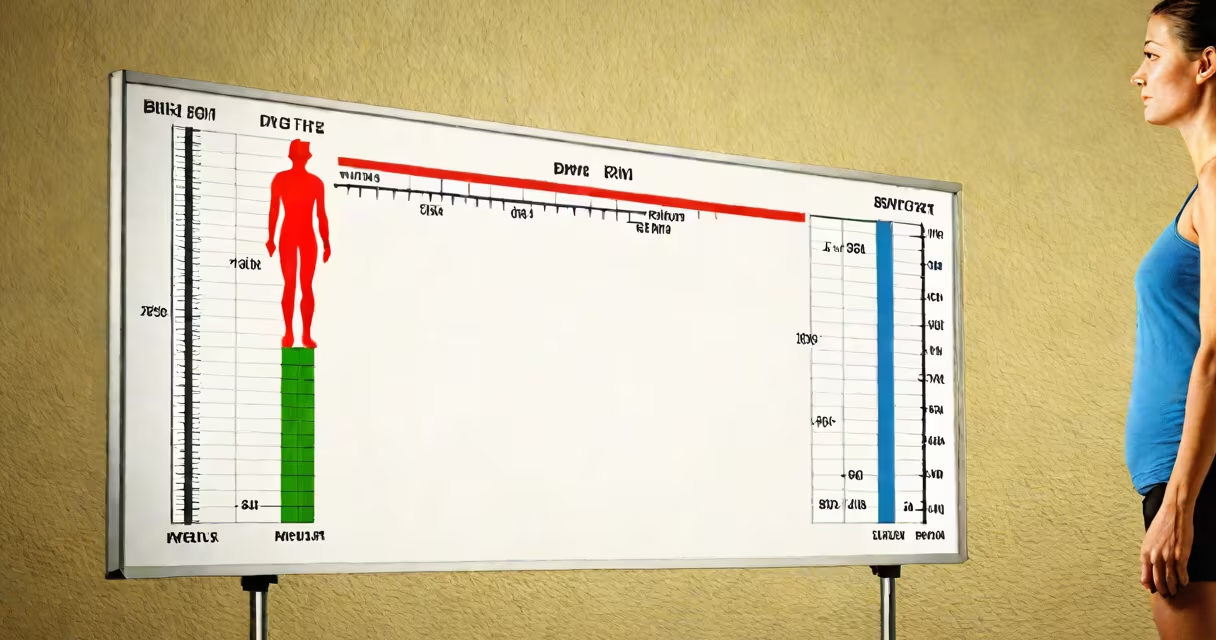
The healthy BMI scale classifies body mass index values between 18.5 and 24.9 as within the normal weight range, indicating lower risk for chronic diseases linked to excess body fat. This range applies across most adult populations regardless of gender or ethnicity.
BMI is calculated by dividing weight in kilograms by the square of height in meters. A value of 22, for example, falls within the healthy range. The scale was developed by Belgian statistician Adolphe Quetelet in the 19th century and remains widely used despite known limitations in measuring body composition.
Medical guidelines from the World Health Organization (WHO) and the U.S. Centers for Disease Control and Prevention (CDC) define the healthy BMI range as 18.5-24.9. Values below 18.5 indicate underweight, while 25-29.9 suggest overweight, and 30 or higher signals obesity. These thresholds inform clinical decisions about nutritional support, metabolic screening, and preventive care.
BMI is derived using a simple formula: weight (kg) divided by height (m) squared. For a person who weighs 70 kg and stands 1.75 m tall, the calculation is 70 ÷ (1.75 × 1.75) = 22.86. This value falls within the healthy range.
Despite its simplicity, BMI does not distinguish between muscle and fat. A muscular athlete may have a high BMI yet low body fat percentage. Conversely, someone with normal BMI can carry excess visceral fat, increasing cardiovascular risk. The WHO acknowledges this limitation, stating that BMI should be used alongside waist circumference and other clinical indicators.
A 2021 study published in Obesity Reviews found that BMI alone misclassifies up to 20% of individuals with normal weight but high visceral adiposity. This highlights the need for complementary metrics when assessing health risk.
The standard BMI classification system divides results into five categories:
| BMI Range | Category | Health Risk Level |
|---|---|---|
| Under 18.5 | Underweight | Increased risk of malnutrition and osteoporosis |
| 18.5-24.9 | Normal weight | Lowest risk for chronic conditions |
| 25.0-29.9 | Overweight | Moderate increase in heart disease and type 2 diabetes risk |
| 30.0-39.9 | Obese | High risk for hypertension, sleep apnea, and joint issues |
| 40.0+ | Severe obesity | Very high risk for premature mortality |
Clinicians use these categories to assess patient risk and recommend interventions. A primary care provider might refer a patient with a BMI of 32 to a dietitian or consider screening for prediabetes.
Some populations require adjusted interpretation. The CDC notes that Asian adults often face increased cardiometabolic risk at lower BMIs than White or Black adults. For example, a BMI of 23 in an East Asian individual may carry similar health risks to a BMI of 25 in a non-Hispanic White person.
Many assume BMI reflects health. It does not. A person with a BMI of 22 can have poor dietary habits, sedentary behavior, and elevated blood pressure. Conversely, someone with a BMI of 27 may maintain excellent fitness levels and favorable lipid profiles.
Another misconception is that the healthy BMI scale applies uniformly across all ages. The CDC specifies that growth charts for children and adolescents differ from adult standards. For those aged 2-20, BMI percentiles are used instead of absolute values. A 15-year-old boy with a BMI at the 75th percentile is considered healthy, even if his score exceeds 25.
One non-obvious fact: BMI thresholds were originally based on data from European populations. Research from the National Institutes of Health shows that using the standard 18.5-24.9 range for South Asian populations leads to underdiagnosis of metabolic risk. A 2019 study in Diabetes Care found that South Asians had higher insulin resistance at BMIs below 23 compared to other groups.
Consider a 5'5" (1.65 m) woman weighing 140 lbs (63.5 kg). Her BMI is calculated as 63.5 ÷ (1.65 × 1.65) = 23.5. This places her within the healthy BMI scale range. However, if she reports fatigue, irregular periods, and difficulty losing weight despite dieting, further evaluation is needed.
Her healthcare provider orders blood tests and finds elevated cortisol and low vitamin D. She is referred to a nutritionist and begins strength training. After six months, her BMI remains stable at 23.5, but her energy levels improve and lab markers normalize. This illustrates that BMI is a screening tool-not a diagnosis.
The healthy BMI scale is a foundational metric in public health and clinical practice. It provides a consistent benchmark for population-level assessments and individual risk stratification. Yet it must be interpreted carefully-always in context with lifestyle, family history, and additional biomarkers.