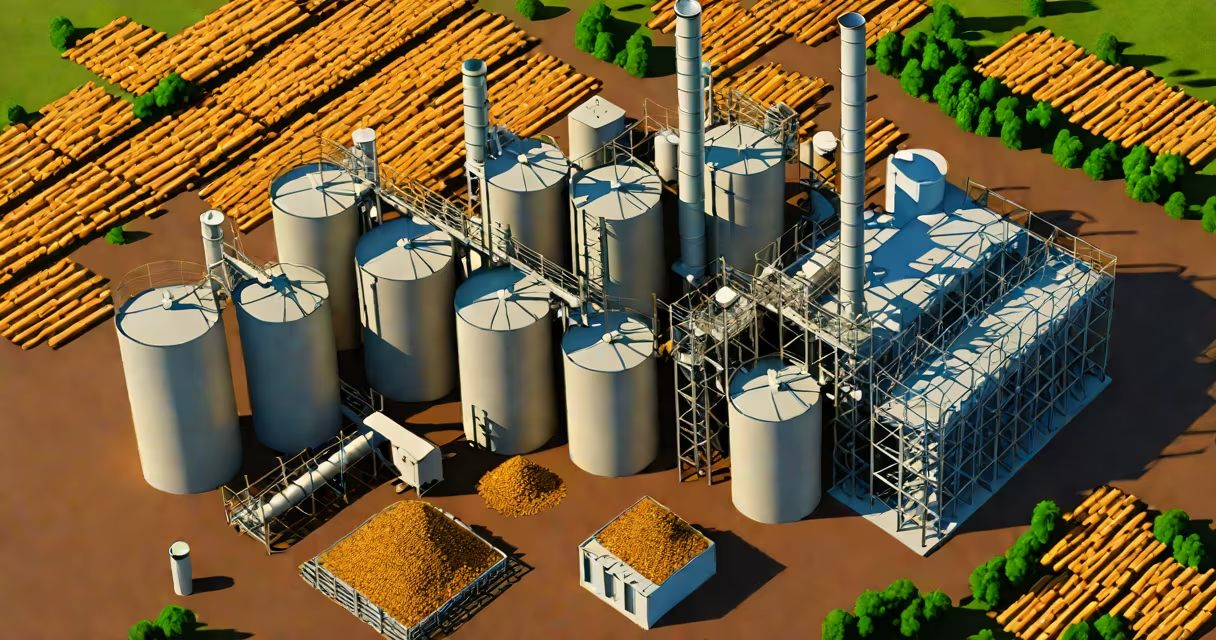
Biomass energy is stored through physical containment of organic materials like wood chips, agricultural residues, or processed pellets, or via chemical conversion into stable fuels such as bio-oil or biogas. The form of storage depends on the intended use-direct combustion, gasification, or biochemical processing.
Stored biomass functions as a renewable energy reserve. Unlike solar or wind, which depend on immediate availability, biomass can be collected, dried, compressed, and kept for months or years. This enables consistent energy output even when sunlight or wind is low. The U.S. Department of Energy notes that biomass accounts for nearly 50% of renewable energy consumption in the United States, largely due to its storability and dispatchability.
Storage begins with harvesting organic feedstock-such as corn stover, switchgrass, or logging residues. These materials are then dried to reduce moisture below 15%, preventing mold and spontaneous combustion. Once dry, they're typically compressed into pellets or bales for easier handling and higher energy density. Pellets have about 16-18 MJ/kg of energy content, comparable to low-grade coal.
Physical storage involves keeping raw or processed biomass in sealed containers, silos, or covered outdoor piles. This method preserves energy potential until needed for combustion or conversion.
Wood pellets are the most common form of stored biomass. They are manufactured by compressing dried sawdust or wood waste under high pressure. A standard pellet weighs about 2 grams and measures 6 mm in diameter. A single ton of pellets occupies roughly 1.5 cubic meters-about the volume of a small refrigerator. This compactness makes them ideal for long-term storage and transport.
Large-scale facilities, such as the Drax Power Station in the UK, store over 1 million tons of wood pellets annually. These are kept in climate-controlled silos to prevent degradation. Moisture levels are monitored daily; above 18%, microbial activity increases, leading to heat buildup and fire risk. The facility uses automated sensors and ventilation systems to maintain safe conditions.
| Storage Type | Energy Density (MJ/kg) | Common Use Case | Duration of Stability |
|---|---|---|---|
| Dried wood chips | 14-16 | Industrial boilers, district heating | 6-12 months |
| Wood pellets | 16-18 | Power plants, home heating | 2+ years |
| Compressed bales (straw, hay) | 12-14 | Agricultural energy, rural microgrids | 1 year |
Some biomass is converted into more stable chemical forms before storage. This includes producing bio-oil via pyrolysis or fermenting organic matter into biogas (methane).
Pyrolysis heats biomass in the absence of oxygen, breaking it down into bio-oil, char, and syngas. Bio-oil has an energy density of around 18 MJ/kg and can be stored in metal tanks for up to five years. It's less corrosive than crude oil and can be burned directly in modified engines. However, it requires preprocessing to remove water and particulates before use.
Biogas, produced through anaerobic digestion of manure or food waste, is stored as methane-rich gas in underground or above-ground digesters. The National Renewable Energy Laboratory (NREL) reports that biogas systems in Germany store enough gas to supply 200 homes for a week during peak demand. Gas is compressed and stored at pressures up to 200 bar in steel cylinders, similar to natural gas infrastructure.
One non-obvious fact: bio-oil degrades faster than fossil diesel when exposed to air. After six months of ambient storage, its viscosity increases by 30%, requiring blending with petroleum-based fuels for engine compatibility. This limitation is often overlooked in discussions about biomass fuel stability.
Biomass energy is not always "green" or carbon-neutral. While plants absorb CO₂ during growth, the full lifecycle emissions-including harvesting, drying, transportation, and combustion-must be accounted for. The Intergovernmental Panel on Climate Change (IPCC) states that biomass energy systems can emit up to 30% more CO₂ per unit of energy than natural gas when poorly managed.
Another misconception is that biomass storage is equivalent to battery storage. Unlike lithium-ion batteries, which store electricity, biomass stores chemical energy. You cannot charge biomass like a device. Instead, you burn it or convert it chemically to release energy. This distinction affects system design-biomass facilities require large storage yards or silos, while battery farms need compact, temperature-controlled rooms.
I once visited a biomass plant in northern Minnesota that used a combination of pellet storage and biogas digestion. The facility received 10,000 tons of wood residue annually. About 70% was turned into pellets and stored in two 1,000-ton silos. The remaining 30% went into a digester that produced biogas for backup power. During winter storms, when grid access was lost, the biogas system kept lights on for 36 hours. That experience showed me how integrated storage methods improve reliability.
Sweden uses biomass storage extensively in its district heating networks. Over 70% of homes in Stockholm are heated using centralized biomass plants that store pellets in underground silos. These silos hold up to 50,000 tons and are refilled monthly based on seasonal demand forecasts. The system reduces reliance on imported natural gas and cuts urban emissions by 40% compared to oil-based heating.
In India, small farmers in Punjab use baled rice straw for cooking. The straw is dried in the sun for three days, compressed into bales, and stored under tarps. Each bale burns for about 45 minutes and replaces 1 kg of kerosene. This method provides off-grid energy access without needing expensive fuel delivery systems.
For larger-scale projects, the European Union mandates that biomass used for energy must meet sustainability criteria, including traceability and low land-use change emissions. Facilities must track feedstock. This helps stored biomass doesn't contribute to deforestation or compete with food crops.
Understanding how biomass energy is stored reveals its role in balancing intermittent renewables. When solar panels stop generating at night, biomass plants can ramp up quickly. The ability to store energy in solid or gaseous form allows for predictable supply, unlike wind or solar alone. As global energy demand grows, biomass storage offers a practical bridge between renewable generation and consistent power delivery.