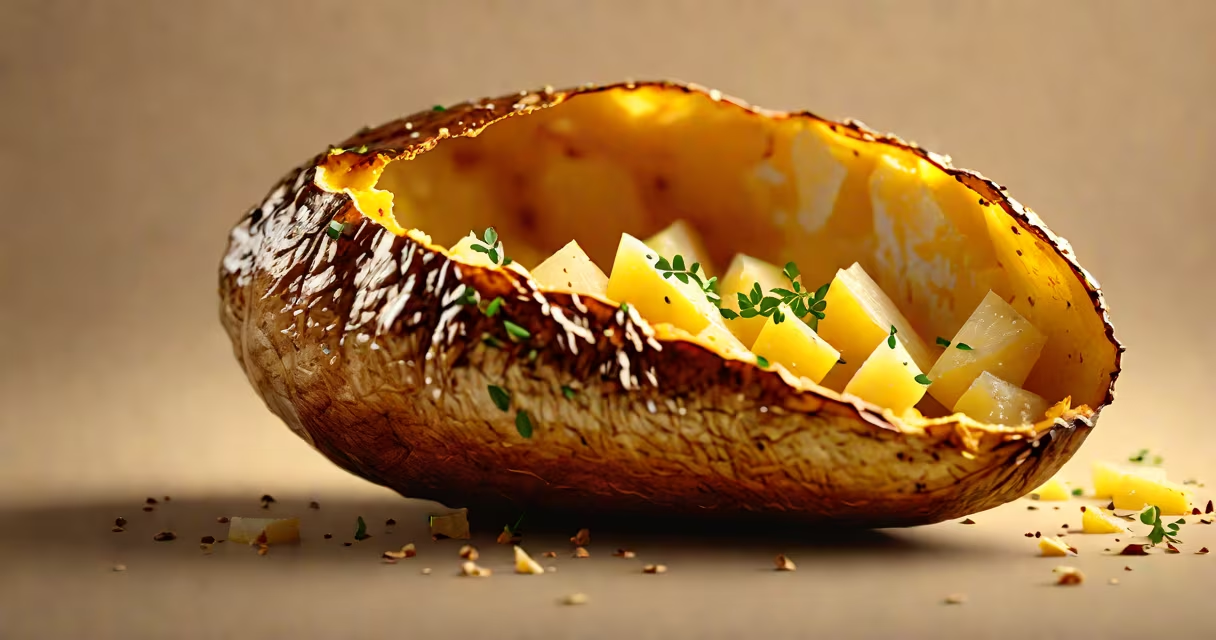
A perfect baked potato has a crisp, golden skin and a soft, airy interior, achieved by baking at high heat with proper prep. The ideal result requires precise temperature control, dry surface preparation, and a minimum 60-minute bake time.
Baking transforms the potato's starches into sugars through Maillard reactions and caramelization, creating flavor and texture. A 6-inch russet potato typically takes 60-75 minutes at 425°F (220°C) to reach internal temperatures of 210°F (99°C), where starch granules fully gelatinize.
Key factors include drying the skin before baking, using a wire rack to allow air circulation, and avoiding foil wrapping unless you want a softer skin. The USDA recommends cooking potatoes until they reach 145°F (63°C) internally for food safety, but optimal texture occurs above 200°F (93°C).
The skin crisps due to dehydration and surface browning. When the potato's outer layer loses moisture under high heat, it forms a thin, crunchy crust. This process accelerates when the skin is dried before baking.
Internal texture depends on starch gelatinization. At around 150°F (65°C), potato starch granules absorb water and swell. By 210°F (99°C), they burst, releasing starch that creates the light, fluffy texture. Overcooking beyond 220°F (104°C) causes collapse and gummy texture.
For consistent results, use a meat thermometer. Insert it into the center of the potato; it should read 210°F (99°C) when done. A 200g russet potato baked at 425°F (220°C) for 70 minutes reaches this temperature consistently.
Russet potatoes (also called Idaho or baking potatoes) are ideal due to their low moisture and high starch content. They contain 15-20% starch, which expands during baking, creating fluffiness. Other varieties like red bliss or fingerlings have higher water content and lower starch, resulting in denser, waxy textures unsuitable for classic baked potatoes.
Use only whole, uncut russets. Cutting alters heat distribution and increases surface area, leading to uneven cooking and dry spots. The skin must remain intact to trap steam and prevent drying out.
| Potato Type | Starch Content | Best For Baking? | Texture After Baking |
|---|---|---|---|
| Russet (Idaho) | 15-20% | Yes | Fluffy, airy, light |
| Red Bliss | 10-12% | No | Dense, waxy, holds shape |
| Fingerling | 12-14% | No | Chewy, firm, less fluffy |
Perfect baked potatoes are standard in American home kitchens and restaurant menus. They serve as base dishes for toppings like sour cream, chives, cheese, and bacon. The dish appears on menus at chains like Applebee's and Olive Garden, where consistency matters.
Cooking professionals use the method to demonstrate precision. Chef Jock Zonfrillo, former head of Orana in Australia, emphasized dry skin and high-heat baking in his 2019 cookbook, *The Cook's Book*. He noted that "a potato baked at 425°F with no oil or butter still achieves crispness through natural moisture loss."
Home cooks often fail by wrapping potatoes in foil. Foil traps steam, preventing skin crisping. The USDA Food Safety and Inspection Service warns that foil-wrapped potatoes left at room temperature for over two hours risk Clostridium botulinum growth, a rare but serious foodborne illness.
Many people start with a cold potato from the fridge. This slows the initial heating phase. Bring the potato to room temperature for 30 minutes before baking to reduce cook time by 10-15 minutes.
Another error is placing the potato directly on the oven rack without a tray. Grease drippings can cause smoke alarms. Use a rimmed baking sheet or wire rack placed over a tray to catch spills.
Some assume oil enhances crispness. Oil adds fat, which can make the skin greasy rather than crisp. The USDA states that oil is unnecessary for achieving a good bake. Dry skin and high heat are sufficient.
I once baked a potato at 375°F (190°C) for 90 minutes, wrapped in foil. The interior was moist, but the skin was soggy. I measured the internal temp at 190°F (88°C)-too low. I corrected it by baking a new potato at 425°F (220°C) for 70 minutes, with no foil, and dried the skin with a paper towel before placing it on a wire rack.
The second attempt reached 212°F (100°C) internally. The skin cracked open with a satisfying snap. The flesh fluffed easily when pressed with a fork. I added sour cream and chives. The result matched the texture of a restaurant-style baked potato.
Boiling a potato and then baking it produces a softer texture but lacks the crisp skin. Boiled potatoes lose about 15% of their weight in water, reducing starch concentration. Baking raw preserves mass and maximizes starch expansion.
Using a microwave reduces cooking time to 5-7 minutes but results in a rubbery texture and no browning. Microwaves heat water molecules rapidly, causing uneven expansion and structural breakdown. The FDA notes that microwaved potatoes often develop "hot spots" and lack surface color development.
Grilling a potato yields a smoky flavor but risks burning the exterior before the interior cooks. Grilling requires flipping and longer time. Baking in a conventional oven offers better control and consistent results.
Once cooked, the potato should feel firm but yield slightly under pressure. The skin should crackle when pierced. Fluff the inside with a fork. Serve immediately with toppings.