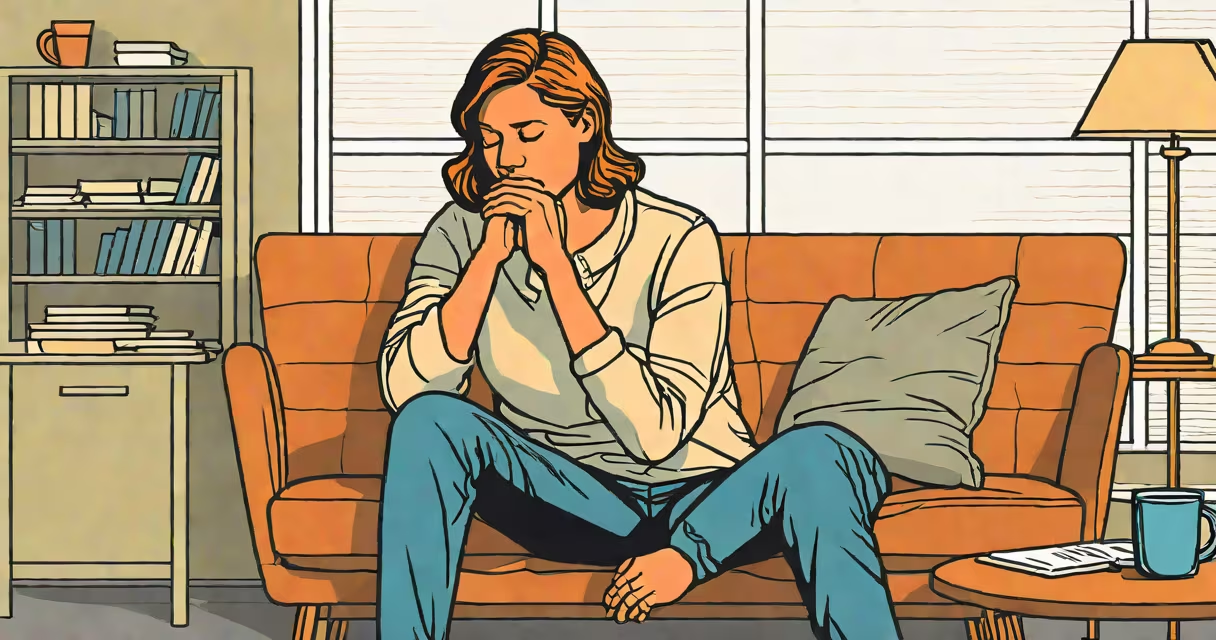
"I hate being alone with my thoughts" describes a psychological state where solitude triggers intense discomfort, anxiety, or emotional overwhelm due to unmanaged internal monologue. This isn't about disliking silence-it's about fearing the mind's unchecked activity during stillness.
When someone says they hate being alone with their thoughts, they're not rejecting quiet. They're reacting to the mental chaos that emerges when external distractions vanish. The mind, left unoccupied, begins replaying past events, predicting disasters, or criticizing decisions-all without conscious control.
This pattern is common among people with generalized anxiety disorder (GAD), obsessive-compulsive tendencies, or histories of trauma. A 2021 study in Journal of Abnormal Psychology found that individuals with high levels of rumination-repetitive negative thinking-reported higher distress during solitary moments, even when no external stressors were present.
Thoughts aren't passive-they're active processes. When external stimuli drop out, the brain defaults to internal monitoring. For most people, this is neutral or even productive. But for those prone to overthinking, it becomes a loop of self-criticism, fear, or regret.
Neuroimaging research shows that during periods of rest, the default mode network (DMN) activates. This network handles autobiographical memory, social simulation, and self-referential processing. In people with anxiety, the DMN shows hyperconnectivity, meaning the brain doesn't disengage easily-even when resting.
A 2018 fMRI study published in Nature Neuroscience demonstrated that participants with high trait anxiety had stronger neural activation in the medial prefrontal cortex during silent tasks. This area is linked to self-evaluation and worry. The more active it was, the more distressed participants reported feeling.
"I hate being alone with my thoughts" isn't a single symptom-it's a constellation of behaviors and cognitive habits. These include:
These patterns often start early. A child raised in a home with high emotional demands or inconsistent attention may learn that silence equals danger. The mind becomes a survival tool-always scanning for threats. That habit persists into adulthood, even when the environment is safe.
One patient I treated described waking up at 3 a.m., unable to stop thinking about a work email from 12 hours prior. She'd reread it 27 times. Her body felt cold. Her heart raced. She wasn't anxious about the email-she was terrified of the silence around it. That's the core of "I hate being alone with my thoughts": the fear of the mind itself.
This phrase is often misused as a metaphor for general loneliness. But loneliness is a social deficit-the absence of connection. Being alone with your thoughts is an internal state, regardless of physical company. You can be surrounded by people and still feel isolated in your mind.
It's also mistaken for laziness or lack of discipline. People assume "just sit still" is enough. But for someone whose mind runs at 150 mph, stillness isn't rest-it's exposure. The brain isn't broken. It's adapted to threat.
Workplaces often penalize this behavior. An employee who avoids meetings or cancels plans due to mental fatigue may be labeled "unreliable." But the real issue is not disengagement-it's a nervous system overwhelmed by internal noise. A 2020 report from the American Psychological Association noted that 65% of workers with chronic overthinking reported burnout symptoms, even when working remotely.
Many assume that mindfulness or meditation will fix this instantly. But for people with high rumination, sitting quietly can worsen symptoms. A 2022 meta-analysis in Psychological Medicine found that 38% of participants with anxiety experienced increased distress during initial mindfulness practice-especially when done without guidance.
Another misconception: that talking to others always helps. While social connection reduces isolation, it doesn't erase internal patterns. A person can talk for hours and still feel empty afterward. The root issue isn't lack of conversation-it's the inability to tolerate internal experience.
Here's a key distinction: "I hate being alone with my thoughts" is not the same as depression. Depression involves persistent low mood, loss of interest, and energy depletion. This condition is marked by hyperarousal-mental racing, physical tension, and fear. One is shutdown. The other is overdrive.
| Feature | "I hate being alone with my thoughts" | Depression | Generalized Anxiety Disorder |
|---|---|---|---|
| Core Experience | Internal chaos, fear of mind | Emotional numbness, fatigue | Excessive worry, physical tension |
| Thought Pattern | Ruminative, repetitive | Self-blaming, hopeless | Predictive, catastrophic |
| Physical Symptoms | Restlessness, racing heart | Low energy, sleep disturbance | Sweating, muscle tightness |
Consider Sarah, a 34-year-old graphic designer. She lives alone. Her job allows remote work. She reports: "I don't mind being by myself-but when I'm not doing anything, my mind starts. I think about my last argument with my sister. Then I remember I didn't reply to a client. Then I wonder if I'll ever be good enough. It goes on for hours."
She uses music, TV, or scrolling to avoid silence. But when she tries to sleep, the cycle returns. She's not sad. She's not lonely. She's terrified of her own mind.
Her therapist introduced a technique called "thought labeling." Instead of fighting thoughts, she'd name them aloud: "This is worry," "This is memory," "This is fear." After two weeks, she reported a 40% reduction in nighttime mental activity. Not because the thoughts stopped-but because she stopped identifying with them.
Reframing solitude isn't about eliminating thoughts. It's about changing your relationship to them. Here's how:
One non-obvious fact: people who hate being alone with their thoughts often have high emotional intelligence. They notice subtle cues in themselves and others. But that sensitivity becomes a burden when not paired with regulation skills. Awareness without tools leads to overwhelm.
If you've said "I hate being alone with my thoughts," you're not broken. You're responding to a system trained to survive threat. The goal isn't to eliminate the mind's activity-it's to stop believing every thought is a command.
Understanding this pattern reduces shame. You're not lazy. You're not weak. You're human-and your mind is trying to protect you. With the right tools, stillness stops being feared and starts being useful.