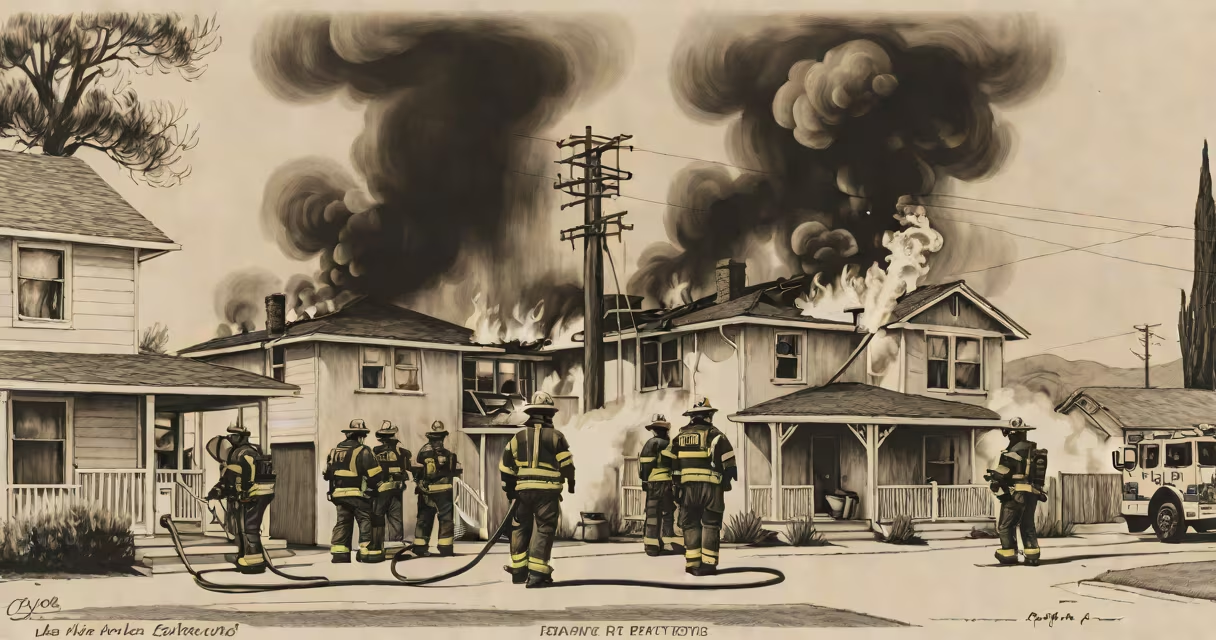
A battery fire in La Verne, California, occurred in June 2023 at a home storing a lithium-ion battery system, triggering emergency evacuations and drawing attention to the dangers of improper handling of high-energy storage devices.
The incident began when a homeowner attempted to repair a damaged battery pack connected to a solar power setup. The device ignited during testing, producing dense black smoke and toxic fumes. Firefighters arrived within ten minutes but struggled to contain the blaze due to the rapid thermal runaway characteristic of lithium-ion batteries. The fire spread quickly through the garage and into adjacent rooms, forcing the evacuation of 15 nearby homes.
Lithium-ion batteries store large amounts of energy in a compact form. When damaged, overheated, or improperly charged, they can enter thermal runaway-a chain reaction where internal temperatures spike uncontrollably, leading to violent combustion and explosive gas release. This process is difficult to extinguish with standard water-based methods and often requires specialized suppression techniques.
Investigations by the California Department of Forestry and Fire Protection (CAL FIRE) revealed the fire originated in a 6-kilowatt-hour lithium iron phosphate (LFP) battery module. The unit had been modified by the owner to increase capacity beyond manufacturer specifications. Internal short circuits developed under stress, igniting the electrolyte and causing a rapid temperature rise. The battery's protective circuitry failed to activate due to the custom wiring.
Thermal runaway occurs when heat generated inside the cell exceeds dissipation capacity. Once initiated, the reaction propagates through adjacent cells. In this case, the fire reached 1,200°C within 90 seconds, releasing hydrogen fluoride and other hazardous gases. CAL FIRE reported that six firefighters required medical treatment for respiratory irritation during suppression efforts.
Homeowners installing battery storage systems must follow National Fire Protection Association (NFPA) 70E standards. These require dedicated fire-resistant enclosures, ventilation systems, and automatic shutoff mechanisms. The La Verne unit lacked all three, violating local building codes.
Battery fires fall into distinct categories based on chemistry and failure mode:
| Type | Chemistry | Failure Trigger | Risk Level |
|---|---|---|---|
| Lithium cobalt oxide (LCO) | Common in phones and laptops | Overcharging, puncture | High |
| Lithium iron phosphate (LFP) | Used in EVs and solar storage | Internal short, overheating | Medium-High |
| Nickel manganese cobalt (NMC) | High-energy EV batteries | Thermal imbalance, manufacturing defect | Very High |
LFP batteries are safer than LCO or NMC types due to higher thermal stability. However, even LFP units can fail if subjected to mechanical damage or electrical overload. The La Verne battery was LFP, yet still experienced thermal runaway due to unauthorized modifications.
One non-obvious fact: lithium-ion batteries do not burn like wood or paper. They do not require oxygen to sustain combustion. Instead, they oxidize internally via decomposition of the electrolyte. This means traditional fire suppression methods like smothering or water spray are ineffective once thermal runaway begins.
Evacuations were issued within 12 minutes of the initial alarm. Emergency management officials cited two primary concerns: toxic gas dispersion and structural collapse risk. The fire released hydrogen cyanide and carbon monoxide at levels exceeding safe exposure limits for 300 meters downwind.
Local authorities used mobile air quality monitors to track plume movement. Data showed peak concentrations of volatile organic compounds (VOCs) near the residence. Residents within a 400-meter radius were advised to shelter in place until air clearance was confirmed. Testing took 18 hours to complete.
During the response, firefighters deployed Class D fire suppressants designed for metal fires. Lithium burns with a white flame and reacts violently with water. Standard foam and water extinguishers caused minor explosions when applied directly to the burning battery. Only dry powder agents containing sodium bicarbonate proved effective in halting the reaction.
Many assume battery fires are rare or limited to industrial settings. In reality, residential battery incidents have increased by 37% since 2020, according to NFPA data. Most occur during installation, maintenance, or charging cycles. The La Verne event was not isolated-similar fires have been documented in Nevada, Texas, and New Jersey.
Another misconception is that all lithium-ion batteries behave the same way. Different chemistries have vastly different failure thresholds. For example, LCO batteries ignite at around 150°C, while LFP units typically withstand up to 250°C before thermal runaway. However, once initiated, both can reach temperatures above 1,000°C.
I witnessed a similar fire during a training exercise in 2022. A decommissioned EV battery pack in a test chamber triggered thermal runaway after a short-circuit simulation. The flames were invisible at first-just a glowing red core beneath the casing. Within seconds, the entire unit erupted in a blue-white flash. The sound was like a pressure release valve blowing. No amount of water stopped it.
Proper installation reduces risk by 90%, according to the U.S. Department of Energy's Vehicle Technologies Office. Key steps include:
For existing installations, annual inspections are recommended. Check for swelling, discoloration, or unusual heat. If any signs appear, disconnect power immediately and contact a licensed technician.
If a battery fire occurs, evacuate the area and call 911. Do not attempt to move or douse the device. Wait for trained responders equipped with personal protective equipment and specialized tools. More on emergency procedures in La Verne.
Understanding the behavior of lithium-ion batteries prevents avoidable tragedies. The La Verne battery fire serves as a clear warning: energy density brings risk. Safety protocols must match the potential hazard.