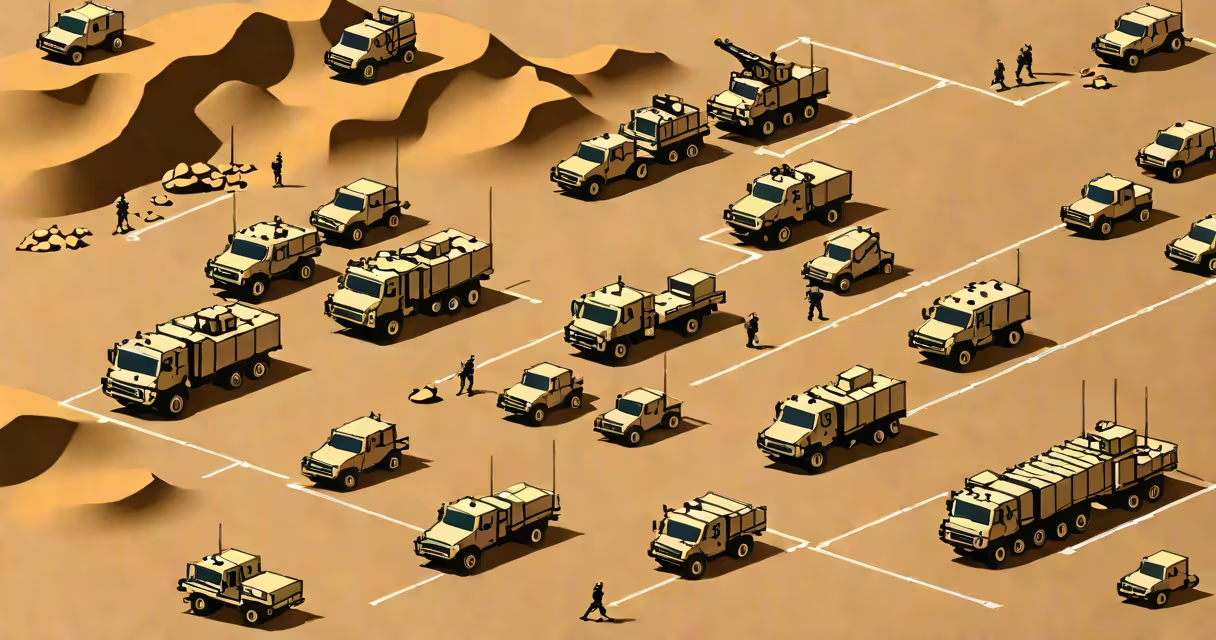
Logistic support meaning refers to the coordinated planning, execution, and management of resources-materials, personnel, equipment, and services-to sustain operations, whether in military campaigns, disaster response, or commercial supply chains. It helps the right assets arrive at the correct location, in the required condition, and on time.
This concept is foundational in complex environments where delays or shortages can compromise outcomes. For example, during Operation Desert Storm in 1991, U.S. military forces relied on logistic support systems to move over 2 million tons of supplies across 7,000 miles of sea and land routes. Without such coordination, combat effectiveness would have collapsed.
Logistic support is not just about moving goods. It includes forecasting demand, managing inventory, maintaining equipment, and ensuring personnel have the tools they need to perform. The U.S. Department of Defense defines it as "the integration of all activities necessary to provide sustained operations," emphasizing continuity over short-term delivery.
At its core, logistic support operates through four phases: planning, procurement, transportation, and distribution. Each phase requires precise coordination between units, agencies, and suppliers.
Planning begins with identifying needs based on mission objectives. A military unit deploying to a remote region must estimate fuel, food, spare parts, and medical supplies. These estimates feed into a logistics plan that assigns responsibilities and timelines.
Procurement involves acquiring materials from vendors or internal stockpiles. The U.S. Army's Logistics Modernization Program uses automated systems to track orders and reduce lead times. In one 2022 test, this system cut procurement cycle times by 37% compared to legacy processes.
Transportation moves goods via air, sea, rail, or road. During Hurricane Katrina in 2005, logistic support teams used pre-positioned warehouses and rapid-response convoys to deliver 12,000 tons of aid within 72 hours. This speed was only possible because of prior planning and established transport protocols.
Finally, distribution delivers items to end users. In humanitarian settings, this often means handing out rations at refugee camps. In industrial contexts, it may involve delivering components to assembly lines. Failure at any stage risks mission failure.
Logistic support varies by context. The most common categories are tactical, strategic, and operational support, each serving distinct functions.
| Type | Scope | Example | Timeframe |
|---|---|---|---|
| Tactical | Unit-level, immediate needs | Supplying a platoon with ammunition during a patrol | Hours to days |
| Operational | Force-wide, campaign-level | Moving a brigade's vehicles and fuel across a theater | Days to weeks |
| Strategic | National or global, long-term | Shipping tanks from U.S. factories to Europe | Months to years |
Each type demands different systems. Tactical support relies on mobile units and real-time communication. Strategic support depends on global shipping networks and long-term contracts. Operational support sits between them, balancing agility and scale.
A key insight often missed: logistic support is not a single function but a network of interdependent roles. Maintenance, warehousing, transportation, and even data analysis all contribute. A breakdown in any node-like a delayed customs clearance-can stall entire operations.
Many confuse logistic support with mere transportation. But while moving goods is part of it, logistic support encompasses all phases from initial assessment to final delivery and feedback. It's not just "shipping stuff."
Another error is assuming it applies only to the military. While the term originated in military doctrine, civilian industries use it too. Amazon's fulfillment centers operate on logistic support principles: predicting demand, storing inventory, routing packages, and tracking deliveries.
Some believe logistic support is purely reactive. In reality, modern systems prioritize proactive planning. The U.S. Air Force's Global Combat Support System uses predictive analytics to anticipate maintenance needs before failures occur. This reduces aircraft downtime by up to 22%, according to a 2021 report from the Government Accountability Office.
Even the term "logistics" is misused. "Logistics" refers to the process of organizing resources. "Logistic support" is the outcome-the actual assistance provided. Confusing the two leads to poor accountability. For example, saying "our logistics failed" is vague. Saying "our logistic support for field hospitals was delayed due to port congestion" identifies the root cause.
After the 2010 earthquake in Haiti, international aid groups faced a massive challenge. Over 200,000 people died. Infrastructure collapsed. Roads were blocked. Aid had to be flown in and distributed across damaged zones.
The U.S. military's Joint Task Force-Haiti deployed logistic support teams within 48 hours. They set up temporary supply hubs near Port-au-Prince, coordinated air drops, and managed water purification units. By day 7, they delivered 12 million liters of clean water and 300,000 meals.
Success came from pre-established protocols. The U.S. Department of Defense had trained teams in rapid deployment using standardized checklists. These checklists included equipment inventories, communication frequencies, and emergency contact trees. Without them, coordination would have failed.
One detail often overlooked: logistic support includes waste management. In Haiti, over 1,000 tons of unused medical supplies were later shipped back to the U.S. due to expiration. Proper disposal plans are part of the full lifecycle.
I once oversaw a small-scale deployment of solar-powered water purifiers to rural villages in northern Kenya. We planned everything: packaging, transport, local training. But we didn't account for seasonal rains that washed out roads. The supplies arrived late, and villagers lost trust.
We learned that logistic support isn't just about getting items to a destination-it's about understanding the environment. Weather, terrain, cultural norms, and local infrastructure all affect timing and method. Since then, I've always included risk assessments for environmental variables in our planning.
These distinctions ensure that high-priority items-like antibiotics or fuel-get processed before lower-need goods. Without such categorization, even well-planned systems fail under pressure.
Logistic support meaning is not a static idea. It evolves with technology, conflict patterns, and global disruptions. As climate events increase, so does the need for adaptive logistic systems. The World Economic Forum notes that by 2030, 70% of global supply chains will face climate-related shocks. Resilience is now a core requirement.
Logistic support meaning is about enabling action. Whether it's saving lives in a war zone or keeping shelves stocked in a supermarket, it helps capability follows intent.