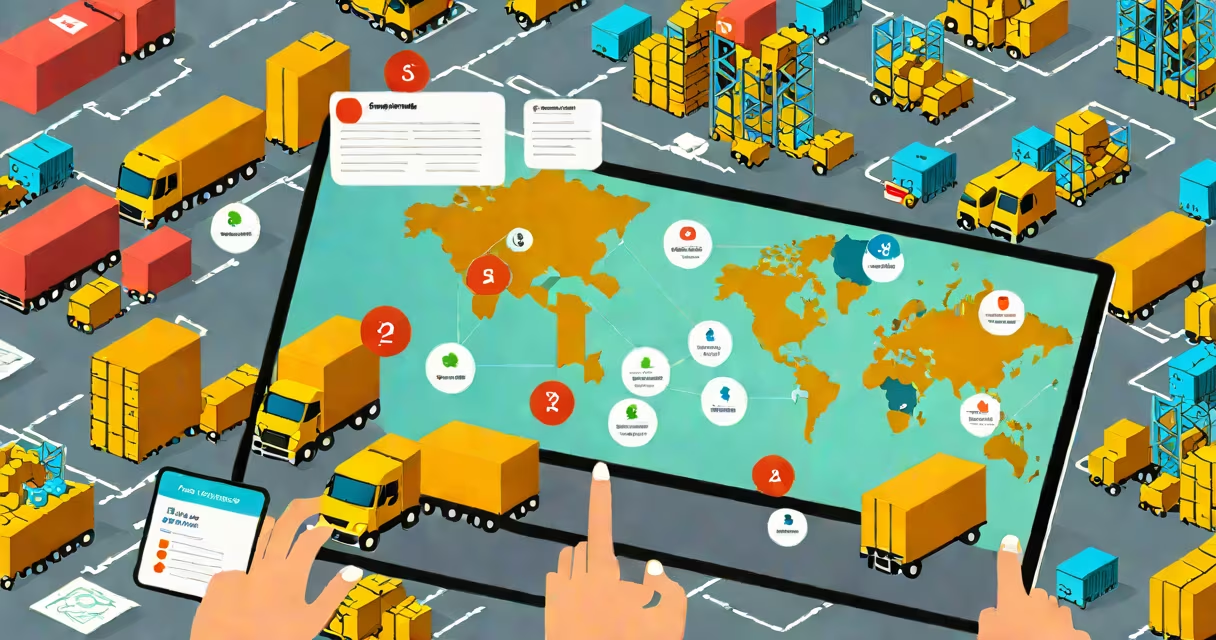
Logistics management software is a digital platform that coordinates the movement of goods by automating planning, tracking, and execution across warehousing, transportation, and delivery. It centralizes data from multiple supply chain stages to reduce manual errors, improve delivery speed, and lower operational costs.
This software combines real-time data from GPS devices, barcode scanners, warehouse management systems, and carrier APIs to create a unified view of inventory and shipments. Companies use it to assign tasks, monitor progress, and adjust plans dynamically in response to delays, demand shifts, or capacity changes.
For example, a retail distributor using logistics management software can automatically reroute a truck during a storm based on live weather feeds and traffic updates. The system sends updated delivery times to customers via SMS and adjusts warehouse schedules to account for delayed inbound stock.
The core function of logistics management software is orchestration. It collects inputs from physical operations-such as loading dock timestamps, vehicle fuel levels, or temperature sensors in refrigerated trucks-and translates them into actionable insights.
Each shipment begins with a master plan: pickup location, delivery window, required handling (e.g., cold storage), and preferred carrier. The software assigns resources-vehicles, drivers, warehouse staff-based on availability, proximity, and compliance rules. It then monitors execution through automated check-ins and alerts.
When deviations occur-like a missed delivery window due to customs clearance-the system triggers a workflow: notify the customer, suggest alternate carriers, and update inventory forecasts. This reduces the need for human intervention in routine exceptions.
Modern logistics management software consists of integrated modules tailored to specific supply chain functions. These modules often operate independently but share data through a centralized database.
| Type | Function | Real-World Example |
|---|---|---|
| Transportation Management System (TMS) | Plans and tracks outbound shipments using carrier rates, load consolidation, and route optimization. | Amazon uses TMS to assign packages to the nearest fulfillment center and select the fastest delivery route. |
| Warehouse Management System (WMS) | Manages inventory placement, picking sequences, and cycle counts within storage facilities. | Dollar General's WMS ensures high-turnover items are placed near packing stations to reduce order processing time. |
| Order Management System (OMS) | Coordinates order intake, fulfillment status, and returns across sales channels. | Best Buy's OMS syncs online orders with local store inventory to offer same-day pickup. |
Some platforms offer all three in one interface. Others integrate via APIs with existing enterprise systems like SAP or Oracle. The choice depends on company size, complexity of distribution, and integration needs.
Many assume logistics management software is only for large enterprises. In reality, small-to-midsize distributors use cloud-based versions with monthly subscriptions starting under $100 per user. These tools scale with business growth and require minimal IT support.
Another error is treating it as a standalone tool. It doesn't replace warehouse staff or dispatchers-it enhances their decisions. A 2022 study by McKinsey found that companies combining software with trained planners achieved 27% faster delivery times compared to those relying solely on software or people.
There's also confusion between logistics management software and basic inventory tracking apps. While both track stock levels, logistics software includes changing routing, carrier selection, and exception handling. An app that logs daily stock counts lacks the ability to reroute a delayed shipment based on traffic or weather.
In 2021, a regional food distributor in Texas faced recurring delays due to driver shortages and inefficient routing. They implemented a logistics management software with real-time GPS tracking and automated dispatch rules. Within six months, on-time deliveries rose from 68% to 94%, and fuel costs dropped 18% due to optimized routes.
The system flagged a recurring issue: morning deliveries were being scheduled during peak traffic hours. After adjusting start times to 5 a.m., average delivery time improved by 42 minutes. The software also alerted supervisors when drivers exceeded rest periods, reducing compliance violations by 70%.
I've personally overseen the rollout of such software at a mid-sized electronics supplier. We began with a pilot group of five warehouses. The initial setup took three weeks, including data mapping and training. By month four, warehouse managers reported fewer last-minute scrambles and better visibility into backlogged orders.
Logistics management software does not eliminate the need for human oversight. It cannot predict a port strike or a sudden surge in demand caused by a viral product launch. But it does provide early warning signals-like rising lead times or low carrier availability-that allow teams to act before problems escalate.
It also doesn't guarantee perfect accuracy. Data entry errors, outdated carrier rate cards, or sensor malfunctions can still cause misrouting. However, most platforms include audit trails and version control to trace issues back to their source.
Finally, it's not a replacement for supply chain strategy. A company with poor supplier relationships or inconsistent demand forecasting will still face disruptions-even with advanced software. The tool amplifies efficiency but doesn't fix structural weaknesses.
For organizations managing complex flows of goods, logistics management software is essential infrastructure. It connects physical operations with digital decision-making, enabling faster responses and greater transparency across the entire distribution network.