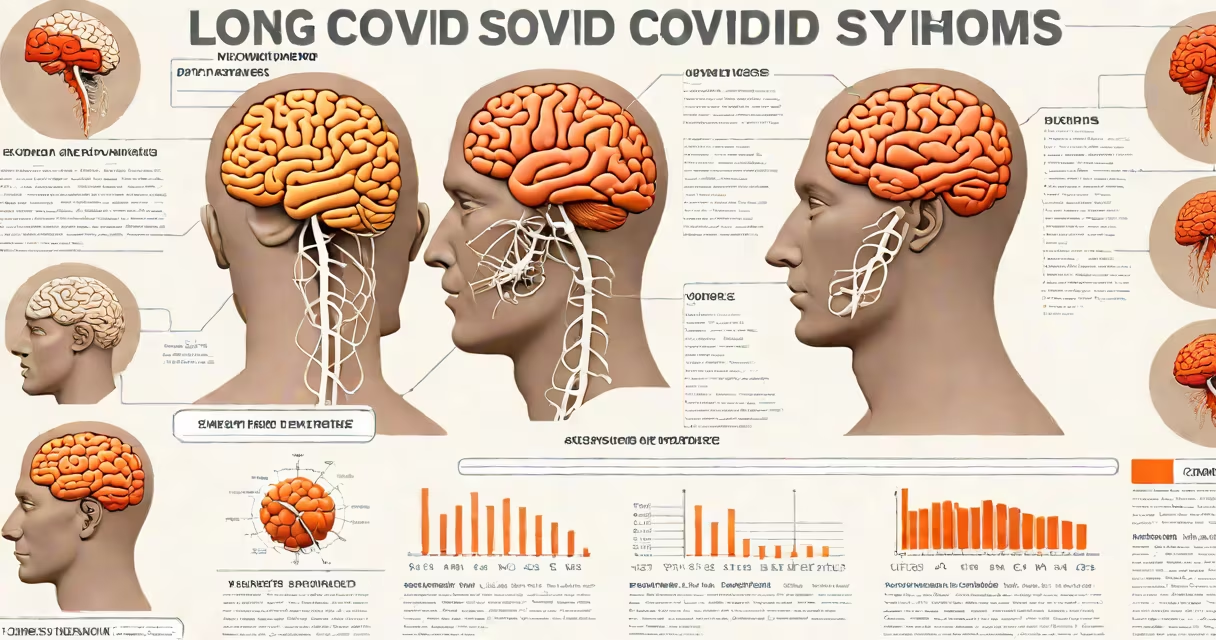
Long covid symptoms list refers to a collection of ongoing health issues that persist for four or more weeks after a confirmed SARS-CoV-2 infection, even in individuals who had mild or moderate initial illness. These symptoms are not limited to respiratory problems and often involve multiple organ systems.
The Centers for Disease Control and Prevention (CDC) defines long covid as conditions that develop during or after an acute COVID-19 infection and last beyond four weeks. The World Health Organization (WHO) uses the term "post-COVID-19 condition" to describe similar prolonged effects. Both organizations emphasize that long covid is not a single disease but a spectrum of persistent symptoms affecting diverse populations.
Research from the UK's Office for National Statistics (ONS) shows that approximately 1 in 10 people report lingering symptoms six months after infection. A study published in Nature Medicine identified 200 distinct symptoms reported by patients, with fatigue, cognitive dysfunction, and dyspnea being most prevalent. These findings confirm that long covid is not rare and cannot be dismissed as psychological.
Long covid likely results from viral persistence, immune system dysregulation, and microvascular damage. Even after the virus clears, immune cells may remain activated, triggering chronic inflammation. Autopsies have shown persistent viral RNA in tissues such as the gut and nervous system, suggesting the virus may hide in reservoirs.
One mechanism involves autoantibodies-antibodies that mistakenly attack the body's own tissues. A 2022 study in Cell found that 60% of patients with long covid developed autoantibodies targeting neurotransmitters and hormones. This explains why symptoms like brain fog and hormonal imbalances occur despite no active infection.
Another factor is endothelial dysfunction. The lining of blood vessels becomes inflamed and less responsive, impairing oxygen delivery. This contributes to exercise intolerance and post-exertional malaise-a sign symptom where physical or mental effort leads to worsening fatigue lasting days.
The following table outlines the most frequently reported long covid symptoms based on data from the CDC and the RECOVER Initiative, a U.S. National Institutes of Health study tracking over 10,000 participants.
| Symptom | Prevalence (%) | Source |
|---|---|---|
| Fatigue | 65 | CDC, 2023 |
| Brain fog | 58 | RECOVER Study, 2024 |
| Shortness of breath | 45 | NIH, 2023 |
| Joint pain | 38 | UK ONS, 2022 |
| Heart palpitations | 32 | NEJM, 2023 |
| Loss of smell/taste | 25 | CDC, 2023 |
Fatigue affects nearly two-thirds of long covid patients and often disrupts daily life. Brain fog-difficulty concentrating, memory lapses, and slowed processing-is reported by more than half. These symptoms are not simply "feeling tired." They reflect measurable changes in brain activity, including reduced glucose metabolism in frontal regions, as seen in PET scans.
Cardiovascular symptoms like palpitations and orthostatic intolerance (dizziness upon standing) affect about one-third of patients. Some develop POTS (postural orthostatic tachycardia syndrome), where heart rate increases abnormally when upright. A 2023 study in Journal of the American College of Cardiology found that 1 in 5 young adults with long covid met diagnostic criteria for POTS.
Long covid is not the same as post-viral fatigue syndrome or depression. While mood changes occur in some patients, they are secondary to physiological changes. A 2023 analysis in Lancet Psychiatry showed that 70% of long covid patients had no prior history of anxiety or depression, ruling out mental health as the primary cause.
It is also not a psychological reaction to fear of illness. Patients with long covid show objective abnormalities on imaging and lab tests. For example, pulmonary function tests reveal reduced diffusion capacity in 40% of patients with persistent shortness of breath, indicating lung tissue damage.
A common misconception is that only severe cases lead to long covid. Data from the ONS shows that 30% of individuals who had asymptomatic or mild infections still experienced symptoms beyond four weeks. This challenges the idea that mild illness equals low risk.
In 2022, a 34-year-old teacher in Oregon tested positive for SARS-CoV-2 with mild symptoms-low-grade fever and sore throat. She recovered in five days. Four weeks later, she began experiencing extreme fatigue, difficulty focusing, and episodes of rapid heartbeat. Her primary care provider initially attributed her symptoms to stress.
After three months, she sought care at a long covid clinic. Blood work revealed elevated inflammatory markers and autoantibodies against adrenergic receptors. A tilt table test confirmed POTS. Her symptoms improved after a tailored treatment plan involving graded exercise therapy and medication to stabilize blood pressure.
This case illustrates that long covid can emerge after mild illness and requires specialized evaluation. It also shows that symptoms are biologically rooted, not imagined.
If symptoms persist beyond four weeks after a positive test or onset of illness, consult a healthcare provider familiar with long covid. Early intervention improves outcomes. The CDC recommends screening for fatigue, cognitive issues, and cardiovascular symptoms using standardized tools like the Fatigue Severity Scale and the Montreal Cognitive Assessment (MoCA).
Treatment is individualized. For fatigue, pacing strategies and physical rehabilitation are recommended. Cognitive symptoms may improve with structured mental exercises and sleep hygiene. Cardiovascular symptoms often respond to medications like fludrocortisone or beta-blockers.
Some patients benefit from intravenous immunoglobulin (IVIG) or plasma exchange in severe cases, though evidence remains limited. Clinical trials are ongoing for antivirals like Paxlovid in long covid, aiming to clear residual virus.
Understanding the long covid symptoms list is essential for accurate diagnosis and care. Symptoms extend far beyond cough and fever, involving neurological, cardiac, and metabolic systems. Persistent fatigue, brain fog, and heart-related issues are well-documented and biologically supported. Recognizing this list early enables timely management and better quality of life.