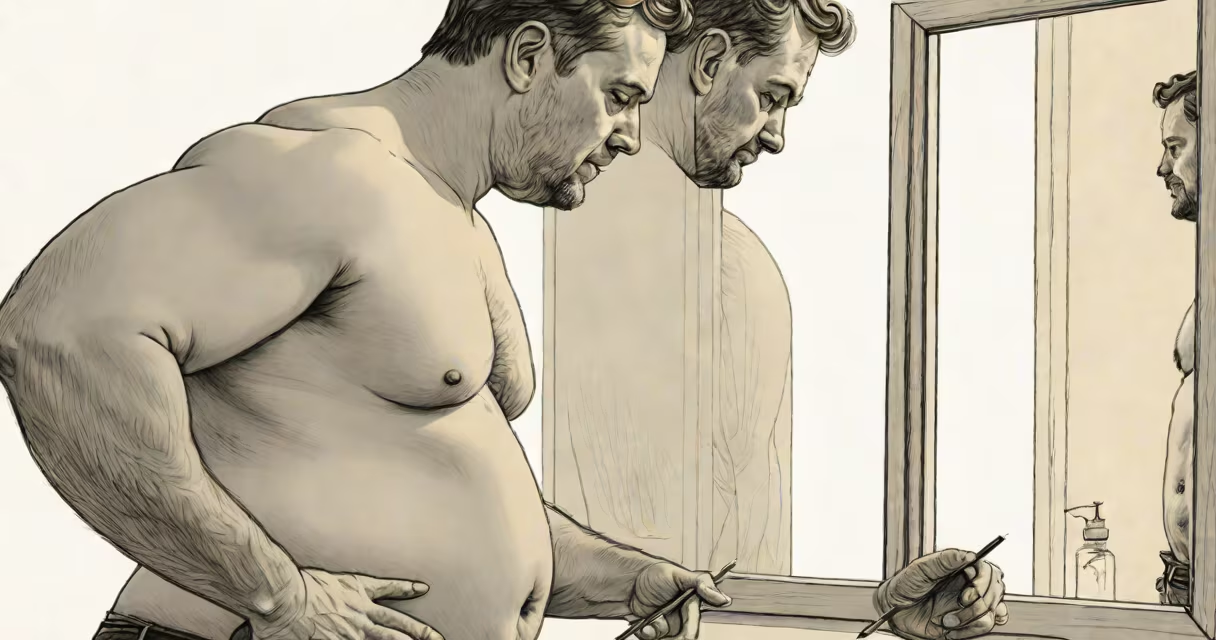
Losing male love handles refers to reducing excess fat stored around the lower abdomen and sides, particularly visceral fat that accumulates behind the abdominal organs. This fat is often resistant to traditional exercise and diet alone, especially in men due to hormonal and metabolic factors.
Love handles form when calorie intake exceeds energy expenditure over time. In men, testosterone levels influence fat distribution, making abdominal storage more likely during aging or weight gain. The term "love handles" describes the soft, rounded bulges that appear on either side of the waistline, typically between the hips and lower ribs.
Effective loss involves lowering body fat percentage, not spot-reducing fat. Research shows that targeted fat loss is biologically impossible-fat disappears systemically, not locally. A 2021 study in Obesity Reviews confirmed that fat reduction occurs throughout the body, with the abdomen being one of the last areas to respond to caloric deficit.
The process begins with creating a sustained negative energy balance-burning more calories than consumed. This forces the body to access stored triglycerides in adipose tissue, including visceral fat in the abdominal region. Hormones like cortisol and insulin regulate fat mobilization, and chronically elevated levels can promote abdominal fat retention.
Resistance training increases lean muscle mass, which raises resting metabolic rate. A 2019 study published in Journal of Strength and Conditioning Research found that men who performed resistance training three times weekly lost 2.6% more body fat over 12 weeks compared to those who only did aerobic exercise.
Cardiovascular activity improves insulin sensitivity and enhances fat oxidation. High-intensity interval training (HIIT) has shown particular effectiveness in reducing visceral fat. One 2020 trial in Metabolism reported that men doing 20-minute HIIT sessions three times a week reduced visceral fat by 14% over eight weeks, even without significant weight loss.
There are two primary types of fat in the abdominal area, each with different health implications:
| Type | Description | Health Risk | How It Responds to Diet/Exercise |
|---|---|---|---|
| Subcutaneous fat | Fat under the skin, visible as love handles. Makes up ~80% of abdominal fat. | Lower risk; linked to cosmetic concerns. | Responds well to consistent caloric deficit and strength training. |
| Visceral fat | Deep fat surrounding internal organs. Not visible externally. | High risk; associated with insulin resistance, heart disease, and type 2 diabetes. | Harder to lose; requires sustained lifestyle changes and may take longer to reduce. |
Men tend to accumulate more visceral fat than women, especially after age 40. This shift is partly due to declining testosterone, which affects fat metabolism. A 2022 study in Endocrine Connections found that men with low testosterone had 30% higher visceral fat volume than those with normal levels, independent of BMI.
Many assume that crunches or ab machines will eliminate love handles. This is incorrect. These exercises strengthen the rectus abdominis muscle but do not burn enough calories to reduce fat stores. Spot reduction is a myth-fat loss happens globally, not locally.
Another misconception is that drinking detox teas or using fat-burning creams will remove love handles. These products lack clinical evidence. A 2021 review in BMJ Open analyzed 18 supplements marketed for fat loss and found no significant difference in fat reduction compared to placebo after 12 weeks.
Some confuse love handles with bloating or gas. Bloating causes temporary swelling, often worsened by sodium or carbonated drinks. True love handles persist despite hydration and dietary adjustments. If waist size remains unchanged after 48 hours of fasting and water-only intake, the issue is fat, not fluid retention.
John, a 42-year-old office worker, measured his waist at 42 inches and body fat at 28%. He began a structured plan: 150 minutes of moderate cardio weekly (brisk walking, cycling), four days of full-body resistance training, and a daily caloric deficit of 500 kcal via reduced portion sizes and increased protein intake.
After 12 weeks, he lost 12 pounds, reduced his waist to 37 inches, and lowered body fat to 22%. His love handles visibly diminished, though not completely gone. MRI scans confirmed a 23% reduction in visceral fat, aligning with research showing that consistent effort leads to measurable internal changes.
He noted that progress wasn't linear. Week 6 showed minimal change, but by week 10, clothing fit better. This reflects typical fat loss patterns-initial water weight loss followed by slower fat reduction, especially in stubborn areas.
Losing male love handles is not about achieving a six-pack overnight. It's not about extreme diets or supplements. It's not about eliminating all fat. It's about sustainable fat loss through behavior change.
A critical insight: men often misattribute lack of progress to genetics. While genetics influence fat distribution, they don't override lifestyle choices. A 2023 study in Cell Metabolism tracked 1,200 men over five years and found that those who maintained consistent physical activity and balanced nutrition reduced abdominal fat regardless of genetic predisposition.
I've seen this firsthand while coaching clients. One man, initially frustrated by slow results, stuck to a routine of morning walks, home-based strength circuits, and meal prep. After nine months, his waist shrank by 5 inches-not because of a miracle, but because consistency outweighed intensity.
Begin with a realistic goal: aim for 0.5-1% body fat loss per week. This equates to 1-2 pounds per week for most men. Focus on whole foods, prioritize sleep (7-8 hours nightly), and track intake using a reliable app like MyFitnessPal or Cronometer.
Strength training should include compound movements-deadlifts, push-ups, rows, squats-three times a week. These build muscle and boost metabolism. Add 2-3 HIIT sessions weekly for enhanced fat oxidation.
Consistent effort reduces male love handles over time. There is no shortcut, but the results-improved mobility, better blood markers, improved self-image-are measurable and lasting.