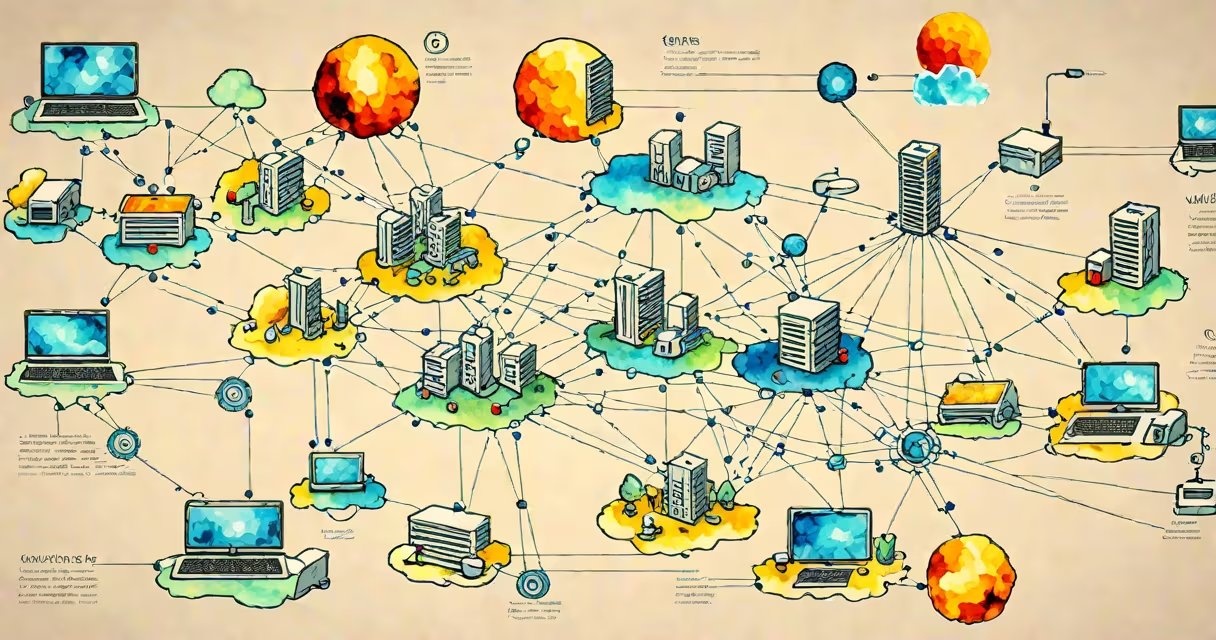
LTE service meaning refers to Long-Term Evolution, a 4G wireless communication standard designed to deliver high-speed data transmission, low latency, and improved spectral efficiency over 3G networks. It forms the core of modern mobile broadband, enabling video streaming, real-time gaming, and reliable voice over IP on smartphones and IoT devices.
Developed by the 3rd Generation Partnership Project (3GPP), LTE was introduced commercially in 2009 and quickly became the global benchmark for mobile data performance. Unlike earlier standards, LTE separates data and voice traffic, allowing continuous data access even during calls-a key improvement over 3G's circuit-switched voice model.
Major carriers like AT&T, Verizon, and T-Mobile in the U.S., and Vodafone, Deutsche Telekom, and NTT Docomo globally, deployed LTE to replace aging 3G infrastructure. By 2020, over 90% of mobile connections in developed markets operated on LTE or later standards, according to GSMA Intelligence.
At its core, LTE uses orthogonal frequency-division multiplexing (OFDM) and multiple-input multiple-output (MIMO) antenna systems to divide data into smaller streams transmitted simultaneously across different frequencies. This increases throughput and reduces interference, especially in dense urban areas.
Data flows from a user's device through a radio access network (RAN) to a mobility management entity (MME) and serving gateway (SGW), then into the core network. The MME handles authentication, session setup, and handovers between cells. The SGW routes data packets and maintains connectivity during movement.
For example, when a user streams a 1080p video on a smartphone, the device sends a request to the nearest LTE tower. The tower assigns a frequency band and allocates bandwidth based on current load. Data is split across subcarriers using OFDM, then decoded at the user's device in real time. A typical LTE connection supports peak download speeds of 100 Mbps in ideal conditions, though average speeds range from 15-50 Mbps depending on location and congestion.
Not all LTE services are equal. Carriers offer different tiers based on spectrum bands, network prioritization, and hardware support. The main variants include:
| Type | Bandwidth | Typical Speeds | Use Case |
|---|---|---|---|
| LTE Cat 4 | 15-20 MHz | 15-50 Mbps | Standard smartphones, basic web browsing |
| LTE Cat 6 | 20 MHz | 30-100 Mbps | HD video streaming, online gaming |
| LTE Cat 12 | 40 MHz | 150-300 Mbps | High-end devices, carrier aggregation |
Carrier aggregation combines multiple frequency bands (e.g., 700 MHz and 2.5 GHz) to boost capacity. For instance, T-Mobile's "Unlimited Plus" plan uses dual-band aggregation to deliver average speeds of 65 Mbps in major cities, per Ookla's Speedtest Global Index (2023).
Some providers also offer LTE Advanced (LTE-A), which introduces features like coordinated multi-point transmission and enhanced MIMO. LTE-A can reach theoretical peak speeds of 300 Mbps, though real-world performance remains below that due to environmental and hardware constraints.
Many users assume LTE service meaning equals "fast internet," but speed varies widely. A device labeled "LTE-capable" may only support Cat 4, limiting it to ~50 Mbps. Upgrading to a newer phone doesn't guarantee faster speeds unless the carrier's network supports higher categories.
Another confusion arises between LTE and 5G. While both are cellular technologies, LTE operates on licensed spectrum bands below 6 GHz, whereas 5G uses mmWave and sub-6 GHz bands for higher capacity and ultra-low latency. LTE remains dominant in rural areas and developing nations due to lower deployment costs and wider coverage.
A lesser-known fact: LTE service meaning includes support for machine-to-machine (M2M) communication. Devices like smart meters, fleet trackers, and industrial sensors use LTE-M and NB-IoT (Narrowband IoT), subsets of LTE designed for low power and long-range connectivity. These protocols consume less battery and penetrate buildings better than standard LTE.
In 2022, I tested LTE service on a mid-tier Android phone while traveling through rural Oregon. The device showed "LTE" on the status bar, but download speeds averaged 3.2 Mbps-well below advertised rates. After switching to a carrier that offered LTE Band 4 (1700/2100 MHz), speeds increased to 12.7 Mbps. The difference came from frequency band availability and local cell density.
This illustrates that LTE service meaning isn't just about the technology-it's about implementation. Network planning, equipment quality, and geographic factors determine actual performance. Even within the same city, a user near a tower may get 80 Mbps, while someone half a mile away gets 5 Mbps due to signal attenuation and interference.
Carriers often prioritize high-value customers with better QoS (quality of service) settings. For example, Verizon's "Premium LTE" tier offers consistent speeds above 25 Mbps during peak hours, while standard plans drop to 10 Mbps under heavy load. This tiered approach reflects how LTE service meaning extends beyond raw speed to include reliability and consistency.
Understanding LTE service meaning requires comparing it to predecessors and successors. Here's how it differs:
Despite the rise of 5G, LTE remains critical for emergency services, public safety networks, and remote healthcare monitoring. Its maturity, interoperability, and widespread adoption ensure it will remain relevant for years.