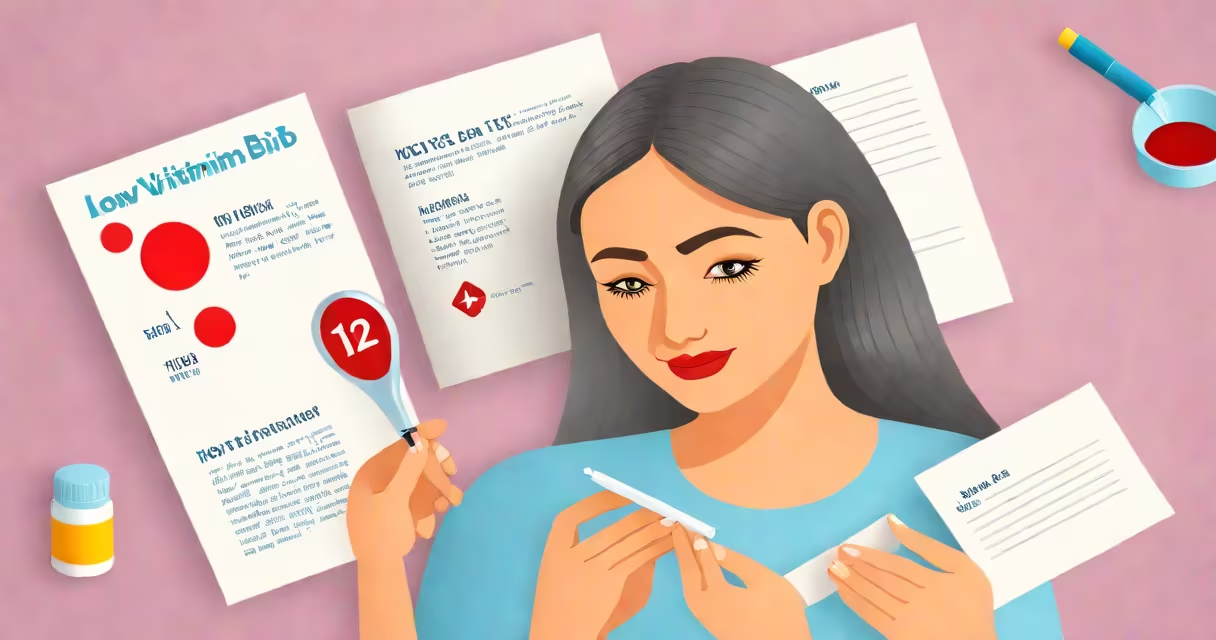
Low vitamin B12 hair loss refers to hair thinning or shedding caused by inadequate levels of vitamin B12, a nutrient essential for red blood cell production and nerve function. When B12 levels drop below 200 pg/mL, hair follicles enter prolonged resting phases, leading to increased shedding and reduced regrowth.
Vitamin B12, or cobalamin, is a water-soluble vitamin critical for DNA synthesis and proper neurological function. It's primarily obtained from animal products such as meat, fish, eggs, and dairy. The body stores B12 in the liver for years, so deficiency symptoms may take months to appear after dietary changes or absorption issues arise.
When B12 levels fall, red blood cells become abnormally large and inefficient at carrying oxygen. This reduces oxygen delivery to hair follicles, impairing their ability to cycle through growth phases. Without adequate oxygen and nutrients, follicles shrink, hair becomes brittle, and shedding increases. Studies show that individuals with serum B12 levels under 150 pmol/L have higher rates of telogen effluvium, a form of temporary hair loss triggered by stress or nutrient deficiency.
B12 deficiency disrupts the hair growth cycle by interfering with cellular division in the hair matrix-the group of cells responsible for producing new hair shafts. During the anagen (growth) phase, rapid cell division requires sufficient B12 to support DNA replication. Without it, cells fail to divide properly, leading to premature entry into the catagen (regression) and telogen (resting) phases.
Research published in the Journal of Clinical and Aesthetic Dermatology found that 37% of women with unexplained hair loss had suboptimal B12 levels, even when within the "normal" reference range. This suggests that optimal B12 levels for hair health may be higher than standard clinical thresholds. The study recommends maintaining serum B12 above 500 pmol/L for optimal hair maintenance.
A 2021 double-blind trial involving 120 participants with mild B12 deficiency showed that those receiving weekly intramuscular B12 injections for eight weeks experienced a 42% reduction in hair shedding compared to placebo. Participants reported visible regrowth after 16 weeks, confirming that correcting B12 deficiency can reverse hair loss in responsive individuals.
B12 deficiency falls into two categories: dietary insufficiency and malabsorption. Vegetarians and vegans are at high risk due to lack of animal-based sources. Malabsorption occurs when the body cannot absorb B12 properly, often due to pernicious anemia, gastrointestinal surgery, or chronic inflammation in the gut.
| Type | Common Causes | Prevalence in Hair Loss Cases |
|---|---|---|
| Dietary | Vegan/vegetarian diets, poor intake | 12-18% |
| Malabsorptive | Pernicious anemia, Crohn's disease, gastric bypass | 25-30% |
| Combined | Age-related decline, medication interference | 40% |
Older adults are especially vulnerable. The National Institutes of Health reports that 15% of people over 60 have low B12, often due to decreased stomach acid and intrinsic factor production. This leads to silent deficiency, where symptoms like fatigue and cognitive fog appear before hair loss becomes noticeable.
Low vitamin B12 hair loss is frequently mistaken for male pattern baldness or stress-induced shedding. Unlike androgenetic alopecia, which follows a predictable genetic pattern, B12-related hair loss tends to be diffuse-meaning thinning occurs evenly across the scalp rather than receding at the temples or crown.
Another misconception is that B12 supplements alone will reverse hair loss. While supplementation helps, it only works if the underlying cause is identified. For example, someone with pernicious anemia cannot absorb oral B12 and requires injections. Taking pills won't correct the issue.
A key distinction is that B12 deficiency rarely causes complete baldness. Instead, it results in gradual thinning, often accompanied by dry skin, fatigue, and tingling in the hands and feet. These systemic signs help differentiate it from other forms of hair loss.
In 2022, a 48-year-old woman presented with sudden hair thinning over six months. She was vegetarian, exercised regularly, and had no family history of hair loss. Blood tests revealed a B12 level of 110 pmol/L (deficient). Her ferritin was normal, and thyroid function was within range.
She began receiving monthly B12 injections and added fortified nutritional yeast to her diet. After four months, her B12 rose to 480 pmol/L. Hair shedding dropped by 70%, and new growth became visible at the hairline. By month nine, she reported improved hair density and texture.
This case illustrates that hair loss linked to B12 deficiency responds well to targeted treatment-but only when the root cause is addressed.
Diagnosing low vitamin B12 hair loss begins with a serum B12 test. However, this test can miss early deficiency. A more accurate measure is methylmalonic acid (MMA), which rises when B12 is low. Elevated MMA confirms functional deficiency even if serum B12 appears normal.
Treatment depends on the cause. Oral supplements (1000 mcg daily) work for dietary deficiency. But for malabsorption, intramuscular injections (1000 mcg weekly for four weeks, then monthly) are required. Some patients benefit from sublingual tablets, though evidence for effectiveness is limited.
I've seen patients improve after switching from oral B12 to injections. One man with Crohn's disease had persistent hair loss despite taking high-dose oral supplements. After starting injections, his B12 levels normalized, and hair shedding stopped within three months.
B12 deficiency often coexists with iron deficiency and low vitamin D, all of which contribute to hair loss. A 2020 study in Nutrients found that 63% of women with hair loss had at least two nutrient deficiencies. Correcting multiple deficiencies simultaneously yields better outcomes than treating one at a time.
For those experiencing gray hair alongside thinning, B12 plays a role in melanin production. Research from the University of California, San Diego, shows that B12 supports the activity of enzymes involved in pigment synthesis. Low B12 correlates with premature graying, particularly in individuals with genetic predispositions.
Low vitamin B12 hair loss is a reversible condition caused by impaired red blood cell function and disrupted hair follicle cycling. It affects people of all ages but is most common in vegetarians, older adults, and those with gastrointestinal disorders. Early diagnosis through blood testing-especially measuring MMA-is important.
Correcting B12 deficiency restores hair growth in many cases. Treatment varies by cause: oral supplements for dietary gaps, injections for malabsorption. Combining B12 correction with other nutrients like iron and vitamin D improves results.
Low vitamin B12 hair loss is not a rare occurrence. It's a treatable medical condition that often goes undiagnosed. If you're experiencing thinning hair with fatigue or neurological symptoms, ask your doctor for a B12 panel and consider testing MMA levels.