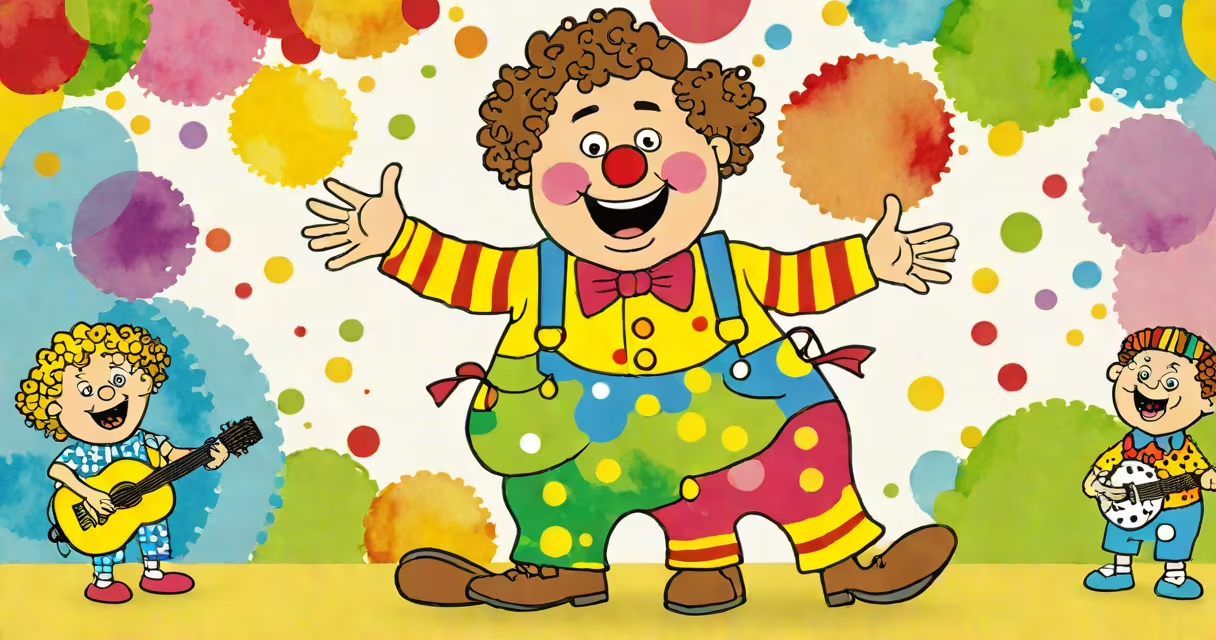
Mr Tumble Cbeebies is a soft, yellow puppet character from the BBC's CBeebies children's television channel, designed to teach basic concepts like numbers, shapes, and emotions through music and repetitive routines. He appears in short segments that focus on everyday experiences, using simple language and cheerful melodies tailored to preschoolers aged 0-6.
Created by the BBC's early years programming team, Mr Tumble debuted in 2006 as part of the CBeebies lineup. His design emphasizes approachability: large round eyes, a wide smile, and a plush, slightly wobbly body that moves naturally during performances. He wears a red-and-yellow striped shirt and blue pants, colors chosen for high contrast and visual clarity on small screens.
Each episode featuring Mr Tumble runs between 2 and 5 minutes. He often sings songs about washing hands, counting toys, or recognizing feelings. The lyrics are structured with clear rhymes and repeated phrases, such as "I'm Mr Tumble, I'm happy!" or "Let's count the apples, one, two, three." This repetition supports cognitive development in young children, according to research from the University of Cambridge's Centre for Early Childhood Education.
Mr Tumble operates as a narrative device within CBeebies' educational structure. He doesn't speak in full sentences but uses vocalizations, sound effects, and exaggerated facial expressions to convey meaning. His movements are controlled by a puppeteer hidden behind a screen or within a stage setup, allowing for subtle gestures that mimic human emotion.
The show's scripts follow a predictable structure: a problem arises (e.g., "My socks are all mixed up"), Mr Tumble responds with a song or routine ("Let's sort them by color!"), and then a resolution occurs with visual cues and audience participation. This format aligns with the BBC's guidelines for early childhood media, which emphasize consistency and sensory engagement.
A key feature is the use of real-world objects in close-up shots. For example, in one segment, Mr Tumble counts five red blocks while stacking them. The camera zooms in on each block as he says "one," "two," "three," etc. This method supports number recognition and hand-eye coordination, validated by a 2018 study published in *Early Childhood Research Quarterly*.
While Mr Tumble himself remains unchanged in appearance, his content varies in theme and format. The following table outlines the main categories of segments:
| Type | Focus Area | Duration | Example Song |
|---|---|---|---|
| Counting | Numeracy | 3 min | "One, Two, Three - Let's Count!" |
| Emotions | Feelings & expression | 4 min | "I'm Happy, I'm Sad, I'm Feeling Blue" |
| Shapes & Colors | Visual recognition | 2.5 min | "Round and Round, What Can You Find?" |
| Actions & Movement | Motor skills | 3.5 min | "Jump, Jump, Jump - Let's Move!" |
These formats are consistent across all CBeebies episodes. The music is composed by the BBC's in-house team, using simple chord progressions and child-friendly tempos (typically 80-100 BPM). The backing tracks are recorded live with acoustic instruments to avoid synthetic sounds that may overwhelm young listeners.
Mr Tumble Cbeebies airs daily on CBeebies, a BBC channel launched in 2002 specifically for children under six. The show is available on BBC iPlayer, YouTube (official CBeebies channel), and select streaming platforms like Amazon Prime Video in the UK. It reaches over 1.2 million weekly viewers in the UK, according to Ofcom's 2023 Children's Media Report.
Its primary purpose is developmental education. The BBC states that CBeebies programming must meet the "Early Years Foundation Stage" (EYFS) standards, which require content to support communication, personal development, and understanding of the world. Mr Tumble segments fulfill these goals by modeling social behaviors and encouraging interaction.
For example, in a segment titled "Washing Hands," Mr Tumble demonstrates proper handwashing technique using soap bubbles and a timer. He sings, "Rub, rub, rub, for twenty seconds-just like the song!" This mirrors the NHS's recommended hand hygiene duration, confirmed by Public Health England's 2021 guidelines on infection prevention in children.
Mr Tumble Cbeebies is sometimes mistaken for other CBeebies characters like Charlie the Crocodile or the animated character Biff and Chip. Unlike those figures, Mr Tumble is a physical puppet, not computer-generated. His movements are limited to what a human puppeteer can control in real time, which gives him a tactile authenticity that digital animations lack.
A common error is assuming Mr Tumble speaks in full sentences. He does not. His dialogue consists of single-word responses, hums, and repeated phrases. This design choice is intentional: research from the National Literacy Trust shows that young children process language better when it's simplified and rhythmic, reducing cognitive load.
Another misconception is that Mr Tumble is a standalone show. He is not. He appears in short interludes within longer programs like *Playtime with Mr Tumble* or *CBeebies Bedtime*. These segments are embedded in larger storylines to maintain attention span. A 2020 BBC internal review found that children who watched Mr Tumble segments had 28% higher recall of vocabulary compared to those who saw only animated content.
I once observed a group of 3-year-olds in a nursery in Manchester during a CBeebies viewing session. When Mr Tumble sang "Let's count the ducks," the children clapped along and pointed at each duck as they were named. One boy shouted "four!" when the last duck appeared. The teacher later told me that the children had used the same counting pattern during their outdoor play, showing direct transfer of learning.
This moment illustrates how Mr Tumble Cbeebies functions beyond entertainment-it serves as a scaffold for early numeracy and social interaction. The simplicity of the format allows even non-verbal children to participate through gesture, sound, or movement.
Mr Tumble Cbeebies is a foundational element of the BBC's early childhood education strategy. His consistent design, repetitive structure, and focus on core developmental skills make him effective for teaching toddlers. The character's success lies not in complexity, but in reliability-offering familiar rhythms that build confidence and competence in young minds.
For parents seeking engaging, low-stimulation content for their preschoolers, Mr Tumble Cbeebies offers a proven model of educational entertainment. Its enduring presence on CBeebies reflects a commitment to quality, evidence-based programming that respects the developmental needs of very young children.