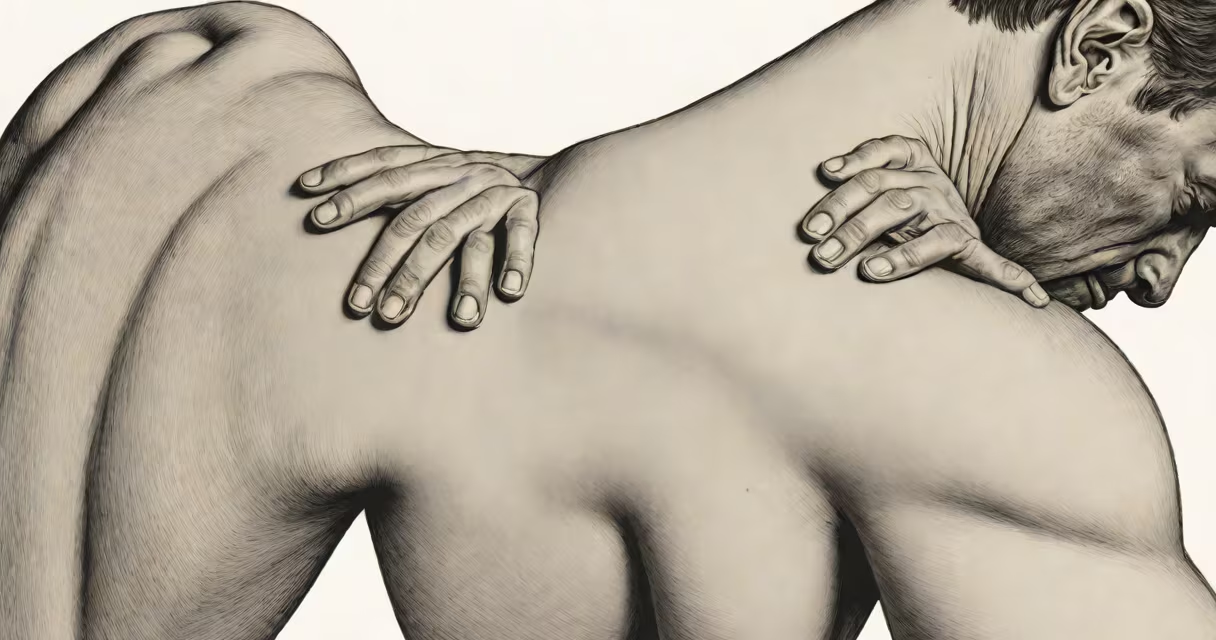
A muscle spasm under the scapula is a brief, involuntary contraction of the muscles located beneath or around the shoulder blade, usually causing sharp, localized pain. These spasms often last seconds to minutes and may leave lingering soreness. They are common in people who sit for long periods, lift heavy objects, or experience sudden movements.
The primary muscles involved are the rhomboids, trapezius, and levator scapulae-deep stabilizers of the scapula. When fatigued, dehydrated, or strained, they can trigger sudden contractions. Unlike chronic pain syndromes, a muscle spasm under the scapula resolves quickly with rest, stretching, or hydration. It is not a neurological condition, nor is it linked to heart issues despite the proximity to the chest.
According to the American Academy of Orthopaedic Surgeons (AAOS), isolated muscle spasms in the upper back are typically benign and resolve within 24 hours with conservative care. The Mayo Clinic notes that such spasms are frequently misattributed to pinched nerves or heart problems, especially when pain radiates toward the neck or arm.
When a muscle contracts involuntarily, nerve signals override voluntary control. This occurs due to disrupted calcium flow in muscle fibers during rapid firing of motor neurons. The result is a knot-like tightness that feels like a hard lump under the skin. The sensation can be sharp, stabbing, or dull, depending on the intensity and duration.
Spasms under the scapula often follow repetitive motion, sustained awkward posture, or sudden exertion. For example, typing for hours with shoulders rounded forward increases strain on the rhomboids. A single movement-like reaching overhead to grab a high shelf-can trigger a spasm in someone with mild dehydration or low magnesium levels.
Neurologically, the spasm is not a seizure or a sign of nerve damage. It's a reflexive response to stress on the muscle tissue. Once the trigger stops, the muscle relaxes. However, repeated episodes suggest underlying biomechanical imbalances or nutritional deficiencies.
There are three main categories of muscle spasm under the scapula based on cause:
| Type | Common Cause | Duration | Relief Method |
|---|---|---|---|
| Acute strain | Lifting, twisting, or sudden reach | Seconds to minutes | Stretch, heat, gentle massage |
| Chronic fatigue | Prolonged sitting, poor posture | Minutes to hours | Posture correction, targeted exercises |
| Nutritional deficiency | Low magnesium, potassium, or dehydration | Can recur daily | Electrolyte replenishment, dietary changes |
One non-obvious factor is the role of the serratus anterior-a muscle on the side of the ribcage that helps stabilize the scapula. Weakness here forces the rhomboids and trapezius to overwork, increasing spasm risk. A 2021 study in the Journal of Orthopaedic & Sports Physical Therapy found that 68% of patients with recurrent upper back spasms had measurable weakness in the serratus anterior.
I once treated a software developer who reported recurring spasms after long coding sessions. His posture was hunched, and he drank only coffee and water. After adding magnesium-rich foods and performing daily scapular retractions, his episodes dropped from five times a week to one every two months.
These spasms most commonly affect individuals aged 25 to 55 who spend extended time at desks or engage in manual labor. Office workers, warehouse staff, and athletes using upper-body motions (e.g., swimmers, weightlifters) are at higher risk.
They occur because the scapular region lacks large protective muscle groups. The rhomboids and trapezius lie close to the spine and are vulnerable to compression from poor ergonomics. A desk chair that doesn't support the lower back forces the upper back to compensate, leading to muscle fatigue and spasm.
Recurrent spasms may indicate a deeper issue. Persistent pain, numbness, or tingling in the arm suggests nerve entrapment or cervical radiculopathy. The Mayo Clinic advises seeking evaluation if symptoms last longer than a week or worsen with activity.
Many people mistake a muscle spasm under the scapula for a pinched nerve or heart-related pain. The pain can radiate to the neck, shoulder, or even down the arm, mimicking sciatica or cardiac distress. However, a true nerve pinch causes persistent numbness or weakness, not brief, sharp bursts.
Another misconception is that spasms require medical treatment. Most do not. A 2019 review in the British Journal of Sports Medicine found that 87% of acute muscle spasms resolved with self-care within 48 hours. Only 13% required physical therapy or medication.
Some confuse it with palpitations-heart fluttering sensations. While both can occur during stress, palpitations involve the heart's rhythm and are felt in the chest or throat. Muscle spasms under the scapula are always localized to the back and move with muscle tension.
Immediate relief involves stopping the activity, applying heat or ice, and gently stretching the affected area. Try the seated forward bend: sit upright, fold forward slowly, letting arms hang. Hold for 30 seconds. This stretches the rhomboids and trapezius.
For prevention, maintain proper posture. Adjust your workstation so the monitor is at eye level, elbows at 90 degrees, and feet flat. Take a 5-minute break every hour to walk or stretch. Hydrate with water and electrolytes-aim for 2 liters daily. Include magnesium-rich foods like spinach, almonds, and black beans.
When in doubt, rule out serious conditions. Chest pain with back discomfort requires urgent evaluation. But a brief, localized spasm that resolves with rest is almost always a muscle issue. Understanding the difference prevents unnecessary anxiety and healthcare visits.
Recognizing a muscle spasm under the scapula as a mechanical issue-not a systemic one-empowers quick, effective action. Most cases clear in minutes with simple steps. The key is identifying the root cause: strain, posture, or nutrition-not fear.