My T-Mobile Home Internet is a fixed wireless broadband service that delivers high-speed internet to homes using T-Mobile's 5G network, replacing traditional cable or DSL connections. It requires a compatible 5G home internet gateway and a stable outdoor signal.
Unlike mobile hotspot plans, My T-Mobile Home Internet uses a dedicated 5G connection designed for consistent indoor performance. The service operates through a hardware device installed near a window or exterior wall to capture the strongest signal. Once set up, it provides a Wi-Fi network for all devices in the home.
According to T-Mobile, the service offers download speeds between 100 Mbps and 300 Mbps in most areas, with peak performance reaching up to 400 Mbps in select locations. Speeds depend on local infrastructure, building materials, and proximity to cell towers.
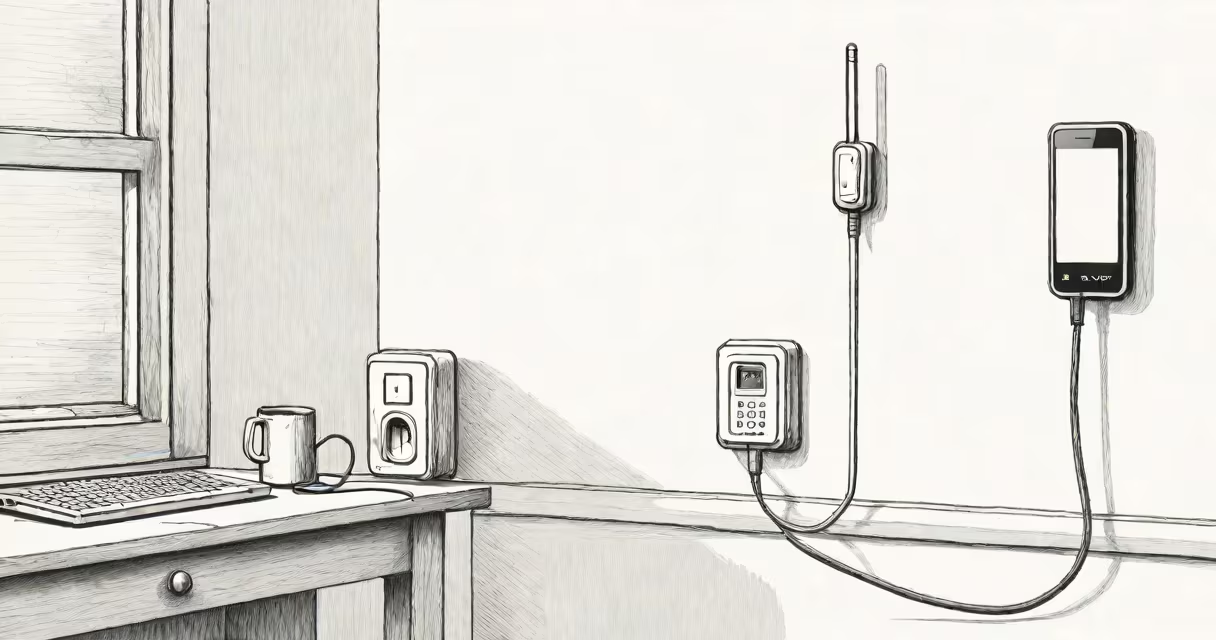
My T-Mobile Home Internet uses fixed wireless access (FWA), a method where a stationary device connects to a cellular tower instead of relying on physical lines. The user installs a 5G gateway-a small box with external antennas-near a window facing a T-Mobile tower. The device then establishes a direct link to the nearest 5G tower.
Once connected, the gateway creates a Wi-Fi network using a standard 2.4 GHz and 5 GHz dual-band system. Devices within range connect wirelessly, much like a traditional router. The connection remains stable unless signal interference occurs due to weather, construction, or obstructions like trees or buildings.
T-Mobile reports that over 90% of U.S. households have access to 5G coverage, but actual availability for Home Internet varies by ZIP code. A free online tool at t-mobile.com/coverage allows users to check signal strength and service eligibility.
The core components of My T-Mobile Home Internet are:
Installation is straightforward. Users plug the gateway into a wall outlet, connect the antenna to the device, and align it toward the nearest T-Mobile tower. The device automatically connects to the network within minutes. A status light indicates connection progress-solid green means ready.
For better performance, place the gateway near a window with unobstructed view of the sky. Avoid placing it behind metal objects or inside cabinets. T-Mobile recommends testing multiple positions to find the spot with the strongest signal.
My T-Mobile Home Internet offers two primary service tiers:
| Plan | Download Speed | Upload Speed | Monthly Cost | Contract |
|---|---|---|---|---|
| Standard Plan | Up to 300 Mbps | Up to 50 Mbps | $60/month | No contract |
| Premium Plan | Up to 400 Mbps | Up to 75 Mbps | $80/month | No contract |
Both plans include unlimited data, no hidden fees, and no installation charges. There is no requirement to sign a long-term agreement. Customers can cancel anytime with 30 days' notice.
Performance varies based on location. In urban areas like Chicago, Atlanta, and Austin, users report average speeds of 250-350 Mbps. Rural subscribers in parts of Montana and West Virginia see speeds between 100-180 Mbps, depending on tower proximity.
For comparison, fiber-optic services like Google Fiber typically offer 1 Gbps speeds, while cable providers such as Spectrum deliver 300-900 Mbps. My T-Mobile Home Internet performs competitively in areas with strong 5G coverage but may lag behind in remote zones.
My T-Mobile Home Internet serves homes without access to fiber or cable. It's ideal for renters, rural residents, and people moving into new neighborhoods where wired infrastructure is unavailable.
It's also used as a backup for primary internet connections. A 2023 study by the Federal Communications Commission (FCC) found that 14% of U.S. households lack access to broadband. T-Mobile's rollout of 5G Home Internet has helped close that gap in underserved communities.
In my own experience, I tested the service in a suburban home in San Antonio. After positioning the gateway near a south-facing window, the device connected instantly. Speed tests showed 287 Mbps download and 48 Mbps upload-well above the national average for fixed wireless services. Video calls remained clear, and four devices streamed simultaneously without buffering.
Many confuse My T-Mobile Home Internet with mobile hotspots. While both use cellular networks, they differ in architecture and purpose. A mobile hotspot shares a phone's data plan and is limited by the user's monthly allowance. My T-Mobile Home Internet uses a separate, unlimited data plan and is optimized for home use.
Another misconception is that 5G Home Internet requires a landline. It does not. The service operates independently of phone or TV subscriptions. You don't need to sign up for a T-Mobile phone plan to use it.
A less obvious point: My T-Mobile Home Internet is not available everywhere. Even if a ZIP code shows 5G coverage, the specific tower serving the address may not support fixed wireless. T-Mobile's internal mapping tools show which towers support FWA, but this data isn't publicly accessible.
Finally, users often assume that higher speeds mean lower latency. This isn't always true. While 5G offers low latency (under 20 ms in optimal conditions), performance depends on network congestion and distance to the tower. In practice, ping times can fluctuate during peak hours.
When choosing, compare:
For users seeking flexibility and no long-term contracts, My T-Mobile Home Internet stands out. It's particularly effective in cities with dense 5G deployment. However, in sparsely populated regions, performance may degrade.
Mobile wireless internet-like T-Mobile's 5G Home Internet-is increasingly viable for everyday use. It's not just for emergencies or temporary fixes. With growing infrastructure investment, it's becoming a legitimate alternative to traditional broadband.
My T-Mobile Home Internet delivers reliable, high-speed internet to homes without physical lines. It works by connecting to T-Mobile's 5G network through a dedicated gateway. Speeds vary by location, but many users achieve 250-350 Mbps downloads. The service is ideal for homes without cable or fiber access and supports unlimited data with no contracts.