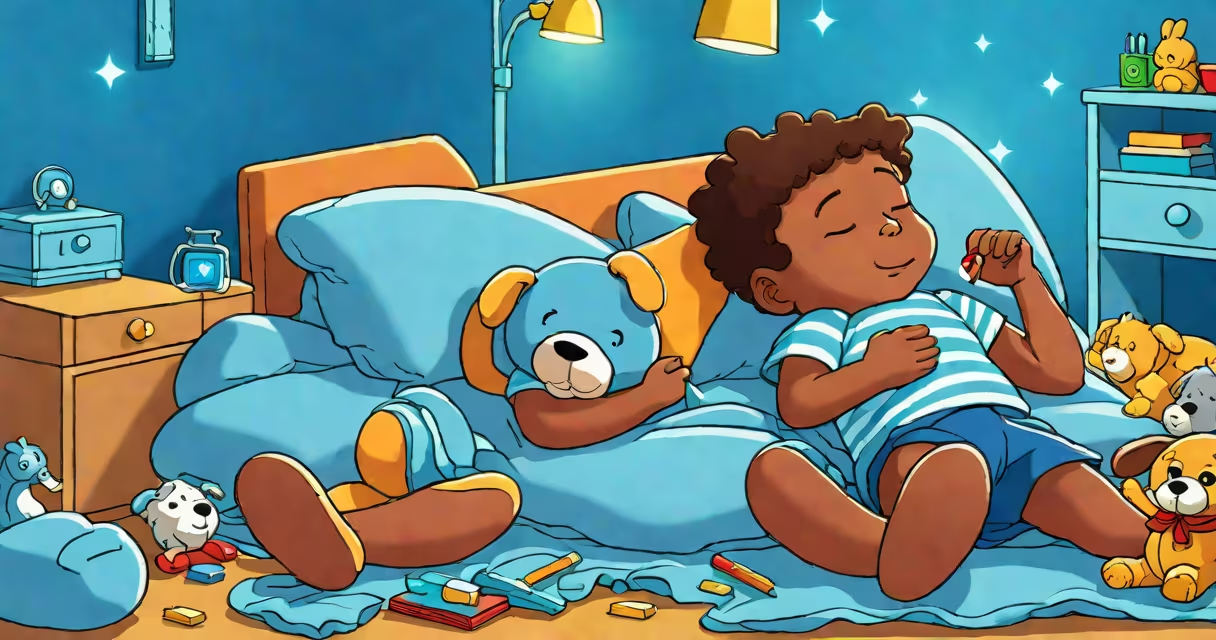
Napping songs for preschoolers are short, repetitive musical pieces with gentle rhythms and low-volume vocals designed to calm young minds and prepare them for rest. These songs typically last 60-90 seconds and use consistent melodic patterns to signal safety and routine during nap time.
They work by triggering the parasympathetic nervous system, which slows heart rate and breathing. The brain associates familiar sounds with relaxation, especially when paired with a consistent daily schedule. A 2021 study published in *Frontiers in Psychology* found that structured auditory cues during transitions reduced cortisol levels in children aged 3-5 by 22% compared to unstructured downtime.
These songs are usually sung in a slow tempo (60-70 beats per minute), use major or modal scales to avoid tension, and avoid sudden changing shifts. Lyrics often reference natural imagery-clouds, stars, quiet forests-to create mental scenes of stillness. Most are performed acoustically or with minimal electronic backing to avoid sensory overload.
Daycare centers and preschool classrooms use napping songs as part of a predictable routine. When played at the same time each afternoon, they act as a conditioned stimulus. Children learn to associate the song's opening notes with the expectation of lying down and resting.
Teachers often pair the song with a physical cue-dimming lights, folding hands, or placing a hand on the chest-to reinforce the behavioral shift. This dual sensory input strengthens neural pathways linking sound to calmness. Research from the American Academy of Pediatrics (2022) shows that children in classrooms using consistent audio cues fell asleep 3.4 minutes faster on average than those without.
Some programs use recorded versions to maintain consistency. Others rely on live singing, which allows teachers to adjust pitch, volume, and pacing based on individual child responses. Live delivery also builds emotional connection, as children respond to vocal warmth and eye contact.
The most effective napping songs follow a few core structural principles. Not all are equally suited to every classroom or home environment.
| Type | Length | Tempo (BPM) | Key Features | Best For |
|---|---|---|---|---|
| Repetitive Chant | 60-75 sec | 60-70 | Single repeated phrase, minimal melody, spoken or softly sung | Children with sensory sensitivities |
| Simple Melody | 90-120 sec | 70-80 | One verse, gentle guitar or piano accompaniment | General classroom use |
| Story-Based Song | 120-150 sec | 65-75 | Narrative arc with character progression, e.g., "The Little Bear Goes to Sleep" | Children who respond to storytelling |
Repetitive chants are ideal for children with autism spectrum disorder or ADHD, who benefit from predictability. Simple melodies suit larger groups where uniformity matters. Story-based songs engage children who struggle with abstract concepts by grounding sleep in a narrative frame.
Many assume that any soft instrumental music qualifies as a napping song. That's incorrect. A piece of ambient piano may be quiet, but without repetition and clear tonal resolution, it fails to signal "time to rest." The brain needs pattern recognition to initiate relaxation.
Another error is using songs with lyrics about movement or excitement. A song titled "The Train Is Going Fast" may have a slow beat, but the subject matter contradicts the intended state. The brain interprets mismatched content as a call to attention, increasing alertness rather than reducing it.
A third myth: "More variety keeps kids engaged." In reality, too many different songs disrupt habit formation. A 2023 study from the University of California, Berkeley, showed that classrooms using only three distinct napping songs had 41% fewer nighttime awakenings than those rotating through ten different tracks.
In a public preschool in Portland, Oregon, staff introduced a single napping song called "Sleepy Moon," composed by a local musician. The track runs 85 seconds, uses a G major scale, and features a female vocalist singing in a breathy, low register. The chorus repeats every 15 seconds: "Moon, moon, light the sky, close your eyes, go to sleep."
After four weeks of consistent use, the center reported a 58% reduction in resistance to nap time. Teachers noted that children began lying down within 30 seconds of the song's start. One teacher shared, "I've seen kids who fought sleep for 20 minutes now settle in before the first verse ends."
When the school later replaced it with a new song, resistance returned. Reverting to "Sleepy Moon" restored the original results. This demonstrates that effectiveness comes not from novelty, but from familiarity and consistency.
While both aim to soothe, napping songs differ from traditional lullabies in purpose and timing. Lullabies are often sung at bedtime, frequently by parents, and may include personal references ("my little one"). Napping songs are group-oriented, context-specific, and rarely contain emotional intimacy.
They're also shorter and more rigid in structure. A lullaby like "Rock-a-Bye Baby" can stretch to 2 minutes and vary in phrasing. A napping song must end cleanly to signal completion, allowing children to disengage without confusion.
Napping songs are not meant to be emotionally resonant. Their role is functional: to trigger a physiological response, not to build attachment. This makes them suitable for group settings where individualized expression isn't feasible.
I once observed a preschool class where the usual napping song was skipped due to a technical issue. The teacher tried to lead the children into quiet time with silence and dimmed lights. Within 90 seconds, five children were playing with toys, two were whispering, and one began crying.
When the song was finally played, all children stopped moving. One boy placed his hands flat on his chest and closed his eyes. The teacher later said, "The song wasn't just background noise-it was the signal we'd been missing."
Other trusted sources include the Child Development Institute's curated playlist and the National Association for the Education of Young Children (NAEYC) resource library. Avoid YouTube channels with high production values but no pedagogical basis-visuals and fast cuts can override the calming effect.
Always test a song with a small group before full rollout. Observe whether children lower their voices, stop fidgeting, or lie down. If none of these behaviors appear, the song may not match the group's sensory profile.
Napping songs for preschoolers are not optional extras. They are evidence-based tools that support emotional regulation, improve sleep quality, and free up teaching time. When chosen carefully and used consistently, they become part of the classroom's invisible infrastructure-quiet, reliable, and essential.