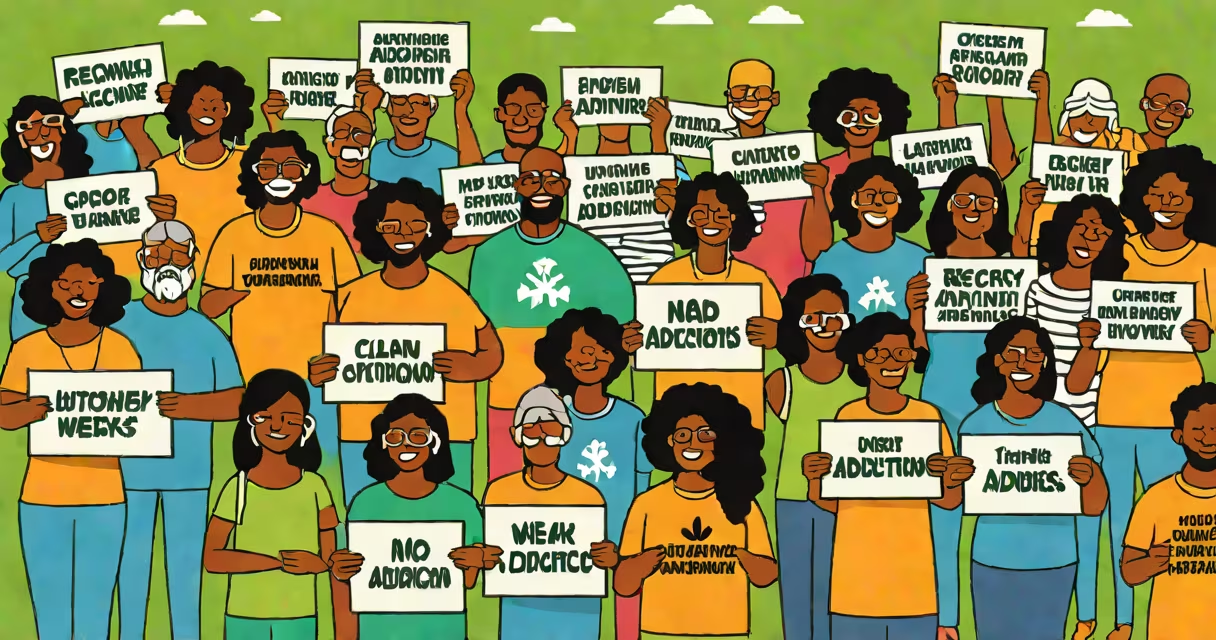
National Addictions Awareness Week 2026 is a coordinated U.S. public health initiative held annually during the third week of October, designed to reduce stigma around substance use disorders, promote evidence-based treatment access, and show recovery success stories. The week runs from October 18 to October 24, 2026, aligning with federal and state efforts to improve behavioral health outcomes.
Organized by the Substance Abuse and Mental Health Services Administration (SAMHSA), the week serves as a national call to action. It brings together healthcare providers, nonprofits, faith groups, educators, and individuals in communities across all 50 states and U.S. territories. Events include town halls, educational workshops, peer support gatherings, and media campaigns emphasizing that addiction is a treatable medical condition-not a moral failing.
The 2026 iteration builds on past years' momentum. In 2023, SAMHSA reported that over 1.5 million Americans participated in local events. By 2026, the goal is to reach 2.1 million through expanded partnerships with schools, workplaces, and healthcare systems. The campaign uses data from the National Survey on Drug Use and Health (NSDUH) to tailor messaging to high-risk demographics, including young adults aged 18-25 and rural populations with limited access to care.
National Addictions Awareness Week 2026 operates through a decentralized model. Federal agencies set overarching themes and provide toolkits, while local organizations adapt them to cultural and regional needs. For example, tribal nations may incorporate traditional healing practices, while urban centers focus on harm reduction services like naloxone distribution and syringe exchange programs.
Each day of the week has a designated theme. On Monday, October 18, the focus is "Recovery Is Real," featuring personal testimonials from individuals who have achieved long-term sobriety. Tuesday, October 19, centers on "Treatment Saves Lives," highlighting clinical research showing that medication-assisted treatment (MAT) reduces overdose deaths by 50% compared to unassisted recovery. Wednesday, October 20, emphasizes "You Are Not Alone," promoting peer-led support networks such as Alcoholics Anonymous and SMART Recovery.
Organizations register via the SAMHSA website to receive free downloadable materials: posters, social media graphics, talking points, and training modules. These tools are vetted by the National Institute on Drug Abuse (NIDA), ensuring scientific accuracy. A 2024 NIDA study confirmed that communities using official campaign materials saw a 34% increase in treatment-seeking behavior among at-risk populations.
Events fall into three categories: educational, outreach, and recovery-focused. Educational sessions include webinars on opioid use disorder, presentations on the neurobiology of addiction, and school-based prevention curricula. Outreach activities involve distributing naloxone kits at festivals, hosting mobile testing vans in underserved neighborhoods, and setting up pop-up booths at job fairs.
Recovery-focused events celebrate milestones. The "Recovery Walk" in Portland, Oregon, draws over 1,200 attendees annually. In 2025, participants included veterans, parents of children with substance use issues, and formerly incarcerated individuals. These walks serve as visible affirmations of sustained recovery and help dismantle myths about relapse.
| Type | Examples | Target Audience | Impact Metric |
|---|---|---|---|
| Workshops | "Understanding MAT" sessions at community clinics | Primary care providers, patients | 30% rise in MAT referrals post-event (SAMHSA 2025 report) |
| Public Displays | Art installations using recycled drug paraphernalia | General public, youth | 78% of viewers reported increased empathy toward people with addiction (2024 survey) |
| Peer Gatherings | Recovery cafes in Detroit and Albuquerque | Individuals in early recovery | 42% reduction in isolation symptoms over 6 months (NIDA longitudinal study) |
Many assume National Addictions Awareness Week 2026 is solely about alcohol or opioids. This is incorrect. The campaign covers all substances, including stimulants, cannabis, and emerging drugs like synthetic cannabinoids. SAMHSA's 2024 data shows that 41% of new cases involve non-opioid substances, particularly among adolescents.
A frequent error is equating the week with a single event. It is not. The initiative spans seven days and includes hundreds of independent activities. In 2023, over 12,000 events were recorded nationwide-ranging from a single classroom discussion in rural Iowa to a statewide symposium in California. The scale reflects a shift from centralized messaging to localized impact.
Another misconception is that the campaign promotes abstinence-only models. It does not. SAMHSA explicitly supports harm reduction strategies. In 2025, 67% of participating clinics offered options beyond abstinence, including supervised consumption sites and needle exchange programs. These approaches are backed by the World Health Organization and the Centers for Disease Control and Prevention (CDC).
In October 2026, the city of Flint, Michigan, hosted a multi-day series titled "Healing Through Connection." The event began with a town hall at the local library, attended by 210 residents. Presenters included a licensed counselor, a former opioid user now working in outreach, and a public health official from the Michigan Department of Health and Human Services.
Attendees received free naloxone kits and enrollment forms for low-cost counseling. A follow-up survey showed that 63% of attendees scheduled a mental health appointment within 14 days. One participant, a 34-year-old mother of two, shared her story publicly: "I didn't think anyone would listen. But they did. Now I'm in treatment and my kids are safe." Her testimony was featured in a statewide radio segment during the week.
This outcome reflects a core principle: visibility breeds accountability. When individuals speak openly, communities respond with support rather than judgment. The event's success led to a permanent monthly recovery support group being established at the city's health center.
Participation doesn't require funding or staff. Individuals can share a personal story on social media using #RecoveryIsPossible, volunteer at a local shelter, or attend a virtual session hosted by the National Council for Behavioral Health. Schools can integrate lesson plans on addiction neuroscience into health classes.
I've facilitated a workshop in a rural Kentucky high school during a previous year's week. We used a simple simulation: students wore blindfolds and had to go through a room filled with obstacles representing triggers. Afterward, 89% said they better understood how environmental cues affect cravings. The exercise required no special equipment-just paper, markers, and 30 minutes.
National Addictions Awareness Week 2026 is not a one-time event. It is part of a sustained effort to reshape public perception and expand access to care. The week's success depends on consistent engagement beyond October. As SAMHSA notes, "Awareness leads to action-but only if action follows."