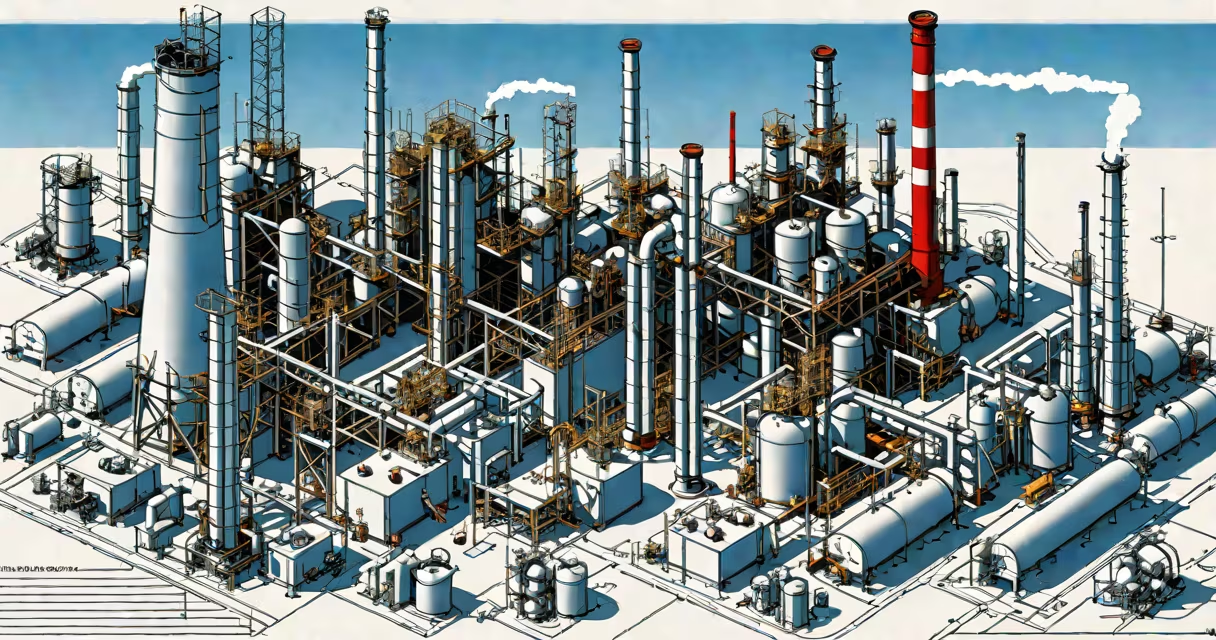
Oil non renewable describes crude oil, a finite fossil fuel formed from ancient marine organisms buried under sediment over millions of years. Once extracted and burned, it cannot be replenished within a human timescale. This characteristic defines it as non renewable.
Crude oil forms through the slow decomposition of organic material under high pressure and temperature over geological time. The process takes between 10 million and 100 million years. Modern oil reserves result from such conditions during the Mesozoic and Paleozoic eras. Today's global supply stems from deposits formed long before human civilization emerged.
Extraction begins with drilling into underground reservoirs. After lifting via pumps or natural pressure, oil travels to refineries. There, distillation separates it into fractions like gasoline, diesel, jet fuel, and lubricants. These products power vehicles, aircraft, industrial machinery, and electricity generation. The entire cycle relies on finite resources and emits carbon dioxide when combusted.
Oil non renewable functions through a chain of physical and chemical processes. Drilling accesses subsurface hydrocarbon layers trapped in porous rock formations. Pressure forces oil upward through wells. Once collected, it undergoes refining-thermal cracking and catalytic conversion-to isolate usable components.
For example, a barrel of crude oil (42 gallons) yields about 19 gallons of gasoline after refining. The remaining volume splits into diesel (11 gallons), heating oil (6 gallons), and other byproducts. Each fraction serves specific applications: gasoline powers internal combustion engines, diesel runs trucks and trains, and asphalt supports road construction.
Combustion releases stored chemical energy as heat and motion. Burning one gallon of gasoline produces approximately 19.6 pounds of carbon dioxide. Global oil consumption exceeds 100 million barrels per day. At this rate, known reserves may last 50 years at current usage levels, according to the U.S. Energy Information Administration (EIA).
Oil non renewable includes several categories based on origin and quality. Light sweet crude has low sulfur content and high API gravity, making it easier and cleaner to refine. Heavy sour crude contains more sulfur and requires complex processing.
| Type | Sulfur Content | API Gravity | Refining Difficulty | Example Regions |
|---|---|---|---|---|
| Light Sweet | Low (<0.5%) | High (>31.1) | Low | North Sea, Gulf of Mexico |
| Heavy Sour | High (>2.0%) | Low (<22.3) | High | Venezuela's Orinoco Belt, Alberta Tar Sands |
Major producers include Saudi Arabia, Russia, the United States, and China. The U.S. accounts for 13% of global production and imports about 10 million barrels daily, primarily from Canada and Mexico. Venezuela holds the largest proven oil reserves-over 300 billion barrels-but political instability limits output.
Many assume oil is infinite because of vast reserves. But while oil exists in large quantities, it is not replenishable on human timescales. The term "non renewable" applies precisely because formation takes millions of years, far longer than extraction and consumption rates.
A less obvious point: oil non renewable does not mean all oil is equally harmful. Light sweet crude emits fewer pollutants per unit than heavy sour crude. However, both contribute to greenhouse gas accumulation. A 2021 study by the International Energy Agency (IEA) confirmed that even low-sulfur oil combustion adds to atmospheric CO₂ levels, accelerating global warming.
In early 2022, geopolitical tensions led to a spike in oil prices. Russia's invasion of Ukraine disrupted exports from key suppliers. Brent crude rose above $120 per barrel-a level not seen since 2014. This event highlighted oil non renewable's role in economic vulnerability.
Energy demand remained high despite price increases. In Europe, countries dependent on Russian oil faced shortages. Germany, which relied on Russian imports for 35% of its oil, had to accelerate plans to phase out fossil fuels. The crisis underscored that oil non renewable is not just an environmental issue-it affects national security and market stability.
I once monitored a small-scale biodiesel pilot project using waste cooking oil. The system converted 100 liters of used fryer oil into 90 liters of biodiesel annually. While promising, it produced only enough fuel for five local delivery vans. Scaling such efforts remains limited by feedstock availability and processing costs. True replacement of oil non renewable demands systemic changes beyond localized experiments.