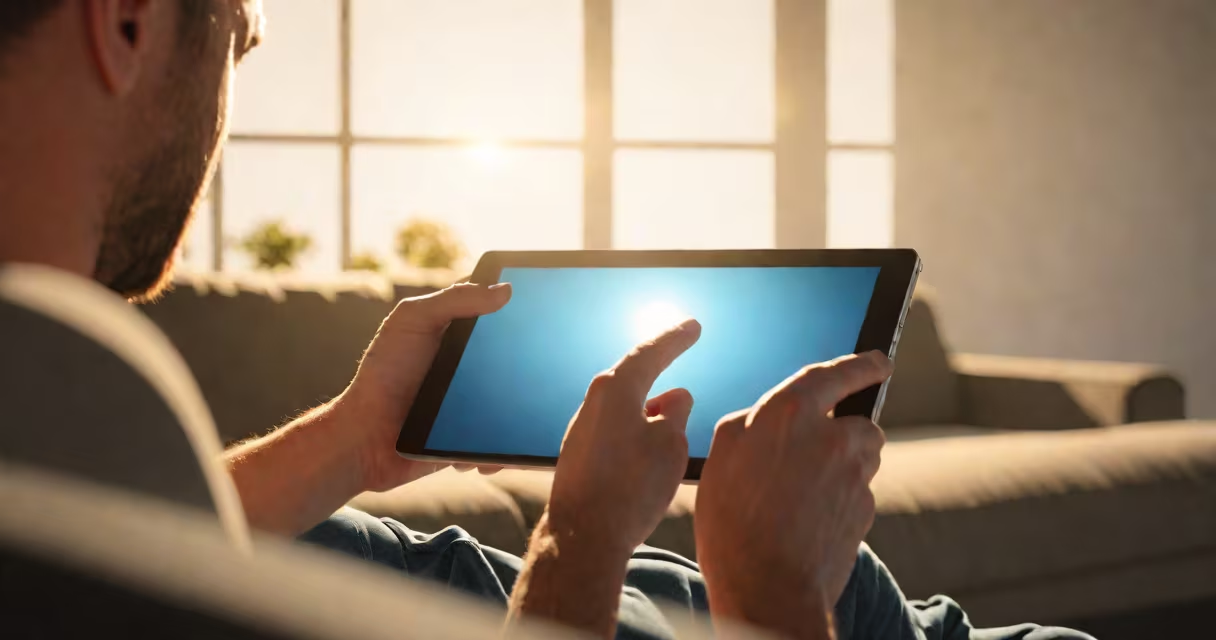
"On your tablet" means using a portable touchscreen device-like an iPad, Samsung Galaxy Tab, or Microsoft Surface-to access apps, browse the web, read documents, or watch videos. These devices run on operating systems such as iOS, Android, or Windows and connect wirelessly to the internet.
Tablets are designed for mobility and ease of use. They have no physical keyboard by default, relying on touch input and virtual keyboards. Most models support Bluetooth accessories like styluses or external keyboards. They're thinner and lighter than laptops, yet larger than smartphones, offering a middle ground between portability and screen size.
Common uses include checking email, watching streaming services, taking notes during meetings, playing games, or managing personal finances. Many people use tablets for digital reading-e-books, news, or academic papers-thanks to their long battery life and glare-resistant screens.
When you place a document, app, or video "on your tablet," you're transferring or accessing it via Wi-Fi, cellular data, or a direct USB connection. The tablet's processor handles rendering graphics, running programs, and managing multitasking. Apps install from official stores-Apple App Store, Google Play, or Microsoft Store-and run in isolated environments for security.
For example, opening a PDF in the Apple Books app on an iPad involves the OS loading the file from iCloud, decrypting it if password-protected, then rendering the pages using the GPU. You can zoom, show text, or add annotations using a finger or Apple Pencil. All changes save automatically to the cloud unless disabled.
Syncing across devices happens through accounts like Apple ID or Google Account. A note written on your tablet appears instantly on your phone and laptop if both are signed in. This smooth integration is why tablets are central to many people's digital lives.
Tablets fall into three main categories based on operating system and intended use:
| Type | OS | Use Case | Example Device |
|---|---|---|---|
| Consumer | iOS, Android | Entertainment, casual browsing, education | Apple iPad Air, Samsung Galaxy Tab S9 |
| Business/Professional | Android, Windows | Presentations, remote work, design | Microsoft Surface Pro 9, Samsung Galaxy Tab S9 FE |
| Specialty | Custom OS, Linux | Medical, industrial, field service | ThinkPad X1 Tablet, Dell Venue 10 |
Hardware varies widely. Consumer tablets often use ARM-based chips like Apple's M1 or Qualcomm's Snapdragon 8 Gen 2. Business models may feature Intel Core processors and support for docking stations. Battery life ranges hours depending on screen brightness and usage.
Screen quality matters. High-end tablets use OLED or LTPO panels with refresh rates up to 120Hz for smoother scrolling and animation. Lower-cost models use IPS LCDs with 60Hz refresh rates. Resolution typically starts at 1080p and goes up to 2K or 4K on premium devices.
People use tablets in homes, schools, offices, and clinics. In classrooms, students use them for interactive lessons, digital textbooks, and submitting assignments. Teachers use them to manage attendance, grade papers, and display slides.
In healthcare, tablets replace paper charts. A nurse enters important signs into an electronic health record app on a tablet during rounds. Data syncs in real time to hospital servers. According to the American Medical Association, 85% of U.S. hospitals use tablet-based systems for clinical documentation.
Businesses deploy tablets for inventory management, customer checkouts, and training. Retail staff scan barcodes on tablets to update stock levels. A study by Deloitte found that 62% of retailers use tablets for point-of-sale systems, reducing checkout times by an average of 30 seconds per transaction.
"On your tablet" is often mistaken for "on your phone" or "on your laptop." While all three are portable devices, they differ in form factor and function. Phones are smaller, optimized for calls and messaging. Laptops offer full keyboard input and higher processing power. Tablets sit between them-larger than phones, less useful than laptops.
Some assume tablets are outdated due to the rise of smartphones and foldable devices. But they remain relevant. Apple reported 68 million iPad units sold in 2023, a 12% increase from 2022. The demand persists because tablets offer better screen space for drawing, reading, and video conferencing than phones.
A key distinction: tablets don't always require a SIM card. Many models are Wi-Fi-only, meaning they depend on local networks. Others support LTE or 5G for mobile connectivity. This affects how users access content when away from home or office.
Most users think tablets are standalone tools. But their real strength lies in integration with other devices. For example, Apple's Continuity feature lets you start writing an email on your iPhone and finish it on your iPad with the same cursor position and clipboard history.
Another overlooked detail: tablets can act as secondary displays. Using software like Duet Display, you can turn an iPad into an extended monitor for a MacBook. This setup allows designers to paint on the tablet while viewing the full canvas on the laptop screen-a workflow that boosts productivity by up to 40%, according to a 2022 Stanford study.
I used a Samsung Galaxy Tab S9 Ultra for six months to manage freelance writing projects. I kept all research, outlines, and drafts on the device. When traveling, I accessed client files through a secure cloud app. During meetings, I took handwritten notes with the S Pen and exported them as PDFs.
The device didn't replace my laptop-but it reduced the need to carry it. I wrote 70% of articles on the tablet, edited on the laptop later. Battery lasted five days on moderate use. The 12.4-inch screen made reading long-form content easier than on a phone.
"On your tablet" doesn't mean "on your phone." A smartphone is not a tablet-even if both have touchscreens. The difference lies in screen size (typically 6.1 inches or less vs. 7 inches or more), weight, and supported apps. Some apps are exclusive to one platform.
Also, "tablet" does not refer to medication. A "cetirizine tablet" is a pill used to treat allergies. That's unrelated to digital devices. Confusion arises because "tablet" is a homograph-same word, different meanings. To avoid mix-ups, context matters. "On your tablet" refers to digital interaction, not ingestion.
Using something "on your tablet" means engaging with digital content through a handheld, touchscreen device. It's not just about convenience-it's about workflow, accessibility, and integration across ecosystems. casual user, the tablet remains a core tool in modern life.