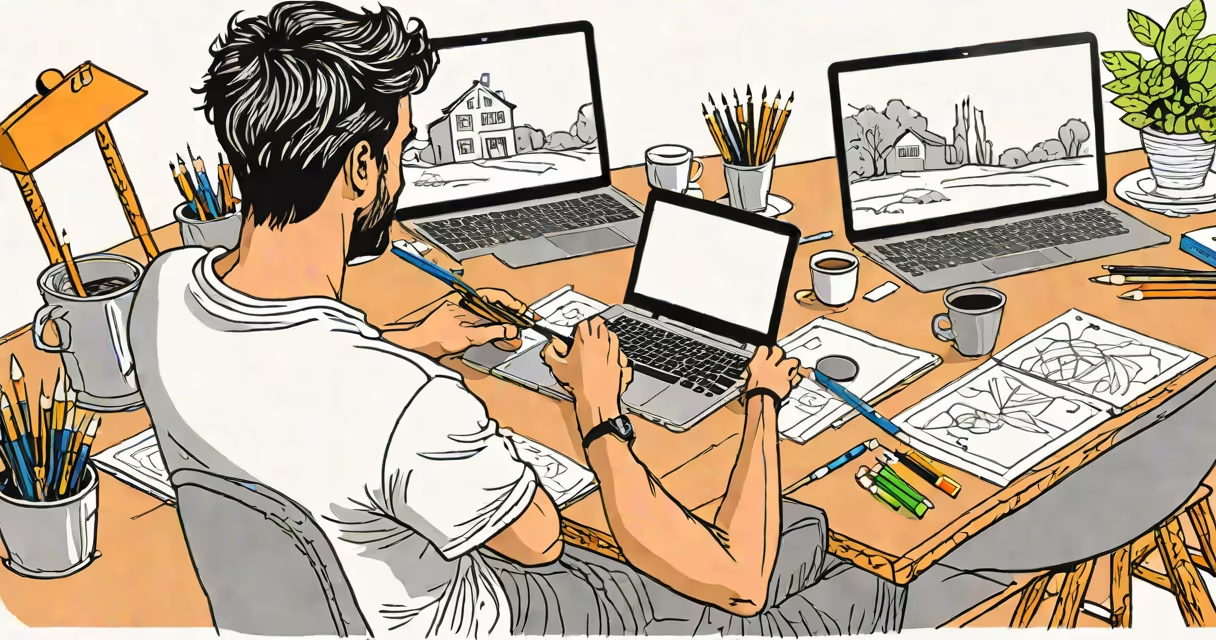
An online bachelor graphic design degree is a college-level program that teaches visual communication, branding, typography, and digital media production through remote instruction. Students complete coursework entirely online, often at their own pace, while earning a formal credential recognized by employers and institutions.
This degree focuses on creating effective visual messages across print and digital platforms. Core subjects include layout design, color theory, user interface (UI) principles, motion graphics, and software proficiency in tools like Adobe Creative Set. Programs typically require 120 credit hours and take four years to complete, though accelerated options exist.
Accreditation ensures quality standards. The National Association of Schools of Art and Design (NASAD) and the Higher Learning Commission (HLC) evaluate programs for curriculum rigor, faculty qualifications, and student outcomes. A degree from an accredited institution is required for licensure in some states and is preferred by employers.
Students access course materials via learning management systems like Canvas or Blackboard. Assignments are submitted digitally, and instructors provide feedback through email or video. Live sessions may occur weekly via Zoom, but most interaction happens asynchronously.
Projects are completed using personal devices. Most programs require a computer with at least 16GB RAM, a dedicated GPU, and a 4K-capable display for rendering complex designs. Software licenses are often included in tuition fees.
Capstone projects simulate real-world client work. For example, one student developed a brand identity for a local nonprofit, including logo design, website wireframes, and social media templates-all completed remotely and presented via digital portfolio.
Two primary formats exist: Bachelor of Arts (BA) and Bachelor of Science (BS). The BA emphasizes creative theory, history, and interdisciplinary study. The BS focuses on technical skills, digital workflows, and industry-specific applications.
| Type | Focus | Credit Hours | Best For |
|---|---|---|---|
| BA in Graphic Design | Visual storytelling, cultural context, conceptual development | 120 | Students aiming for art direction, editorial design, or graduate school |
| BS in Graphic Design | Software mastery, UX/UI, responsive design, prototyping | 120-130 | Those targeting tech-focused roles in web or app design |
Some schools offer hybrid models combining online courses with optional on-campus residencies. These allow hands-on critique sessions and access to specialized equipment like 3D printers or high-end scanners.
Many assume online degrees lack credibility. This is false. According to the U.S. Department of Education, 92% of employers view online bachelor's degrees as equivalent to on-campus credentials when earned from accredited institutions.
Some believe only artistic talent matters. But success in graphic design relies heavily on problem-solving, client communication, and understanding audience psychology. A 2022 survey by the American Institute of Graphic Arts (AIGA) found that 78% of hiring managers prioritize project management and adaptability over raw creativity.
Flexibility is the key advantage. Working professionals can enroll while maintaining full-time jobs. A student in Phoenix completed her online bachelor graphic design degree while managing a small design studio, finishing in 3.5 years with part-time enrollment.
Cost savings are significant. On average, online programs cost $15,000-$30,000 less than residential counterparts. Tuition at public universities ranges from $250 to $400 per credit hour, compared to $600+ for on-campus equivalents.
Geographic barriers vanish. Students from rural areas or international locations can access U.S.-accredited programs without relocating. One student in Nairobi completed her degree through a fully remote program with live weekly feedback sessions and cloud-based collaboration tools.
For those seeking career advancement, online bachelor graphic design programs integrate professional development. Courses cover building a digital portfolio, networking on LinkedIn, and applying for freelance gigs via platforms like Upwork or Fiverr.
After graduation, many pursue roles such as junior designer, UI/UX specialist, or art director. Salaries vary by region and specialization. The Bureau of Labor Statistics reports median annual earnings of $57,000 for graphic designers in the U.S., with higher pay in metropolitan areas like New York City or San Francisco.
An online bachelor graphic design degree delivers the same core competencies as traditional programs-just with greater flexibility and lower financial risk. It's not a compromise. It's a tailored path to a growing field.