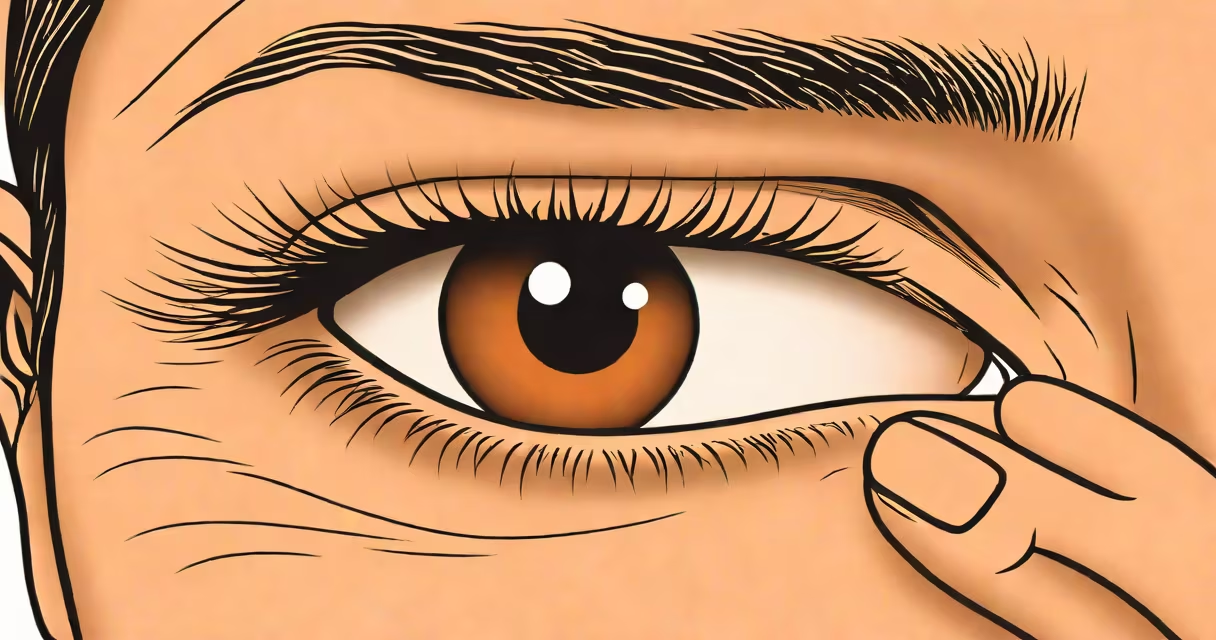
Pain and pressure behind the right eye is a symptom describing discomfort localized to the area around or behind the right eyeball, often described as dull, throbbing, or sharp. It may result from sinus congestion, migraines, eye strain, or neurological conditions affecting the trigeminal nerve.
This sensation typically arises from inflammation, increased fluid buildup, or nerve irritation in the facial sinuses, orbital cavity, or nearby brain regions. It's not a diagnosis itself but a signal that something in the visual or cranial system requires attention. The condition can appear suddenly or persist for hours to days depending on the cause.
Common triggers include allergies, colds, prolonged screen use, dehydration, or high blood pressure. In rare cases, it signals serious conditions such as optic neuritis or giant cell arteritis-especially if accompanied by vision changes or jaw claudication.
The space behind the right eye contains the frontal, ethmoid, and sphenoid sinuses-air-filled cavities lined with mucous membranes. When inflamed due to infection or allergy, they swell and press against the eye socket, causing pressure and pain. This is especially common during seasonal allergies or upper respiratory infections.
Migraines frequently involve pain behind one eye, often with pulsating quality, nausea, and light sensitivity. A 2021 study in Headache: The Journal of Head and Face Pain found that 67% of migraine patients report unilateral orbital pain, confirming this link. Migraine-related pain behind the eye usually lasts 4-72 hours and may precede or accompany aura symptoms.
Eye strain from extended digital device use can also produce tension-type pain behind the right eye. The ciliary muscles, responsible for focusing, fatigue under sustained demand. A 2020 survey by the American Optometric Association reported that 65% of adults experience eye strain after more than two hours of screen time.
Causes of pain and pressure behind the right eye fall into several categories based on origin:
| Type | Key Features | Typical Duration | When to Seek Care |
|---|---|---|---|
| Sinusitis | Pressure worsens when bending forward; thick nasal discharge; fever possible | Days to weeks | After 7 days of symptoms; if fever exceeds 101°F |
| Migraine | Pulsating pain; nausea; photophobia; may have aura | 4-72 hours | If first-ever severe episode; frequent attacks |
| Glaucoma (acute angle-closure) | Sudden onset; severe pain; blurred vision; red eye; nausea | Minutes to hours | Emergency-requires immediate ophthalmology evaluation |
| Temporal arteritis | Throbbing pain along temple; jaw pain when chewing; vision loss risk | Days to weeks | Over age 50 with new-onset headache-treat as medical emergency |
One lesser-known but critical distinction: pain behind the right eye from temporal arteritis often begins subtly and mimics tension headaches. According to the National Institute of Neurological Disorders and Stroke (NINDS), untreated cases lead to permanent vision loss in 15% of patients within days. Early treatment with corticosteroids reduces this risk.
Pain and pressure behind the right eye most commonly occurs in upper respiratory illness, seasonal allergies, or prolonged screen exposure. For example, during peak pollen season, individuals with allergic rhinitis report a 40% increase in sinus-related orbital pressure, per a 2019 study in Journal of Allergy and Clinical Immunology.
Work environments with poor lighting or high screen brightness contribute to eye strain. A 2022 report from the CDC noted that 42% of remote workers experienced eye discomfort after four or more hours of daily computer use. The condition is exacerbated by reduced blink rate-down to 6-7 blinks per minute during screen focus versus 15-20 normally.
Another overlooked trigger is dental issues. Referred pain from impacted wisdom teeth or temporomandibular joint (TMJ) dysfunction can radiate to the right eye region. A 2021 case series in Oral Surgery, Oral Medicine, Oral Pathology and Oral Radiology documented five patients with TMJ disorder who presented with unilateral eye pain misdiagnosed as sinusitis initially.
Many mistake pain behind the right eye for a sinus infection when it's actually a migraine. Migraine pain often feels deeper and more pulsatile than sinus pressure, which tends to be constant and worsens with head movement. Distinguishing them matters because treating a migraine with decongestants offers no relief.
Another error is assuming all eye pain involves vision loss. While acute angle-closure glaucoma causes both pain and vision changes, most causes-like dry eyes or mild sinusitis-do not affect sight. However, persistent pain behind the eye with blurry vision warrants urgent evaluation. The American Academy of Ophthalmology states that 1 in 5 cases of sudden eye pain with vision drop is due to glaucoma.
One non-obvious fact: pain behind the right eye can originate from the cervical spine. Cervicogenic headaches arise from neck muscle tension or joint dysfunction and refer pain to the orbit. A 2020 review in Pain Medicine found that 22% of patients with chronic unilateral eye pain had cervical spine abnormalities on MRI, even without neck pain.
In 2022, a 48-year-old woman reported daily pain and pressure behind her right eye lasting three weeks. She attributed it to allergies and used over-the-counter antihistamines without improvement. An ophthalmologist discovered elevated intraocular pressure and referred her to neurology. Imaging revealed a compressive lesion near the cavernous sinus. After surgical removal, her symptoms resolved completely.
This case illustrates why self-diagnosis fails. What seemed like sinus or allergy-related pain was actually a structural issue requiring specialist intervention. The patient had no other neurological signs-highlighting that subtle presentations exist.
Seek care if pain behind the right eye is new, worsening, or unresponsive to rest and hydration. Red flags include vision changes, double vision, drooping eyelid, or pain that wakes you from sleep. These may indicate neurological or vascular problems.
Home remedies like warm compresses, saline irrigation, and screen breaks help short-term. But if pain persists beyond 72 hours or recurs regularly, do not delay evaluation. Early detection prevents complications.
Understanding pain and pressure behind the right eye starts with recognizing it as a symptom-not a standalone condition. Accurate identification of root causes ensures appropriate treatment and avoids unnecessary interventions. Knowing when to act separates manageable discomfort from potential emergencies.