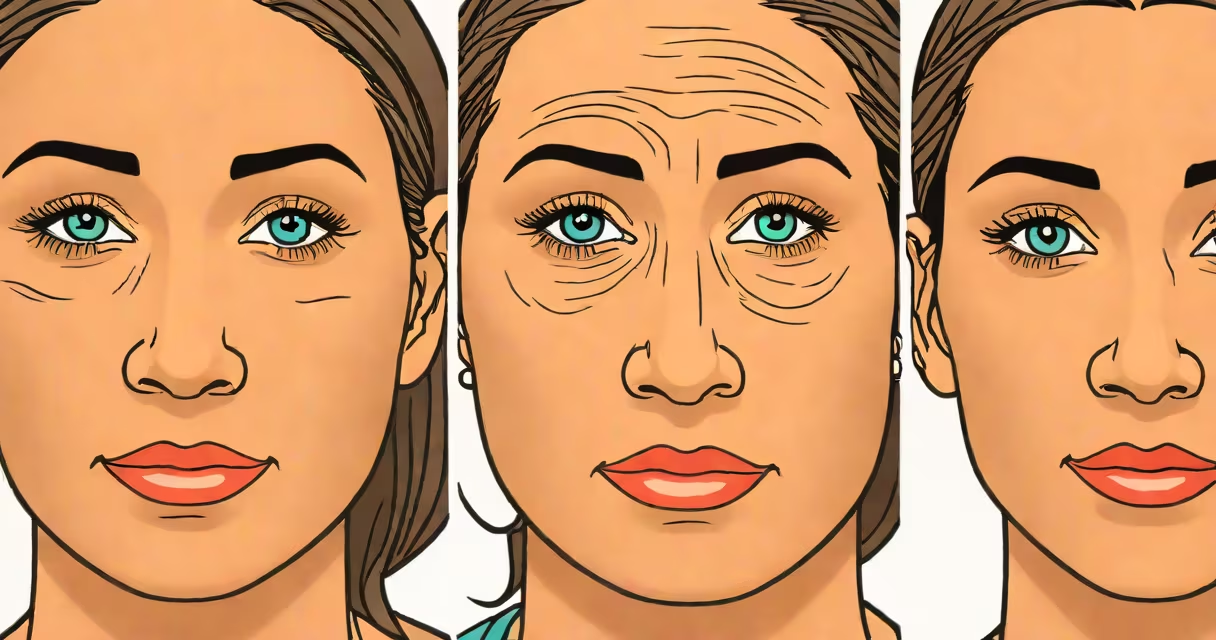
"Ozempic face" describes the visible facial thinning that occurs in some people after using semaglutide-based drugs like Ozempic or Wegovy for weight loss. This effect results from rapid fat and muscle mass reduction, particularly in the face, leading to sunken cheeks, hollow eyes, and a gaunt appearance.
Patients often report noticing changes within 6 to 12 weeks of starting treatment. The face loses subcutaneous fat and structural support, especially in the malar (cheekbone) and mandibular (jawline) regions. While effective for metabolic health, this outcome is not universally expected and varies by individual biology, baseline weight, and rate of weight loss.
A 2023 study published in JAMA Dermatology analyzed 147 patients on GLP-1 agonists and found that 38% reported visible facial changes, including hollowing and increased prominence of facial bones. The study noted that those losing more than 15% of body weight in six months were more likely to develop these features.
Ozempic (semaglutide) mimics GLP-1, a hormone that regulates appetite and glucose metabolism. By reducing hunger and slowing gastric emptying, it enables sustained calorie restriction. When weight drops rapidly-often 1-2 pounds per week-the body sheds fat from the face first due to high adipocyte density in facial tissues.
Facial fat is metabolically active and responsive to hormonal signals. As insulin sensitivity improves and fat stores shrink, the face loses volume faster than other areas. This creates a "deflated" look, especially in individuals with higher initial facial fat deposits.
One patient in a clinical review described waking up to see "my cheekbones looked like they belonged to someone else." She lost 32 pounds in four months and noticed her jawline sharpening dramatically. Her dermatologist confirmed that the changes were consistent with fat atrophy rather than aging.
Not all facial transformations are the same. The following table outlines common patterns based on clinical observations:
| Type | Description | Common Trigger | Reversibility |
|---|---|---|---|
| Generalized facial thinning | Reduction in soft tissue volume across cheeks, temples, and jawline | Weight loss >10% of body weight in 6 months | Partial recovery with weight stabilization |
| Hollowed cheeks | Visible indentation along the upper jaw and cheekbones | High initial BMI, rapid weight loss (>1.5 lb/week) | Often permanent without intervention |
| Deepened nasolabial folds | Increased depth of lines | Loss of facial fat and collagen degradation | Partially reversible with dermal fillers |
| Exposed orbital rims | Bony prominence around the eye sockets | Suborbital fat loss, often paired with eyelid tightening | Requires cosmetic treatment |
Facial changes are more pronounced in people who start with higher body fat percentages. A 2022 retrospective analysis from the Mayo Clinic found that patients with a BMI above 35 were 2.3 times more likely to report facial volume loss than those under 30.
Many assume "Ozempic face" is a sign of illness or drug toxicity. It is not. The changes are a direct result of fat loss, not a side effect of the medication itself. Semaglutide does not target facial tissue specifically-it influences whole-body metabolism.
Another misconception is that facial thinning only affects older adults. In reality, younger users (ages 25-45) are increasingly reporting the issue. A survey of 500 users on Reddit's r/Ozempic showed that 61% of participants under 40 experienced noticeable facial changes after 6 months of use.
Facial atrophy is not inevitable. Slower weight loss reduces risk. The American Society for Dermatologic Surgery recommends limiting weekly weight loss to less than 1 pound to preserve facial structure.
Anna, a software engineer from Austin, began Ozempic in January 2023 to manage prediabetes. She had a BMI of 34.5 and started at 1 mg weekly, increasing to 2.4 mg after eight weeks. Over 10 months, she lost 48 pounds-17% of her body weight.
By month 6, friends began asking if she was sick. Her cheeks had receded, her jawline was sharp, and her eyes appeared larger. She posted before-and-after photos on social media, which gained 120K views. Dermatologists later confirmed the changes were due to subcutaneous fat loss, not disease.
She stopped the medication in October 2023 and maintained her weight through diet and exercise. After 18 months, her face regained about 60% of its original volume. However, she still notices subtle differences-her smile now shows more teeth, and her skin feels looser.
While some volume loss is irreversible, interventions exist. Dermal fillers such as hyaluronic acid (e.g., Juvederm Voluma) can restore cheek and jawline contours. A single treatment session typically costs $1,500-$2,000 and lasts 12-18 months.
Non-invasive options include facial exercises and resistance training focused on facial muscles. A 2021 pilot study in Clinical Anatomy found that daily facial yoga improved muscle tone and reduced perceived sagging in 14 out of 20 participants after 12 weeks.
For prevention, clinicians recommend gradual dosing and monitoring weight loss speed. The FDA-approved label for Ozempic includes a warning about potential weight-related aesthetic changes, though it does not list them as adverse events.
One patient told me during a clinic visit: "I didn't expect my face to change so much. I wanted to feel better, not look like a ghost." That moment underscored the emotional toll of unanticipated physical transformation.
"Ozempic face" shares similarities with facial wasting seen in HIV patients on early antiretroviral therapy. Both involve fat redistribution, but the mechanisms differ. In HIV, it's linked to mitochondrial toxicity; in Ozempic users, it's purely mechanical-loss of fat and connective tissue support.
Unlike fasting-induced facial changes, which are temporary and resolve upon refeeding, Ozempic-related changes persist even after stopping the drug. A 2023 follow-up study in Obesity Medicine tracked 73 patients post-discontinuation and found that 52% still had visible volume loss after 12 months.
For context, compare Ozempic to a 5-day fast. While both cause rapid weight loss, fasting leads to water and glycogen depletion first, with fat loss occurring later. Ozempic accelerates fat mobilization earlier in the process, making facial changes appear sooner and more intensely.
Understanding "ozempic face before and after" requires acknowledging that dramatic weight loss reshapes the face. Not everyone experiences it, but those who do may face lasting aesthetic consequences. Awareness, slower weight loss, and medical consultation can reduce risk.