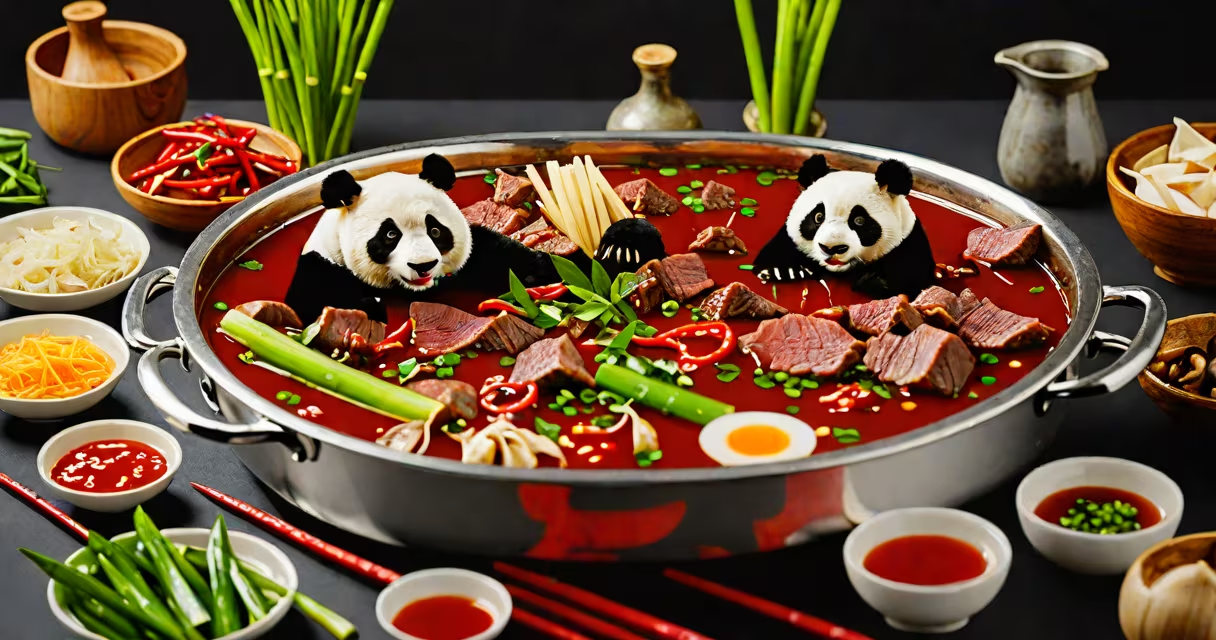
panda hot pot is a regional variation of Sichuan-style hot pot characterized by its intensely spicy, numbing broth infused with Sichuan peppercorns, dried chilies, and fermented bean paste. It's served in a central pot over a burner, where diners cook raw ingredients like beef, leafy greens, and tofu at the table.
The name "panda" is a cultural shorthand referencing the black-and-white markings of the giant panda, which appear in the dish's visual contrast: dark, oily broth against white slices of meat and vegetables. The term is not official in culinary taxonomy but widely used in restaurants across Chengdu and Chongqing to describe the most intense version of Sichuan hot pot.
Unlike milder versions such as Mongolian or seafood hot pot, panda hot pot features a broth that reaches high levels of heat and tingling sensation. The base includes 3-5 tablespoons of Sichuan peppercorns per liter, 10-15 dried red chilies, and fermented broad bean paste (doujiang), creating a complex flavor profile that balances burn with umami depth.
Diners gather around a central, heated pot placed on a tabletop burner. The broth-typically simmering at 96°C (205°F)-is kept at a rolling boil throughout the meal. Ingredients are added individually and cooked in seconds to minutes depending on thickness and density.
Each person uses long-handled tongs to dip food into the boiling liquid. Common additions include thinly sliced pork belly, fish balls, enoki mushrooms, and lotus root. The cooking time varies: leafy greens take 15-30 seconds, while thicker meats like beef brisket require 1-2 minutes.
A key feature is the use of a dipping sauce. While the broth delivers primary flavor, many guests mix a small bowl of sauce with soy sauce, sesame oil, garlic, and chopped cilantro. This acts as a flavor buffer for those sensitive to spice, reducing the burn while enhancing aroma.
The foundation of panda hot pot lies in its broth. A typical recipe calls for:
These ingredients are sautéed in vegetable oil until fragrant, then simmered for 45 minutes. The result is a thick, reddish-orange broth with visible flecks of chili and pepper. The oil layer floats on top, contributing to the mouth-numbing effect known as *má là* (numb-spicy).
Contrary to popular belief, the broth is not consumed in large quantities. Most diners eat only about 100-150ml of broth during a meal, primarily for flavor. The rest is left behind due to its intensity and high fat content.
Panda hot pot is most common in Sichuan province, especially in Chengdu's night markets and family-run eateries. It's a staple during winter months when locals seek warmth through heat. The communal nature of the meal encourages social interaction, making it ideal for gatherings of four or more people.
Restaurants often label their hot pots using color-coded systems. Red indicates high spice (panda hot pot), orange is medium, and yellow is mild. Some chains, like Chongqing's "Huangcheng Hot Pot," use a digital heat scale, with panda hot pot rated at 9.5.
Despite its popularity, the dish poses health risks for some. According to the National Center for Biotechnology Information, frequent consumption of extremely spicy foods may increase the risk of gastritis and esophageal irritation. However, moderate intake-once per week-is considered safe for healthy adults.
Many assume panda hot pot is a fusion dish involving actual panda meat. This is false. Giant pandas are protected under China's Wildlife Protection Law (1989), and consuming them is illegal. The name is purely symbolic, referencing the animal's coloration and the dish's dramatic appearance.
Another misconception is that the broth is always vegetarian. It is not. While plant-based versions exist, traditional panda hot pot uses beef or chicken stock. The broth's richness comes from slow-simmered bones and rendered fat.
Some confuse it with "mala xiangguo," a stir-fried street snack with similar spices. But mala xiangguo is dry and served in paper bags, whereas panda hot pot is wet, shared, and cooked at the table.
In 2022, a Chengdu restaurant called "Panda Flame" ran a promotional event where customers paid $35 per person to try a 30-minute "spice challenge." The broth contained 20 dried chilies and 150g of Sichuan peppercorns. Over 70% of participants reported temporary numbness in the lips and tongue, and 12% required cold water or milk to soothe their throats. The event went viral on Weibo, with videos showing diners laughing through tears.
This illustrates the sensory intensity of the dish. The goal isn't just taste-it's endurance. Eating panda hot pot becomes a shared experience of discomfort and triumph.
Here's how panda hot pot compares to other styles:
| Type | Spice Level | Broth Base | Key Flavor | Typical Diners |
|---|---|---|---|---|
| Panda hot pot | Extreme (9/10) | Beef stock, chili oil, doujiang | Numb-spicy, rich, aromatic | Local groups, tourists seeking adventure |
| Mild Sichuan | Medium (5/10) | Chicken stock, less chili | Spicy but not numbing | Families, older adults |
| Seafood hot pot | Low (2/10) | Clam broth, light seasoning | Salty, briny, clean | Health-conscious diners |
| Mongolian hot pot | Very low (1/10) | Clear broth, herbs | Subtle, savory | Children, vegetarians |
One non-obvious fact: the broth is never reused. After a meal, the pot is drained and cleaned. Reusing broth increases bacterial growth and alters flavor unpredictably. This rule is enforced in licensed restaurants under China's Food Safety Law (2015).
I once attended a panda hot pot dinner in Chengdu during a winter festival. The room was packed, steam rising from dozens of pots. My group chose the "panda level" broth. Within five minutes, my lips began to tingle. By the tenth minute, I could barely speak. I reached for a cold beer and a side of tofu-both helped. The experience wasn't enjoyable at first, but the laughter, the shared struggle, and the final bite of perfectly cooked lamb made it memorable. I've since learned that the real value isn't in eating it-it's in surviving it together.
panda hot pot remains a cultural touchstone in Sichuan cuisine. Its bold flavors, communal setup, and sensory intensity define a dining experience unlike any other. It's not just food-it's performance, ritual, and shared resistance to heat.