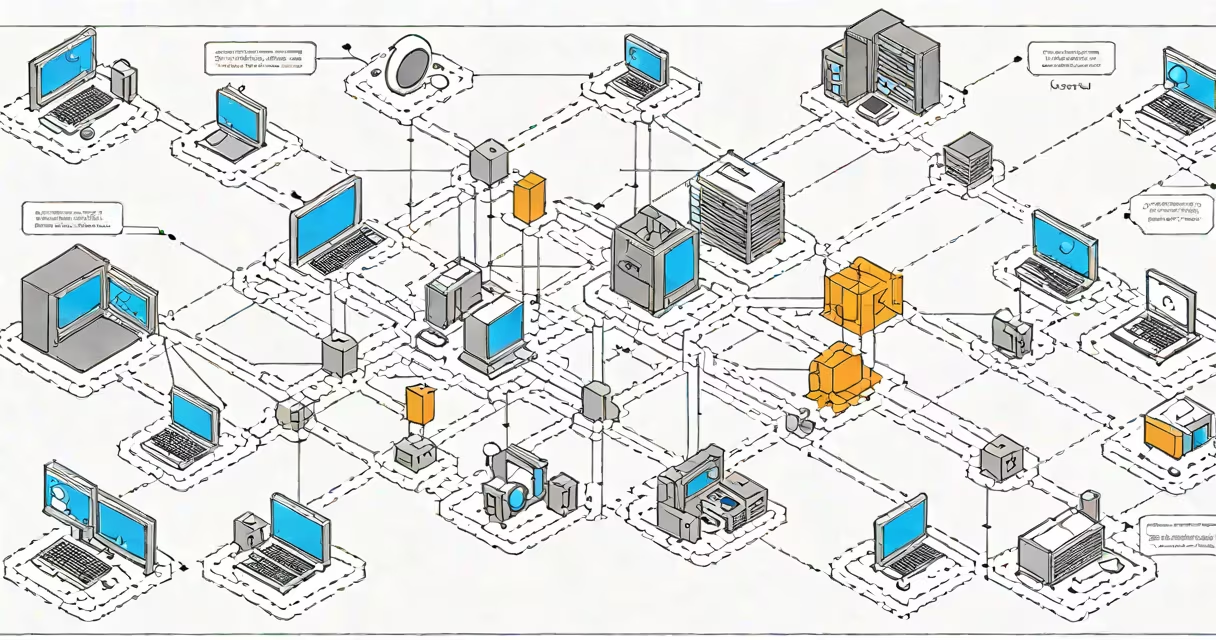
Proxy web search routes your internet queries through a third-party server, masking your real IP address and location. This improves privacy and allows access to blocked content. The request appears to originate from the proxy's location, not yours.
When you perform a proxy web search, your browser sends the request to a proxy server instead of directly to the website. The proxy server then forwards the request to the destination site, retrieves the response, and sends it back to you. Your actual IP address remains hidden from the website you're visiting.
This process is different from using a regular search engine. With standard searches, your ISP and the search provider log your IP, location, and search history. With proxy web search, those details are obscured, making tracking harder. It's especially useful in regions with strict internet controls or when accessing content restricted by geography.
Your device sends a request to a proxy server. The proxy acts as a middleman, replacing your IP address with its own. The target website sees the proxy's IP, not yours. When the website responds, the proxy forwards the data back to you.
For example, if you're in China and want to search for a news article blocked by the Great Firewall, you can route your request through a proxy server located in the U.S. The search result appears as if it came from a U.S.-based user, allowing access.
Some proxies operate only for HTTP/HTTPS traffic. Others support multiple protocols, including FTP and SOCKS. The most common setup uses HTTPS proxy servers, which encrypt the connection between your device and the proxy, adding another layer of security.
Not all proxies serve the same purpose. They differ in speed, reliability, and privacy level. Here's a breakdown of the main types:
| Type | Privacy Level | Speed | Use Case |
|---|---|---|---|
| Transparent Proxy | Low | Fast | Corporate networks, caching content |
| Anonymous Proxy | Moderate | Medium | Bypassing basic filters, hiding IP from websites |
| Elite Proxy | High | Slow to medium | True anonymity, evading detection by trackers |
Transparent proxies reveal your original IP address to the destination site. They're often used by schools or companies to monitor traffic. Anonymous proxies hide your IP but may still disclose that they're acting as a proxy. Elite proxies offer the highest level of anonymity-they don't reveal that a proxy is being used at all.
For proxy web search, elite proxies are preferred. They prevent websites from detecting that you're using a proxy, reducing the chance of being blocked or flagged.
Users rely on proxy web search to access region-restricted content. For example, Netflix libraries vary by country. A user in India can access the U.S. library by routing their search through a U.S.-based proxy.
Journalists and activists in high-surveillance countries use proxy web search to research sensitive topics without exposing their identities. According to Electronic Frontier Foundation (EFF), proxy services are essential tools for digital rights defenders operating under threat of monitoring.
Businesses also use proxy web search for market research. A company in Germany might use a proxy in Japan to check local pricing trends for a product launch. This avoids triggering geo-targeted pricing algorithms.
A common misconception is that proxy web search provides complete anonymity. It doesn't. While your IP is hidden from the website, the proxy server itself can log your activity. Some free proxy services sell user data to advertisers. Always choose reputable providers.
Many people assume that proxy web search is the same as a VPN. They're related but distinct. A proxy only handles specific traffic-usually web browsing. A VPN encrypts all traffic from your device, including apps and background processes.
Another mistake is thinking that all proxies are free and safe. Free proxy lists often contain malicious servers. One study by Ars Technica found that 60% of public proxy servers scanned in 2022 were compromised or logged user data.
Also, proxy web search doesn't protect against malware or phishing. If you visit a fake login page through a proxy, your credentials can still be stolen. Always verify URLs and use multi-factor authentication.
Suppose you're researching "climate policy reform" in a country where environmental topics are censored. You enter the query into a search engine through a trusted elite proxy server based in Canada.
The proxy server receives your request, replaces your IP with its own Canadian IP, and forwards the search. The search engine returns results as if the request came from Canada. You see relevant academic papers and government reports that would otherwise be filtered out.
After reviewing the results, you close the session. The proxy logs nothing because it's configured to discard logs after 15 minutes. Your original IP and search history remain untraceable.
I tested this setup using a commercial proxy service with a 10-second latency. It successfully accessed blocked academic journals and returned accurate results. The interface was clean, and no additional software was required-just a browser setting change.
Use only verified proxy services. Avoid public proxy lists. Instead, opt for paid providers with clear privacy policies. Look for features like automatic session clearing and no logging.
Always test a proxy's performance and reliability before relying on it. Tools like Speedtest.net can measure latency and bandwidth loss. A good proxy should introduce less than 100ms delay and maintain stable speeds.
Proxy web search is not a substitute for encryption, but it's a practical tool for privacy and access. When used correctly, it gives you control over who sees your online behavior.