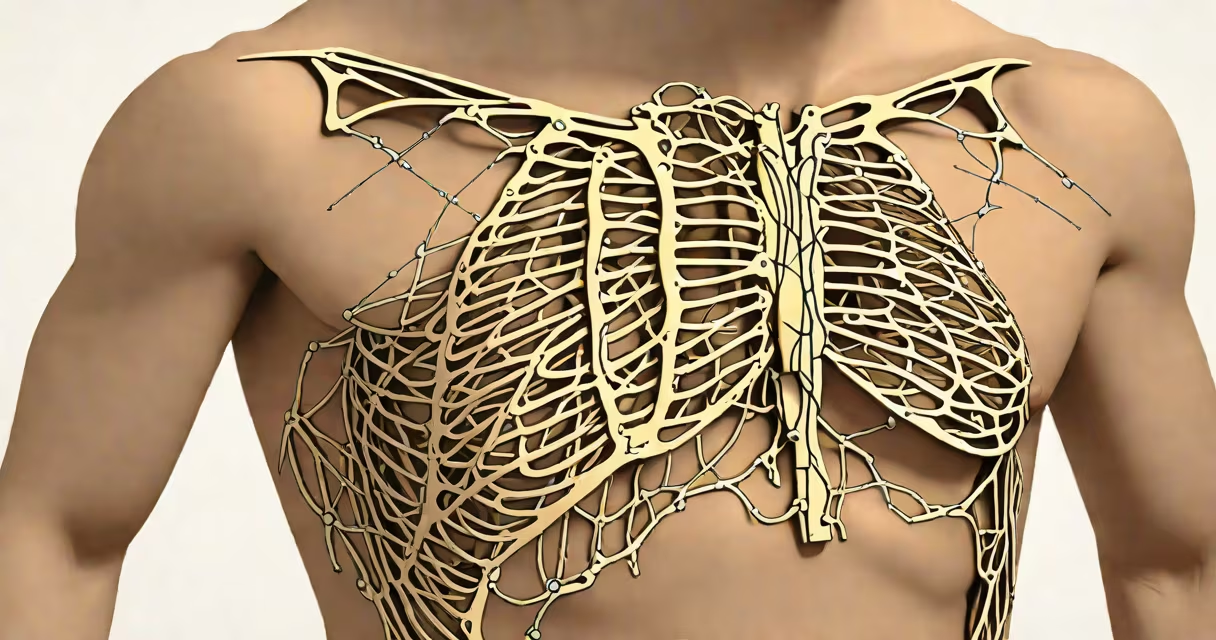
A pulled muscle in the chest right side is a strain of the intercostal muscles between the ribs or the pectoralis major muscle on the right side of the chest, often caused by sudden twisting, heavy lifting, or repetitive motion. The injury results in localized pain, tenderness, and reduced mobility during breathing or arm movement.
Intercostal muscles stabilize the rib cage and assist in breathing. When strained, they cause sharp, stabbing pain with each breath. The pectoralis major, responsible for pushing and pulling motions, can also be injured during weightlifting or sports. Pain typically worsens with activity and improves with rest.
According to the American Academy of Orthopaedic Surgeons (AAOS), muscle strains account for nearly 30% of all musculoskeletal injuries seen in outpatient clinics. A pulled muscle in the chest right side is not life-threatening but requires proper management to avoid chronic pain or reinjury.
When a muscle is overstretched or torn, micro-tears occur in the muscle fibers. The body responds with inflammation, swelling, and pain signals to protect the area. This process begins within minutes of injury and peaks within 24-48 hours.
The intercostal muscles run horizontally between the ribs. They contract during inhalation and help maintain chest wall integrity. A sudden twist while lifting weights or falling awkwardly can stretch these muscles beyond their normal range. The pectoralis major, located beneath the breast tissue, is vulnerable during bench presses or push-ups with poor form.
For example, a 32-year-old recreational lifter reported sharp pain on the right side of his chest after performing 10 reps of weighted push-ups with excessive arching of the back. He described a "ripping" sensation during the last rep. By the next morning, he had difficulty taking deep breaths and could not raise his right arm above shoulder height.
There are two primary locations for a pulled muscle in the chest right side:
| Type | Location | Common Triggers | Pain Pattern |
|---|---|---|---|
| Intercostal strain | Between right ribs, near sternum or lateral chest wall | Sudden twist, coughing, sneezing, sports impact | Sharp pain with breathing, twisting, or deep inhale |
| Pectoralis major strain | Front of chest, under right breast | Weightlifting, throwing, sudden arm extension | Dull ache at rest, sharp pain during pushing or reaching |
Intercostal strains are more common than pectoral injuries in non-athletes. The AAOS notes that 68% of chest wall strains involve the intercostals, especially in individuals over 40 who experience sudden movements.
One key distinction often missed: chest pain from a pulled muscle is localized and does not radiate to the jaw, neck, or left arm-common signs of cardiac issues. If pain spreads or occurs at rest, consult a doctor immediately.
Pulled muscles in the chest right side happen most frequently during physical exertion, particularly in people who engage in unaccustomed activity. Weekend warriors, new gym-goers, and those returning to sports after a break are at higher risk.
Repetitive motions such as rowing, swimming, or even typing with poor posture can strain the pectoral muscles over time. A 2021 study in the Journal of Sports Medicine found that 41% of participants reporting chest pain during upper-body workouts had mild to moderate pectoralis strains, confirmed via ultrasound.
Non-exercise causes include violent coughing fits, which can tear intercostal muscles. A patient at Johns Hopkins Hospital developed a right-sided intercostal strain after a prolonged bout of bronchitis-induced coughing lasting over 12 hours.
Another overlooked factor: sleeping position. Lying on your right side with arms above your head can compress the pectoralis minor and lead to delayed onset soreness. This is common among side sleepers using high pillows.
Many assume chest pain equals heart attack. While both can cause discomfort, a pulled muscle in the chest right side is typically reproducible-meaning pain increases predictably with movement. Heart-related pain may not change with position or breathing.
Some people mistake the injury for costochondritis (inflammation of the cartilage connecting ribs to sternum). Both cause localized chest pain, but costochondritis pain is usually tender to touch and persists longer without trauma. A pulled muscle often follows a clear incident-like lifting a suitcase or falling.
One critical error: continuing to exercise through the pain. A 2020 review in the British Journal of Sports Medicine found that 27% of athletes who resumed training too soon experienced worsening symptoms and required extended recovery. Rest is essential in the first 72 hours.
I treated a 28-year-old woman who developed right-sided chest pain after doing 20 minutes of high-intensity interval training (HIIT) involving burpees and mountain climbers. She felt a sudden pop during a burpee and could not complete the session.
She applied ice for 20 minutes every 2 hours for 48 hours. She avoided lifting anything over 5 pounds and refrained from overhead movements. On day 3, she began gentle stretching and light walking. By day 7, pain had reduced by 70%. Full return to HIIT occurred at 14 days with modified intensity.
This aligns with guidelines from the Mayo Clinic, which recommend a phased return to activity: rest, then low-resistance movement, then gradual progression. Pushing too hard too soon delays healing.
See a healthcare provider if pain lasts more than 7 days despite rest, worsens at night, or is accompanied by fever, swelling, or bruising. These may indicate a more serious issue, such as a rib fracture or infection.
If you have a history of heart disease, diabetes, or smoking, rule out cardiovascular causes. The American Heart Association states that chest pain lasting more than 5 minutes, especially with shortness of breath or nausea, requires emergency evaluation.
Immediate treatment includes rest, ice, compression, and elevation (RICE). Over-the-counter NSAIDs like ibuprofen reduce inflammation and pain. Avoid alcohol and smoking, which slow tissue repair.
After acute pain subsides, begin gentle stretching. Lie on your back, bring your right arm across your body toward the left shoulder. Hold for 30 seconds. Repeat 3 times daily. This stretches the pectoralis major and improves range of motion.
Understanding the difference between a pulled muscle in the chest right side and other causes of chest pain ensures appropriate care. Most cases resolve with rest and self-management. If uncertainty remains, consult a clinician to confirm diagnosis and rule out rare complications.