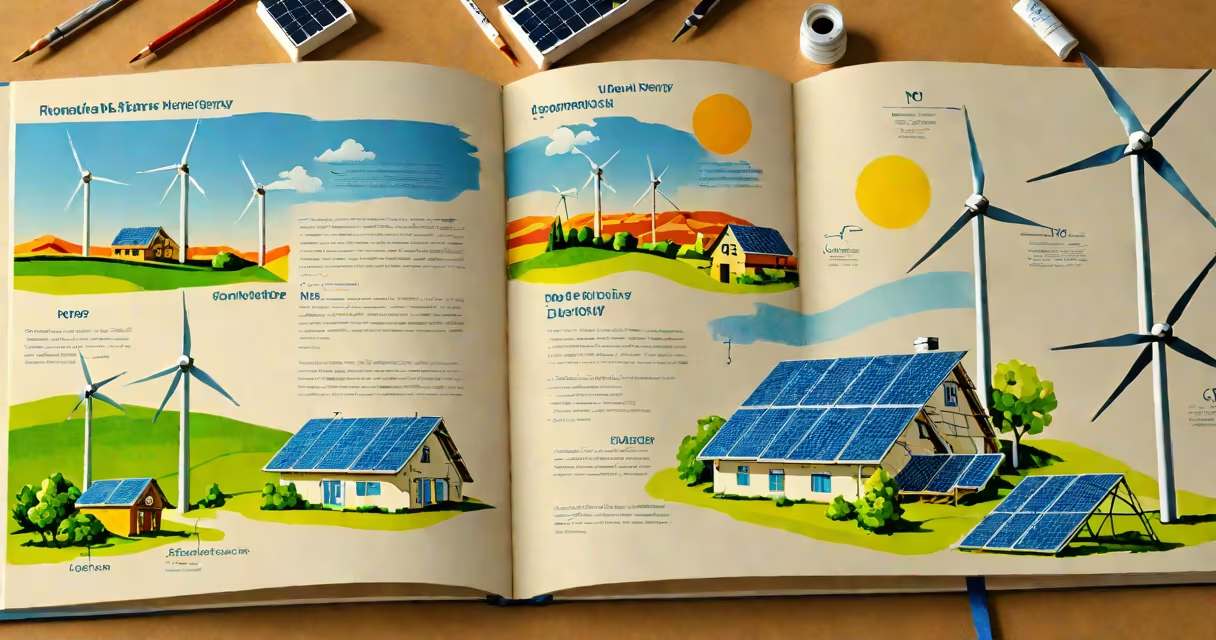
A renewable energy textbook is a structured educational resource that details how natural, replenishable sources like sunlight, wind, water, and geothermal heat are converted into usable electricity or thermal energy. These books cover scientific principles, engineering applications, policy frameworks, and real-world deployment of clean energy technologies.
They serve as foundational materials in academic courses, vocational training, and professional development programs focused on climate-resilient infrastructure and decarbonized power systems. Unlike general articles or online summaries, a renewable energy textbook provides systematic progression from basic concepts to advanced implementation challenges.
For example, a chapter on photovoltaic systems may begin with semiconductor physics, then explain panel design, inverters, grid integration, and lifecycle analysis-all supported by data tables, schematics, and case studies. The content is peer-reviewed and aligned with national and international standards such as those from the International Renewable Energy Agency (IRENA) and the U.S. Department of Energy.
Renewable energy textbooks translate complex physical processes into teachable modules. They define core mechanisms-like the photovoltaic effect in solar cells or Betz's limit in wind turbines-and show how these principles scale from individual components to utility-scale installations.
Each chapter typically includes learning objectives, key terminology, worked problems, and discussion questions. For instance, a problem might ask students to calculate the annual energy output of a 10 MW offshore wind farm given average wind speeds of 8.5 m/s and turbine efficiency of 45%. The solution walks through air density assumptions, swept area calculations, and capacity factor modeling.
These texts integrate interdisciplinary perspectives. A unit on bioenergy may combine agricultural science, chemical engineering, and environmental economics to assess feedstock sustainability and carbon payback periods. This cross-cutting approach prepares learners for roles in project planning, regulatory compliance, and innovation management.
Textbooks vary by audience and depth. Introductory versions focus on conceptual understanding and societal impacts. Advanced editions include mathematical models, material science details, and economic forecasting tools.
| Type | Focus Area | Typical Audience | Example Topic |
|---|---|---|---|
| Introductory | Basic principles, environmental benefits | High school, undergraduates | How solar panels convert light to electricity |
| Technical | Design, performance metrics, system integration | Engineering students, technicians | Maximum power point tracking algorithms |
| Policy & Economics | Incentives, grid stability, life-cycle costs | Public policy majors, planners | Comparing PPA structures across states |
Some textbooks include companion websites with interactive simulations. One widely used book features a virtual microgrid simulator that lets users adjust solar penetration levels and observe voltage fluctuations in real time. This hands-on component strengthens retention and application skills.
Many assume renewable energy textbooks are purely theoretical or overly optimistic about deployment timelines. In reality, they address intermittency, land-use trade-offs, and supply chain constraints with quantitative rigor.
For example, a common error is equating "renewable" with "always available." A textbook clarifies that solar and wind depend on weather patterns and require storage or backup systems. It cites Germany's 2021 energy mix: 50% renewables during peak sun hours, but only 30% during winter months, requiring gas-fired plants for balance.
Another misconception is that all renewable projects have low environmental impact. Textbooks show trade-offs-such as habitat disruption from large hydropower dams or rare earth mining for wind turbine magnets. They reference the 2019 study by the National Academy of Sciences showing that lithium extraction can deplete groundwater in Chile's Atacama Desert, affecting local communities and ecosystems.
One textbook used in a university course in California included a case study on the 2019 Moss Landing battery storage facility. Students analyzed its role in stabilizing the grid after the retirement of the Diablo Canyon nuclear plant. The exercise required calculating discharge duration based on state regulations and market pricing, reinforcing how technical specs influence real-world decisions.
I once attended a workshop where a professor used a renewable energy textbook to simulate a town's transition from diesel generators to a hybrid solar-wind system. Over three days, participants modeled load profiles, sized arrays, selected inverters, and evaluated payback periods. The final report showed that a 500 kW solar range paired with 200 kWh batteries reduced emissions by 68% and cut fuel costs by $120,000 annually.
This practical integration demonstrates why textbooks aren't just reading-they're tools for building solutions. They prepare engineers, policymakers, and entrepreneurs to make evidence-based choices under uncertainty.
As countries commit to net-zero targets by 2050, accurate, accessible knowledge becomes critical. The Intergovernmental Panel on Climate Change (IPCC) Sixth Assessment Report emphasizes that scaling renewable energy is central to limiting warming to 1.5°C. Textbooks provide the consistent foundation needed to train the workforce that will deliver this transformation.
They also help debunk myths. When misinformation spreads about wind farms harming birds, a textbook cites research from the U.S. Fish and Wildlife Service showing that window collisions kill 365 million birds annually-far more than wind turbines, which cause about 170,000 bird deaths per year in the U.S.
For anyone entering the field-from high schoolers considering a career in green tech to utility managers upgrading aging grids-a renewable energy textbook offers clarity, credibility, and actionable insight. It's not just a book-it's a roadmap for a sustainable future.