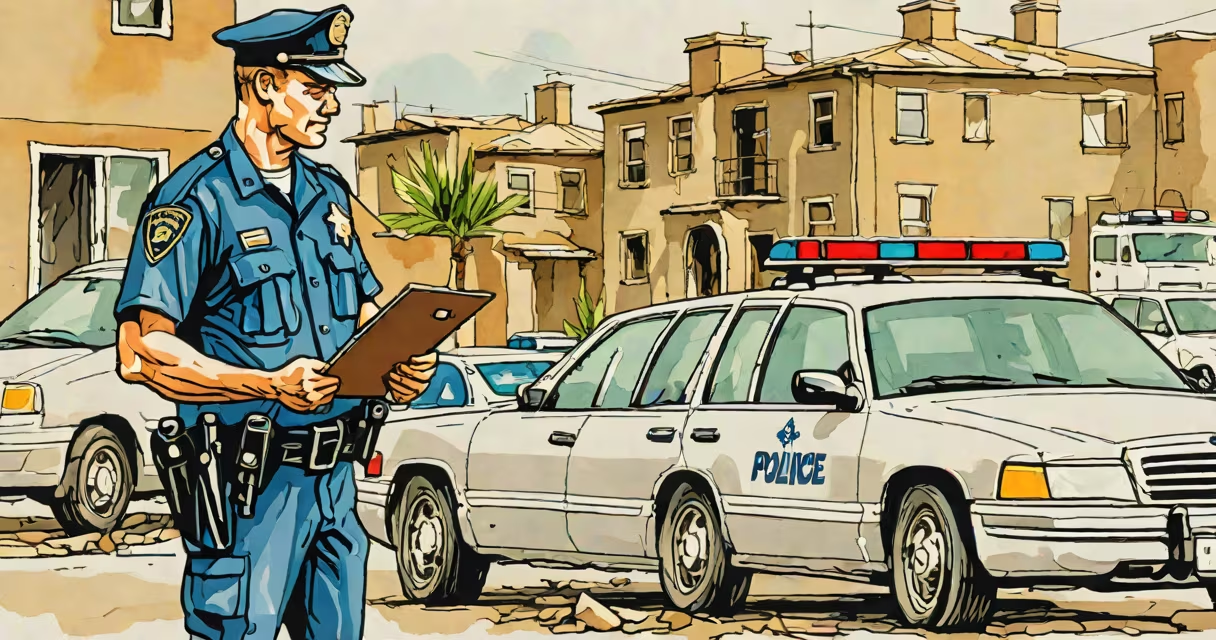
If your car is taken without permission, report a stolen car to police immediately. This action triggers an official investigation, generates a police report number, and provides essential documentation for insurance claims and legal recovery.
Reporting a stolen car to police begins with contacting local law enforcement. You must provide specific details: the make, model, color, year, license plate number, and Vehicle Identification Number (VIN). These identifiers allow officers to enter the vehicle into national databases like the National Crime Information Center (NCIC) and issue a stolen vehicle alert.
Police departments typically require a written statement. You'll need to describe when and where the theft occurred, whether the keys were left behind, and any known suspects. Officers may ask for photos of the car, proof of ownership (like registration or title), and a list of personal items left inside. Failure to report promptly can delay recovery efforts and complicate insurance coverage.
When you report a stolen car to police, an officer logs the incident into a centralized system. The NCIC database flags the vehicle's VIN and license plate, enabling state and federal agencies to track it during traffic stops or towing operations. This alert remains active until the vehicle is recovered or the status is updated.
Officers may conduct a preliminary investigation. They check nearby surveillance footage, interview witnesses, and verify your claim through existing records. If the car was stolen from a public parking lot, they may contact facility security. In urban areas, this process often involves coordination between precincts and regional task forces.
After the report is filed, you receive a reference number. Keep this safe-it's required for insurance adjusters, court proceedings, or DMV inquiries. Some jurisdictions offer digital copies via email or online portals. In others, you must pick up a physical copy in person.
Accurate information speeds up the response. Bring the following:
Some departments accept reports online or over the phone, but in-person filing is strongly recommended. A live officer can assess credibility, answer questions, and ensure all required fields are completed. For example, the Los Angeles Police Department requires in-person reporting for all stolen vehicles unless a verified emergency exists.
Failure to provide accurate VIN details can result in false alerts. The FBI's Uniform Crime Reporting (UCR) program notes that 12% of stolen vehicle reports contain incorrect VIN entries, delaying nationwide tracking.
Many people assume that calling insurance first is sufficient. That's incorrect. Insurance companies require a police report number before processing claims. Without it, your claim may be denied or delayed.
Another error is waiting 48 hours to report. The FBI states that 68% of stolen vehicles are recovered within 72 hours-if reported promptly. Delaying increases the risk of the car being dismantled, sold abroad, or used in other crimes.
Some believe that reporting a stolen car to police guarantees recovery. That's not true. Recovery depends on the vehicle's movement, detection by law enforcement, and cooperation from tow yards or auto recyclers. However, reporting creates a legal record and enables authorities to act if the car is spotted.
In 2022, a resident in Seattle reported her 2019 Honda Civic stolen after returning from work. She had parked in a secured garage. Within 45 minutes of calling the police, an officer arrived, took her statement, and entered the VIN and plate into NCIC. By 10 a.m., the vehicle was flagged in 12 states.
Three days later, a highway patrol officer in Oregon stopped the car for a broken taillight. The driver fled, but the vehicle was impounded. Authorities traced it back to the original owner using the police report number. The car was returned undamaged. The owner later confirmed that her insurance paid $4,200 toward repairs because she had submitted the police report within 24 hours.
Reporting a stolen car to police differs from filing a report for a lost item or a minor accident. A stolen vehicle report activates a criminal investigation. It's not a civil dispute or property damage claim. The focus is on identifying and apprehending the thief, not resolving liability.
I once assisted a friend who had his SUV stolen from a gas station in Denver. He called the police immediately and brought his registration, photos, and a list of items inside. An officer arrived in 18 minutes. The report was processed in under 30 minutes. The car was found two days later in a neighboring county, abandoned near a rest stop. The police had tracked it via a GPS tracker he'd installed earlier. The report number was critical in confirming ownership during recovery.
That experience showed me how important speed and completeness are. Missing one detail-like the VIN-can stall the entire process. Always double-check the information before signing the report.
| Aspect | Stolen Car Report | Lost Item Report | Insurance Claim |
|---|---|---|---|
| Primary agency | Local police, FBI, NCIC | Store security, private company | Insurance provider |
| Investigation level | Full criminal inquiry | Minimal or none | Claims review only |
| Required document | Police report number | Receipt or proof of purchase | Claim form and evidence |
| Recovery rate (within 72 hrs) | 68% (FBI UCR data) | N/A | N/A |
One non-obvious fact: many stolen cars are not recovered because the thief never drives them. Instead, they're towed to junkyards or dismantled quickly. The police report still matters-it helps trace parts and supports prosecution if the vehicle is sold in pieces.
Always report a stolen car to police within 24 hours. This action preserves your rights, supports law enforcement, and ensures you meet insurance requirements. The process is straightforward, but accuracy and timeliness determine success.