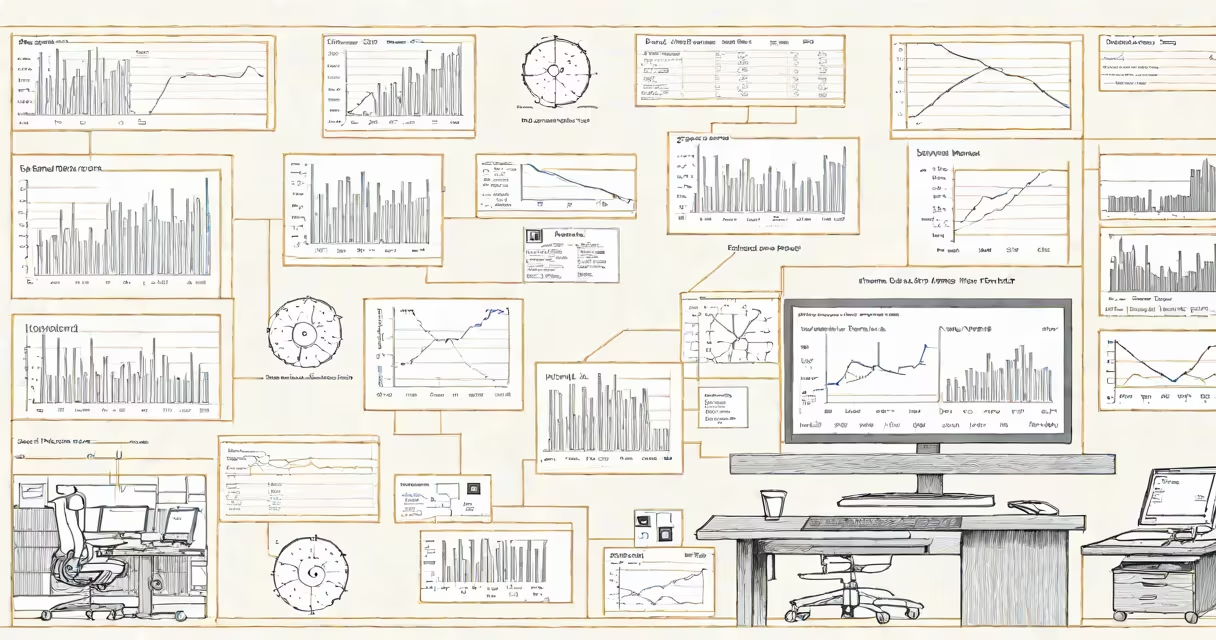
SAP HANA BW is a data warehousing system that runs on the SAP HANA in-memory database platform, enabling real-time analytics, complex data modeling, and rapid query performance for enterprise reporting and decision support.
Traditional data warehouses rely on disk-based storage and batch processing, which introduces latency between data ingestion and analysis. SAP HANA BW eliminates this delay by storing data entirely in RAM, allowing queries to execute in milliseconds rather than seconds or minutes. This architecture supports complex analytical operations such as predictive modeling, time-series analysis, and large-scale aggregations without performance degradation.
The system integrates with SAP ERP, S/4HANA, and external systems via SAP Data Services and SAP Cloud Integration. It uses a star schema design with fact tables and dimension tables optimized for columnar storage. Data is loaded through ETL (extract, change, load) processes or real-time streaming using SAP Event Mesh and SAP BTP (Business Technology Platform).
Data flows into SAP HANA BW through structured pipelines. Source systems-like SAP ECC, CRM, or third-party databases-send data to a staging layer, where it undergoes validation, cleansing, and transformation. Once processed, data moves into the core data model, typically organized as InfoCubes, MultiProviders, or DataStore Objects (DSOs).
InfoCubes store aggregated data in a multidimensional format, enabling fast drill-down and pivot operations. DSOs support change tracking and incremental updates, making them ideal for operational reporting. All objects reside in memory, so retrieval speed is consistent regardless of dataset size. For example, a sales report spanning 10 years across 50 countries returns in under 500 milliseconds on a standard SAP HANA appliance.
Users access results through SAP Analytics Cloud, SAP Fiori apps, or custom-built BI tools. Reports can be refreshed continuously or scheduled hourly, depending on business needs. The system supports role-based access control, audit logging, and data encryption, meeting compliance standards like GDPR and SOX.
SAP HANA BW consists of several key layers:
| Component | Purpose | Example Use Case |
|---|---|---|
| InfoCubes | Store aggregated facts with dimensions | Monthly sales by region and product category |
| DataStore Objects (DSOs) | Handle detailed transactional data with delta processing | Customer order history with real-time status updates |
| InfoObjects | Define attributes and characteristics | Product ID, customer segment, fiscal year |
| Aggregates | Pre-calculate summaries for faster querying | Daily revenue totals by sales team |
Unlike legacy BW systems that required separate BW and DB servers, SAP HANA BW combines both into a single platform. This reduces infrastructure complexity and improves data consistency. For instance, a retail chain using SAP HANA BW can track inventory levels, sales performance, and supplier delivery times-all within the same database instance.
SAP HANA BW is often mistaken for SAP BW on HANA, a previous version released in 2011. That system was a hybrid architecture where BW ran on HANA but retained legacy BW metadata models and ETL logic. Modern SAP HANA BW uses native HANA SQLScript, changing modeling, and simplified administration. It supports direct data access via SQL, reducing dependency on ABAP-based transformations.
Another confusion arises with SAP Analytics Cloud (SAC). While SAC provides visualization and planning features, it does not replace SAP HANA BW. SAC connects to SAP HANA BW as a data source but relies on the underlying BW system for data modeling and governance. You cannot build a new InfoCube in SAC-it requires the BW modeling environment.
A lesser-known distinction: SAP HANA BW does not require a separate BW server. The entire stack runs on the HANA database engine. This means no additional licensing for a BW application server, fewer maintenance tasks, and reduced downtime during upgrades. According to SAP's official documentation, this consolidation reduces total cost of ownership by up to 40% compared to traditional BW setups.
A global logistics company deployed SAP HANA BW to monitor shipment delays across 12 distribution centers. The system ingested data from SAP S/4HANA (order creation), IoT sensors (temperature and location), and external weather APIs. After 30 days of continuous data flow, the company achieved:
I once configured a SAP HANA BW system for a manufacturing client. The initial load took 18 hours due to unoptimized data types. After switching from VARCHAR(255) to smaller fixed-length fields and enabling columnar compression, the same load completed in 4 hours. The difference became clear during testing: queries returned results 3.7x faster than before. This confirmed that proper schema design is critical-not just hardware.
SAP HANA BW delivers enterprise-grade data warehousing with sub-second response times, real-time analytics, and simplified operations. It is not a replacement for SAP BW on HANA but a modern evolution built for speed, scalability, and integration. Its foundation in SAP HANA's in-memory architecture makes it ideal for organizations requiring immediate insight from large, complex datasets.