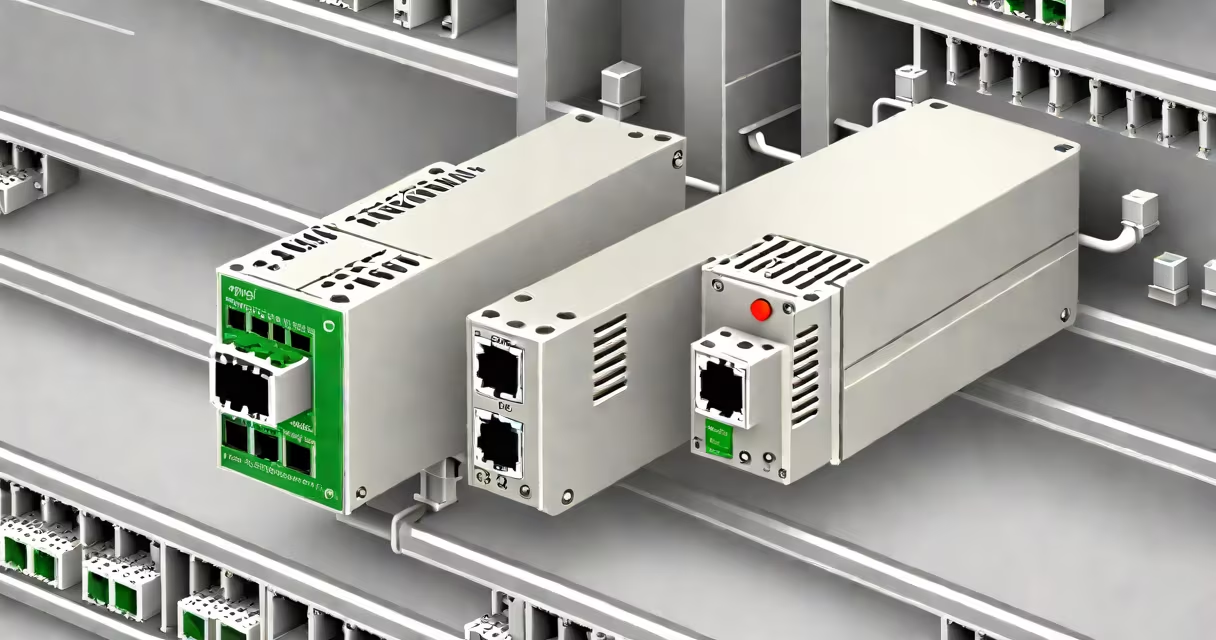
A serial to Ethernet connector is a hardware device that translates data between serial communication protocols (like RS-232 or RS-485) and Ethernet networks, allowing older industrial equipment to connect to modern IP-based systems.
These connectors operate by receiving serial data from a device-such as a PLC, sensor, or barcode scanner-and encapsulating it into TCP/IP packets for transmission over an Ethernet network. On the receiving end, another converter or software application decodes the packet back into serial format. This enables remote monitoring, configuration, and data exchange without replacing legacy hardware.
For example, a factory machine using RS-232 to report temperature readings every 10 seconds can send that data through a serial to Ethernet connector to a central server located in a different country. The server processes the data as if it were coming from a local serial port, even though the physical connection spans continents.
At its core, a serial to Ethernet connector functions as a protocol bridge. It uses embedded firmware to manage the conversion process, typically supporting standard protocols such as TCP, UDP, and sometimes Modbus over TCP. The device assigns a unique IP address, allowing it to appear as a network node.
Data flows in both directions. When a host computer sends a command via Ethernet, the connector reassembles the message into serial format and transmits it to the connected device. The response follows the reverse path. This bidirectional flow enables real-time control and diagnostics.
Most models support configurable baud rates, parity settings, and stop bits to match the requirements of specific serial devices. A common setup involves setting the converter to "transparent mode," where it passes raw serial data through unchanged, minimizing processing overhead.
Serial to Ethernet connectors come in several forms based on interface type, power source, and mounting method. The most widely used variants are:
| Type | Interface | Use Case | Example |
|---|---|---|---|
| USB-to-Ethernet Serial Adapter | USB Type-A, RJ45 | Connecting a laptop to a serial device over a network | FTDI FT232R-based USB-to-RS232 module with Ethernet support |
| DIN Rail Mount Converter | RS-485, Ethernet | Industrial automation, factory floor integration | Wise-3000 series from WISE-TECH |
| Wall-Mounted Gateway | RS-232, PoE | Remote site monitoring, security systems | Advantech EKI-1526 |
Some models offer additional features like firewall filtering, VLAN tagging, and SSL/TLS encryption for secure communications. Others support multiple serial ports, allowing a single network connection to serve several devices.
Industries relying on long-standing machinery-manufacturing, utilities, transportation, and energy-depend on serial to Ethernet connectors to integrate aging equipment into modern IT environments. These devices eliminate the need for costly replacements or custom wiring.
For instance, a water treatment plant may have pumps controlled by outdated SCADA systems using RS-485. By installing a serial to Ethernet connector at each pump station, operators can monitor pressure levels and trigger alerts from a centralized dashboard accessible via web browser or mobile app.
Another key use is remote maintenance. Technicians can diagnose issues in field devices without traveling to the site. A single serial to Ethernet connector can provide SSH access to a terminal server, enabling command-line troubleshooting across dozens of locations.
Many assume that a serial to Ethernet connector acts like a direct cable replacement. It does not. While it emulates a serial port over the network, latency, packet loss, and timing jitter can affect time-critical applications. For high-speed or precision tasks-such as real-time motion control-using a dedicated industrial bus like PROFINET or EtherCAT remains superior.
Also, confusion arises around the term "gateway." Not all serial to Ethernet converters are gateways. A gateway performs protocol translation between incompatible systems (e.g., Modbus RTU to Modbus TCP). A basic serial to Ethernet connector only handles transport layer conversion. It doesn't interpret data formats or perform logic decisions.
One non-obvious fact: many serial to Ethernet connectors support auto-negotiation of baud rate and handshaking signals. This feature prevents communication failures caused by mismatched settings. However, it requires proper configuration in the device's management interface. Without it, the device may fail to establish a stable link.
In 2021, a logistics company in Ohio upgraded its warehouse inventory system by connecting 12 legacy barcode scanners-each using RS-232-to a central server via serial to Ethernet connectors. The scanners were installed on forklifts and conveyor belts. Instead of rewiring each unit, they deployed five industrial-grade converters (model: Moxa NPort 5650) with PoE support.
Each converter was assigned a static IP address and configured to forward data to a central database server running on a Linux VM. The system reduced manual data entry errors by 92%, according to internal audit reports. The company saved $48,000 in labor and hardware costs over two years compared to replacing all scanners.
During testing, the team discovered that disabling flow control improved throughput by 18%. They also enabled SSH access on each converter to allow secure remote updates, reducing downtime during maintenance cycles.
Confusion often occurs between serial to Ethernet connectors and other network interfaces. Here's how they differ:
I once installed a serial to Ethernet connector in a remote weather station in Montana. The station used a Davis Vantage Pro2 weather station with an RS-232 output. The local network had no direct access due to distance. After configuring the converter with a static IP and setting up a UDP broadcast, we received live wind speed and humidity data on a cloud dashboard within 15 minutes. The unit operated reliably for over 18 months without rebooting.
For reliable deployment, ensure the serial to Ethernet connector supports your device's voltage level (e.g., 3.3V vs. 5V TTL) and signaling method (half-duplex vs. full-duplex). Always test with a known-good serial device before full rollout.
Understanding the role of a serial to Ethernet connector clarifies how legacy systems interact with modern networks. It is not a universal solution-but for integrating older serial devices into IP-based environments, it remains a proven, cost-effective tool.